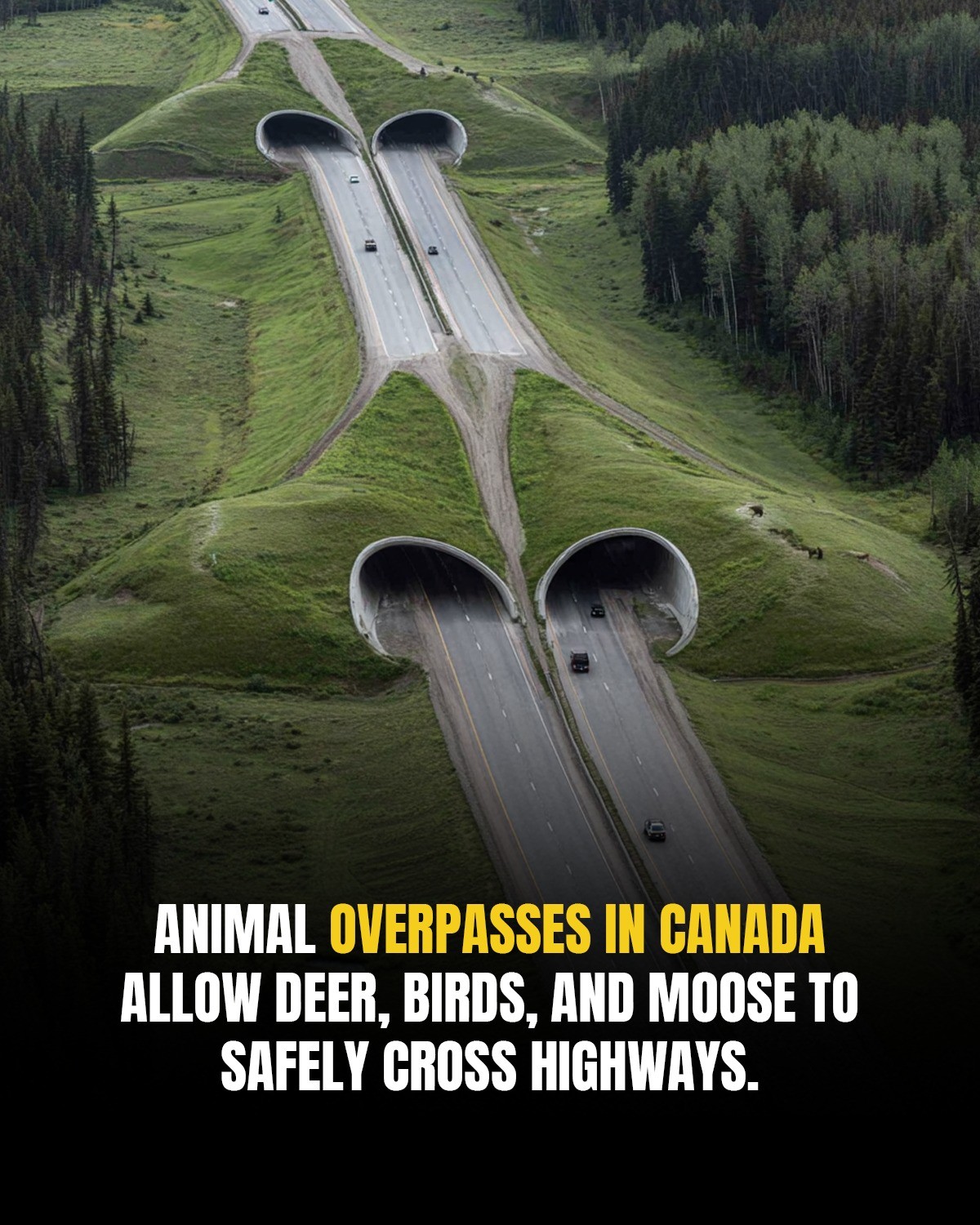
Canada’s Secret Weapon Against Wildlife Deaths: Bridges You Won’t Believe Exist
Highways cut across forests, rivers, and wildlife migration paths, often with deadly consequences for animals. Every year, thousands of deer, moose, bears, and other creatures are killed in collisions with speeding cars, leaving communities devastated and ecosystems disrupted. But Canada decided to do something extraordinary: build bridges for animals.

These aren’t ordinary bridges. They’re covered in trees, grass, and shrubs, blending seamlessly into the natural environment. From above, they look like extensions of the forest. From below, they allow streams and smaller animals to continue their journeys undisturbed. Deer, moose, bears, and even birds now use these overpasses to cross safely, avoiding the dangers of human traffic.
The results have been remarkable. Wildlife-vehicle collisions have dropped dramatically in areas with overpasses, habitats have become more connected, and researchers have observed natural animal behaviors returning along traditional migration paths. This proves that cities and highways don’t have to be enemies of nature.
Canada’s success has inspired other countries to rethink their infrastructure. In the Netherlands, eco-bridges are connecting fragmented habitats, and in the U.S., states like Colorado are building tunnels and overpasses to protect elk and bears. The movement is gaining momentum worldwide, showing that with ingenuity, human development and wildlife conservation can coexist.
But here’s the bigger question: if we can design roads to save animals, why stop there? Imagine:
-
Cities with wildlife corridors: Parks, green roofs, and tree-lined streets that support pollinators, birds, and small mammals.
-
Suburbs designed for coexistence: Neighborhoods with native plants, rain gardens, and mini-wetlands that invite animals safely into our daily lives.
-
Agriculture and industry that respect nature: Farms and factories with buffer zones, hedgerows, and water access points for local ecosystems.
-
Energy and water systems that protect wildlife: Dams, power lines, and canals redesigned to reduce disruption to animals.
The lesson is clear: coexistence can be engineered, not just hoped for. If Canada can build bridges for animals, then perhaps the next step is to rethink highways, cities, and suburbs worldwide—not as barriers between humans and nature, but as opportunities for harmony.
Nature doesn’t have to be a casualty of progress. With bold ideas, thoughtful planning, and a little creativity, we can create a world where humans and wildlife thrive side by side.