House Approves ‘Take It Down’ Act to Combat Deepfake Revenge Imagery
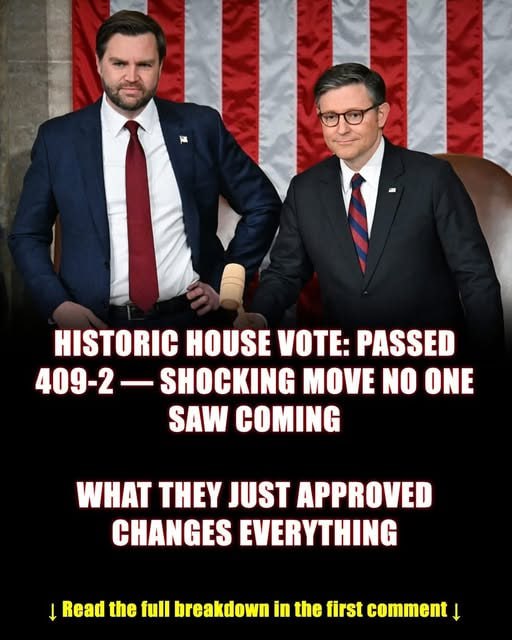
By a sweeping 409 to 2 vote, the House has passed the Take It Down Act, a bill aimed at combating nonconsensual deepfake pornography. The measure directly addresses the growing problem of artificial intelligence generated sexual content that is created and shared without permission. Lawmakers described the vote as a clear signal that Congress is ready to respond to the darker uses of rapidly advancing technology.

In recent years, deepfake content has grown at an alarming pace. What once required advanced technical skills can now be produced with easy to use software and minimal experience. Victims have reported seeing their faces placed into explicit videos within hours of images being taken from public profiles. Supporters of the bill argue that this speed and accessibility makes immediate legal protection essential.
Key Provisions
The bill makes it a federal crime to create or distribute explicit deepfake images or videos without consent. In addition, online platforms will be required to remove flagged material within 72 hours of notification. This provision is intended to prevent harmful content from spreading endlessly while victims struggle to navigate slow and confusing reporting systems. Lawmakers emphasized that time is often the most critical factor in limiting the damage caused by viral exploitation.
Legal Recourse for Victims
For the first time, individuals harmed by deepfake pornography will be able to sue creators, distributors, and online platforms that ignore valid takedown requests. This gives victims a direct legal tool to seek damages and accountability. Advocates say this shift is crucial because many platforms have historically escaped responsibility by claiming they merely host user content. The new law establishes that in cases of nonconsensual explicit material, inaction has consequences.
Bipartisan and Executive Support
Praised as a historic safeguard for digital privacy and human dignity, the bill has drawn rare bipartisan backing as well as support from President Trump. Lawmakers from both parties described the issue as one that cuts across ideology, touching families, schools, and workplaces alike. Supporters highlighted the particular vulnerability of children, women, and public figures who are frequently targeted due to their visibility and social media presence.
Addressing the Harm
“This is about drawing a line,” said Representative Sheila Jackson Lee, a Democrat from Texas and a sponsor of the bill. Victims of deepfake pornography often suffer severe psychological, emotional, and social damage. Many report harassment, job loss, strained relationships, anxiety, and depression. Even when content is eventually taken down, the fear of resurfacing often lingers. Lawmakers argued that no individual should have to live under constant threat of digital humiliation created entirely without consent.
The Opposition
Only two lawmakers voted against the measure. They raised concerns about free speech and the possibility of government overreach into online expression. Some critics warned that unclear definitions could lead to unintended censorship. Supporters countered that the bill was carefully crafted to target only explicit material that is demonstrably nonconsensual. They argue that protecting personal dignity does not weaken free expression but instead preserves it.
Next Steps in the Senate
The legislation now heads to the Senate, where it is widely expected to advance quickly given the strong momentum in the House and executive backing. Several senators have already voiced support, signaling that final passage could come soon. If approved, the bill would move to the president for signature.
A Turning Point in Digital Protection
If enacted, the Take It Down Act would significantly reshape how the United States addresses digital exploitation and the abuse of artificial intelligence tools. Supporters describe it as a long overdue step toward restoring personal control in an online world that often feels lawless. At a time when technology evolves faster than regulation, the bill represents a rare moment when policy appears to be catching up with reality.