Donald Trump Responds to Criticism Over Comments About Rob Reiner
The nation is reeling after the shocking deaths of legendary filmmaker Rob Reiner and his wife, Michele Singer Reiner. Known for classics like The Princess Bride and A Few Good Men, Rob’s cinematic genius touched millions—but now, tragedy has collided with politics, igniting a storm across media and social platforms.

The couple was found dead at their Brentwood estate on December 14, 2025, the victims of a devastating domestic violence incident. Both succumbed to fatal knife wounds. Authorities quickly took their 32-year-old son, Nick Reiner, into custody, citing a volatile family dispute linked to long-standing struggles with mental health and substance abuse.
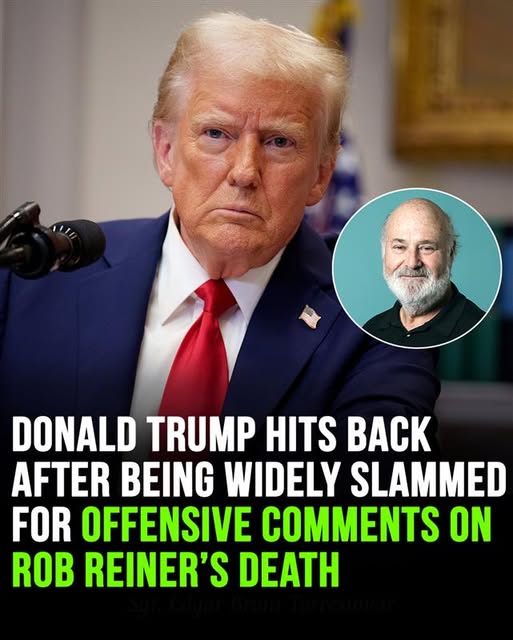
What should have been a moment of national mourning instead turned into controversy when former President Donald Trump used his Truth Social platform to attack the deceased filmmaker, blaming Reiner’s political activism for the tragedy. Trump’s posts, claiming Rob suffered from “Trump Derangement Syndrome,” suggested that his anti-MAGA stance somehow fueled the incident. The timing—mere hours after the Reiners’ daughter discovered their bodies—sparked outrage and bipartisan condemnation.
Even staunch Trump supporters broke ranks. Georgia Representative Marjorie Taylor Greene and Kentucky Representative Thomas Massie publicly criticized the remarks, calling them disrespectful to a family grieving unimaginable loss. Political analysts note this rare intra-party dissent may signal a shift in voter sentiment, as Americans express frustration over the mixing of partisan rhetoric with private tragedy.
Rob Reiner’s outspoken criticism of Trump, combined with his lifelong commitment to social justice, made him a target for political attack—but his legacy extends far beyond the political arena. His films, philanthropic efforts, and advocacy for democratic values cemented his status as a cultural icon. Despite the President’s incendiary comments, Hollywood has rallied around remembrance, with memorial tributes, charitable donations in the Reiners’ names, and renewed interest in his body of work, including streaming surges for Spinal Tap and other classics.
Meanwhile, the legal process against Nick Reiner is set to unfold under intense public scrutiny. Lawyers will likely weigh mental health, substance abuse, and mitigating circumstances, with forensic evidence and eyewitness accounts forming the foundation of a high-profile criminal case. The intersection of mental health advocacy and criminal liability promises to dominate headlines in the months ahead.
Beyond the courtroom, this tragedy highlights a nation deeply divided. Even in moments of loss, partisan lenses filter public perception, raising critical questions about empathy, responsibility, and the role of leaders in shaping civil discourse. The Reiner family’s story—a blend of artistic brilliance and heartbreaking tragedy—has now become a cultural touchstone, reminding the country that life, loss, and legacy are often inseparable from the social and political climates in which they unfold.