I Helped a Struggling Grandmother at the Grocery Store — Days Later, I Received an Unexpected Visit

At 29, my life as a single mother of three—Emma, Josh, and Max—often feels like a constant balancing act performed over thin air. Our days are loud, messy, and ruled by sticky fingers, unanswered bills, and the quiet anxiety of never quite having enough. Every month feels like a race between rent, utilities, groceries, and exhaustion, and most days I’m not sure which one will catch me first.

Last Thursday started like so many others. The kids argued over cereal brands that barely filled the box. Someone stomped through the hallway roaring like a dinosaur. My phone buzzed nonstop—overdue rent reminders, an electric bill warning, and a message from my boss asking if I could pick up another long diner shift. When I opened the fridge and saw little more than a nearly empty milk jug and the last crust of bread, I grabbed my purse and headed to the neighborhood grocery store, hoping I could stretch a few dollars into dinner.

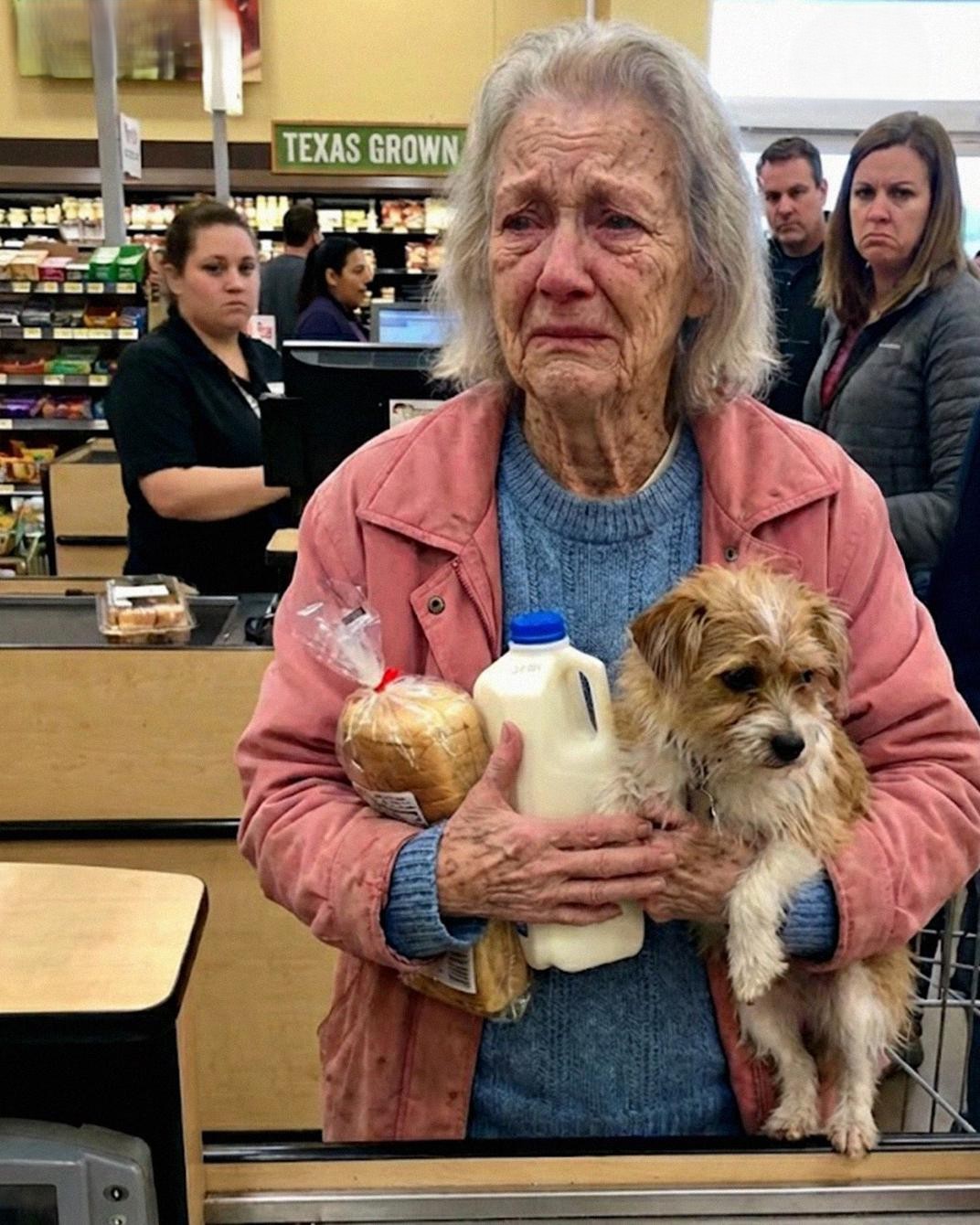
Inside, the bright lights and squeaking carts only amplified my fatigue. I chose the shortest checkout line and waited behind an elderly woman who looked impossibly small beneath her oversized, threadbare coat. Her posture was stooped, as if life itself had pressed down on her shoulders for decades. She placed just two items on the conveyor belt: a loaf of the cheapest bread and a gallon of milk.

The young cashier totaled the purchase. The woman opened a worn wallet and slowly counted coins and wrinkled bills with shaking hands. After a moment, she stopped, her voice barely audible. “I’m short,” she said softly. “I’m sorry.”

The mood in the line shifted instantly. Someone behind her sighed loudly. Another person muttered about people wasting time. A man snapped that some of us had places to be. The woman’s shoulders curled inward as if she wanted to disappear. She reached for the bread and whispered, “I’ll just take the milk.”

That familiar knot tightened in my chest—the same feeling I’d had so many times when money ran out at the register and eyes burned into my back. Without thinking through my own nearly maxed-out card or the bills waiting at home, I spoke up.

“I’ve got it,” I said. “I’ll pay for hers.”

The line went quiet for a second, then filled again with judgment. Someone said I was foolish. Another accused the woman of manipulating people. She turned toward me, eyes glossy but firm.

“No,” she said. “You have children. I can’t take from you.”

“I’m not losing anything,” I replied. “Please. Let me do this.”

After a long pause, she nodded. The cashier processed the payment, watching closely. The woman introduced herself as Mrs. Hargrove and held the bread and milk like something precious. “No one’s ever done this for me,” she said. “Not with kindness. Thank you.” Before leaving, she looked at me carefully and added, “Don’t let the world harden you.”

Life moved on quickly after that. Kids, work, exhaustion. The moment faded into the background of survival—until three days later, when there was a sharp knock at my door.

Standing outside was the same cashier, still in his grocery uniform, holding a white envelope. He looked nervous. “I’m here about Mrs. Hargrove,” he said.

My heart dropped. “Is she okay?”

He shook his head. She had passed away the day before. Before collapsing in the store, she’d left the envelope with instructions for him to find “the woman who helped me.” He admitted he’d used my rewards account to track me down.

Inside the envelope was a handwritten letter and legal documents. The letter was simple but powerful. She thanked me for treating her like a person when others treated her like a problem. She wrote that her family rarely visited unless money was involved. She said she wanted what little she had to go to someone who showed genuine kindness.

My hands trembled as I read the paperwork. She had left me her small house and her savings. Not wealth—but security. Stability. Something that would change everything.

When I told my children, they stared at me in disbelief. “Why would she do that?” one of them asked.

The cashier answered quietly, “Because sometimes one moment is enough for someone to see who you are.”

Before leaving, he passed on her final words: “She said she didn’t accept charity. She said she traded kindness for kindness.”

That day at the grocery store, I didn’t think I was changing my life. I just refused to look away. And somehow, that single moment of compassion became the foundation for a future I never imagined—one built not on luck, but on empathy.

If this story moved you, share it with someone who believes small acts don’t matter—or leave a comment about a moment of kindness you’ll never forget.


Similar Posts

Leave a Reply

Your email address will not be published. Required fields are marked *