Tragedy in Gaston County! Denny Hamlins Father Dies!
In the high-octane world of NASCAR, where life is measured in milliseconds and legacy is forged on asphalt, Denny Hamlin has long stood as a pillar of poise and competitive fire. But on a somber Sunday in Gaston County, the speed of the racetrack was eclipsed by the devastating velocity of a domestic tragedy. By the time the first responders reached the scene, the Hamlin family residence had already been transformed into an inescapable inferno. In the span of a few agonizing minutes, the quiet peace of a weekend afternoon dissolved into a nightmare that would claim the life of the family patriarch and leave a mother fighting for every breath.

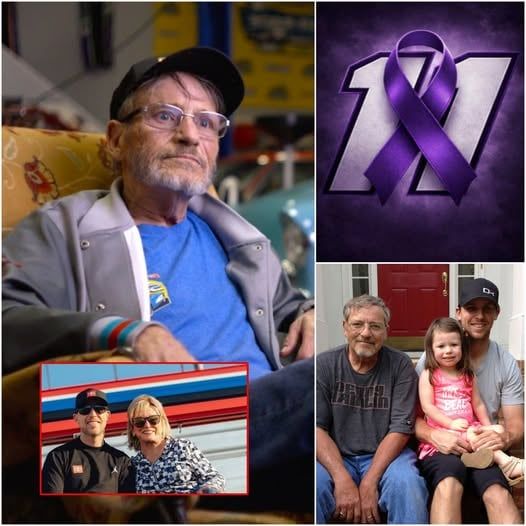
Dennis Hamlin, aged 75, was more than just a father to one of the sport’s most decorated drivers; he was the primary architect of the Hamlin legacy. While Denny commanded the spotlight at the Daytona 500 and across the nation’s premier speedways, Dennis was the quiet driving force who worked tirelessly in the shadows. He was the man who made the early sacrifices, who invested not just money but a lifetime of belief into his son’s potential long before the cameras, the corporate sponsorships, and the checkered flags became a reality. His passing in the wake of the fire has sent shockwaves through the racing community, leaving a void that no trophy can ever hope to fill.
The details of the escape are harrowing. Though Dennis and his wife, Mary Lou, managed to exit the burning structure, the physical and emotional toll was catastrophic. Dennis was rushed to the hospital with injuries that would eventually prove too severe for even the most advanced medical intervention. His death was not just a personal loss for the Hamlin family, but a moment of collective mourning for a sport that views its drivers and their families as a singular, tight-knit tribe. Denny Hamlin, typically known for his measured composure and strategic mind behind the wheel, was suddenly thrust into a race against a different kind of adversary: a crushing, overwhelming grief.
As the racing world reels, the focus remains sharply fixed on Mary Lou Hamlin. Currently stabilized in a specialized burn center miles away from the ruins of her home, her condition remains a fragile thread in a very dark hour. The family’s daily life is now measured by the incremental updates from medical staff, clinging to every small sign of progress with a desperate hope. Denny has stepped into the public eye only briefly, setting aside his competitive persona to serve as a grieving son. In a poignant public statement, he thanked the fans for their outpouring of support and praised the medical teams for their tireless efforts, all while describing his father as the bedrock upon which his entire life and career were built.
The cause of the blaze that gutted the Gaston County home remains shrouded in mystery. Fire investigators continue to sift through the charred remains, looking for the spark that turned a sanctuary into a death trap. For the family, the lack of an immediate explanation only adds a layer of frustration to an already unbearable situation. Ruins rarely offer comfort, and in this case, the blackened timbers and melted memories refuse to explain why a life of such quiet dedication had to end in such a violent manner.
The NASCAR community has responded with the characteristic solidarity that defines the sport. In the garage stalls and on pit road, the usual rivalries have been silenced. Teams and drivers who battle each other at 200 miles per hour have closed ranks around the Hamlin family, offering a protective barrier of prayers, tributes, and, perhaps most importantly, a respectful silence. In a world that often demands constant content and immediate reactions, the racing community understands that there are some tragedies for which words are simply insufficient. They are honoring Dennis Hamlin by remembering the man who existed far from the television monitors—the man who was the first to arrive at the go-kart track and the last to leave the garage when his son was just a boy with a dream.
Dennis Hamlin’s story is the quintessential American tale of a father’s devotion. He belonged to a generation of parents who viewed their children’s success as their own greatest achievement. Every win Denny secured was a shared victory, a testament to the years Dennis spent working extra hours to fund tires, fuel, and travel. He was a fixture in the motorhome lots and the hospitality tents, yet he never sought the limelight. He was content to watch from the sidelines, a proud, silent sentinel who knew exactly what it had cost to get to the winner’s circle.
The healing process for the Hamlin family is in its most primitive, painful stages. For Denny, the challenge ahead is multifaceted. He must find a way to navigate the remainder of the racing season while carrying the weight of his father’s absence and the anxiety of his mother’s ongoing recovery. The cockpit of a race car has often been described by drivers as a sanctuary—a place where the outside world disappears, and the only thing that matters is the next turn. But grief has a way of finding its way through the helmet, and Denny will undoubtedly face his most difficult laps in the weeks and months to come.
As the investigation in Gaston County continues, the story serves as a sobering reminder of the fragility of life, even for those who seem insulated by fame and success. Tragedy does not discriminate between the grandstands and the gated communities. It is a universal leveler that strips away the accolades and leaves behind only the raw, human core of a family in pain. The Hamlin house may be gone, and a legend of the garage may have passed, but the foundation Dennis Hamlin built is made of sturdier stuff than wood and brick. It is built on the resilience he instilled in his son and the love he shared with Mary Lou—a legacy that will eventually rise from the ashes.
The road to recovery will be long and arduous, marked by medical milestones for Mary Lou and emotional ones for Denny. But they will not walk it alone. From the fans in the bleachers to the executives in the front offices, the entire NASCAR family stands ready to support one of their own. As Denny Hamlin prepares to return to the track, he does so not just for the points or the trophies, but to honor the man who taught him how to drive, how to compete, and how to survive the hardest hits life can deliver. Dennis Hamlin’s final race is over, but his influence continues to accelerate through the life of his son.