Developments Surrounding Mexican President Claudia Sheinbaum
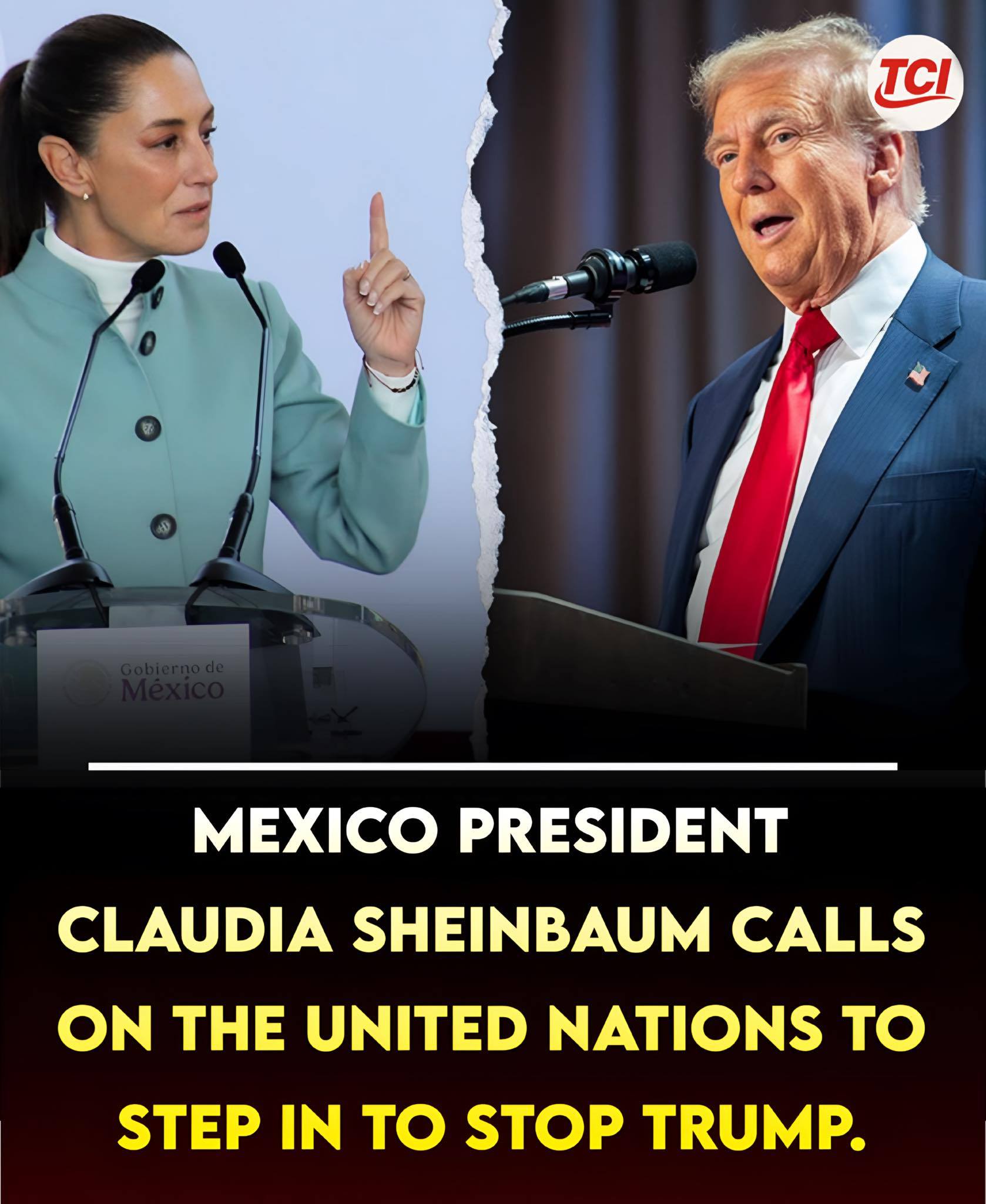
In the volatile wake of the U.S. military operation in Venezuela and the subsequent capture of President Nicolás Maduro, the geopolitical landscape of the Americas has been thrust into a profound state of flux. Leading the charge of dissent is Mexican President Claudia Sheinbaum, whose response has rapidly hardened into one of the most significant critiques of U.S. foreign policy from a Latin American leader in recent memory. Sheinbaum’s admonishment is far more than a rhetorical flourish; it is a calculated challenge grounded in the bedrock of international law, established diplomatic doctrine, and the constitutional principles of the Mexican state. Her stance has not only strained bilateral ties but has immediately reshaped the diplomatic calculus across the hemisphere.

A Legal Challenge to Unilateralism
The Sheinbaum administration’s opening move was the issuance of a forceful official communiqué condemning the American operation as a unilateral breach of the United Nations Charter. Central to Mexico’s legal argument is Article 2(4), the provision that strictly prohibits the threat or use of force against the territorial integrity or political independence of any sovereign state.
By anchoring her opposition in a fundamental legal obligation binding on all U.N. member states, Sheinbaum effectively elevated the dispute from a localized bilateral spat into a high-stakes debate over global norms. In press briefings and formal addresses, she has consistently underscored that Latin America and the Caribbean are legally designated as a “zone of peace.” This concept, long championed by the Mexican Foreign Ministry, is intended to serve as a legal shield against foreign military interventions in hemispheric affairs.
From Sheinbaum’s perspective, the U.S. action represents a dangerous erosion of sovereignty, self-determination, and the global rule of law. It is, in her view, a precedent that the region cannot afford to ignore.
The Call for Multilateral Intervention
Refusing to let the matter rest in the court of public opinion, Sheinbaum has called for immediate, high-level multilateral engagement. She has urged both the United Nations and the Organization of American States (OAS) to move beyond rhetoric and fulfill their mandates as active guarantors of international norms.
Her remarks carry a sharp, if implicit, criticism of the U.N. Security Council. She pointedly noted the “paralysis” of the Council in the face of the U.S. operation—a failure she suggests exposes deep structural cracks in the framework of global governance.
Sheinbaum’s stance is a modern reassertion of Mexico’s storied diplomatic traditions, most notably the Estrada Doctrine. Established in the early 20th century, the doctrine dictates that governments should not pass judgment on the internal legitimacy of foreign states, prioritizing non-intervention and sovereign equality above all else.
Historical Scars and Democratic Agency
Beyond the technicalities of law, Sheinbaum has leaned heavily into historical memory. She has reminded the international community that Latin America’s history is littered with the wreckage of foreign-backed coups, covert interferences, and externally imposed regimes—episodes that have left indelible scars on the regional psyche.
“True democratic self-determination must be achieved internally, through the agency of a nation’s own people.”
Sheinbaum argued that foreign military interventions—regardless of the altruism of their stated intentions—have a failing track record when it comes to delivering lasting stability or genuine democracy. Her defense was framed not as an endorsement of the Maduro regime, but as a rejection of the “savior” complex that has often defined Northern intervention in the South.
A Regional Litmus Test
The symbolism of Mexico’s stance is unmistakable: the crisis in Venezuela has become a proxy for a much larger question. Will the Western Hemisphere be governed by the rule of force or by the principles of law, respect, and diplomacy?
Importantly, Sheinbaum paired this principled stand with a pragmatic warning. She made it clear that while Mexico remains a partner to the United States on critical issues such as migration, trade, and security, this cooperation is not a blank check. Mexico, she signaled, will not trade its principles on war and peace for economic or diplomatic convenience.
The Global Ripple Effect
The Mexican position is already resonating across South America and the Caribbean. Other governments are beginning to voice varying degrees of concern, sparking a wider debate about the limits of military action in the 21st century.
In the struggle over Caracas, Sheinbaum has positioned Mexico as the guardian of a specific vision for the Americas—one where regional sovereignty is upheld even in the face of great power assertions. As the dust settles on the capture of Nicolás Maduro, the real contest has just begun: a test of whether diplomacy can still prevail over unilateral force in an increasingly fractured world order.
In the volatile wake of the U.S. military operation in Venezuela and the subsequent capture of President Nicolás Maduro, the geopolitical landscape of the Americas has been thrust into a profound state of flux. Leading the charge of dissent is Mexican President Claudia Sheinbaum, whose response has rapidly hardened into one of the most significant critiques of U.S. foreign policy from a Latin American leader in decades.
Sheinbaum’s admonishment is far more than a rhetorical flourish; it is a calculated challenge grounded in the bedrock of international law, established diplomatic doctrine, and the constitutional principles of the Mexican state. Her stance has not only strained bilateral ties but has immediately reshaped the diplomatic calculus across the hemisphere.
A Legal Challenge to Unilateralism
The Sheinbaum administration’s opening move was the issuance of a forceful official communiqué condemning the American operation as a unilateral breach of the United Nations Charter. Central to Mexico’s legal argument is Article 2(4), the provision that strictly prohibits the threat or use of force against the territorial integrity or political independence of any sovereign state.
By anchoring her opposition in a fundamental legal obligation binding on all U.N. member states, Sheinbaum effectively elevated the dispute from a localized bilateral spat into a high-stakes debate over global norms. In press briefings and formal addresses, she has consistently underscored that Latin America and the Caribbean are legally designated as a “zone of peace.” This concept, long championed by the Mexican Foreign Ministry, is intended to serve as a legal shield against foreign military interventions in hemispheric affairs.
From Sheinbaum’s perspective, the U.S. action represents a dangerous erosion of sovereignty, self-determination, and the global rule of law. It is, in her view, a precedent that the region cannot afford to ignore.
The Call for Multilateral Intervention
Refusing to let the matter rest in the court of public opinion, Sheinbaum has called for immediate, high-level multilateral engagement. She has urged both the United Nations and the Organization of American States (OAS) to move beyond rhetoric and fulfill their mandates as active guarantors of international norms and mediators in crisis situations.
Her remarks carry a sharp, if implicit, criticism of the U.N. Security Council. She pointedly noted the “paralysis” of the Council in the face of the U.S. operation—a failure she suggests exposes deep structural cracks in the framework of global governance.
Sheinbaum’s stance is a modern reassertion of Mexico’s storied diplomatic traditions, most notably the Estrada Doctrine. Established in the early 20th century, the doctrine dictates that governments should not pass judgment on the internal legitimacy of foreign states, prioritizing non-intervention and sovereign equality above all else.
Historical Scars and Democratic Agency
Beyond the technicalities of law, Sheinbaum has leaned heavily into historical memory. She has reminded the international community that Latin America’s history is littered with the wreckage of foreign-backed coups, covert interferences, and externally imposed regimes—episodes that have left indelible scars on the regional psyche.
“The history of Latin America is clear and compelling: intervention has never brought democracy, never generated well-being, nor lasting stability.” — President Claudia Sheinbaum
Sheinbaum argued that foreign military interventions—regardless of the altruism of their stated intentions—have a failing track record when it comes to delivering lasting stability or genuine democracy. Her defense was framed not as an endorsement of the Maduro regime, but as a rejection of the “savior” complex that has often defined Northern intervention in the South. She emphasized that true democratic self-determination must be achieved internally, through the agency of a nation’s own people.
A Regional Litmus Test
The symbolism of Mexico’s stance is unmistakable: the crisis in Venezuela has become a proxy for a much larger question. Will the Western Hemisphere be governed by the rule of force or by the principles of law, respect, and diplomacy?
Importantly, Sheinbaum paired this principled stand with a pragmatic warning. She made it clear that while Mexico remains a partner to the United States on critical issues such as migration, trade, and security, this cooperation is not a blank check. Mexico, she signaled, will not trade its principles on war and peace for economic or diplomatic convenience.
The Global Ripple Effect
The Mexican position is already resonating across South America and the Caribbean. Other governments, including Brazil and Colombia, are beginning to voice varying degrees of concern, sparking a wider debate about the limits of military action in the 21st century.
In the struggle over Caracas, Sheinbaum has positioned Mexico as the guardian of a specific vision for the Americas—one where regional sovereignty is upheld even in the face of great power assertions. As the dust settles on the capture of Nicolás Maduro, the real contest has just begun: a test of whether diplomacy can still prevail over unilateral force in an increasingly fractured world order.