“66 Global Organizations the U.S. Withdrew From During Trump’s Presidency”
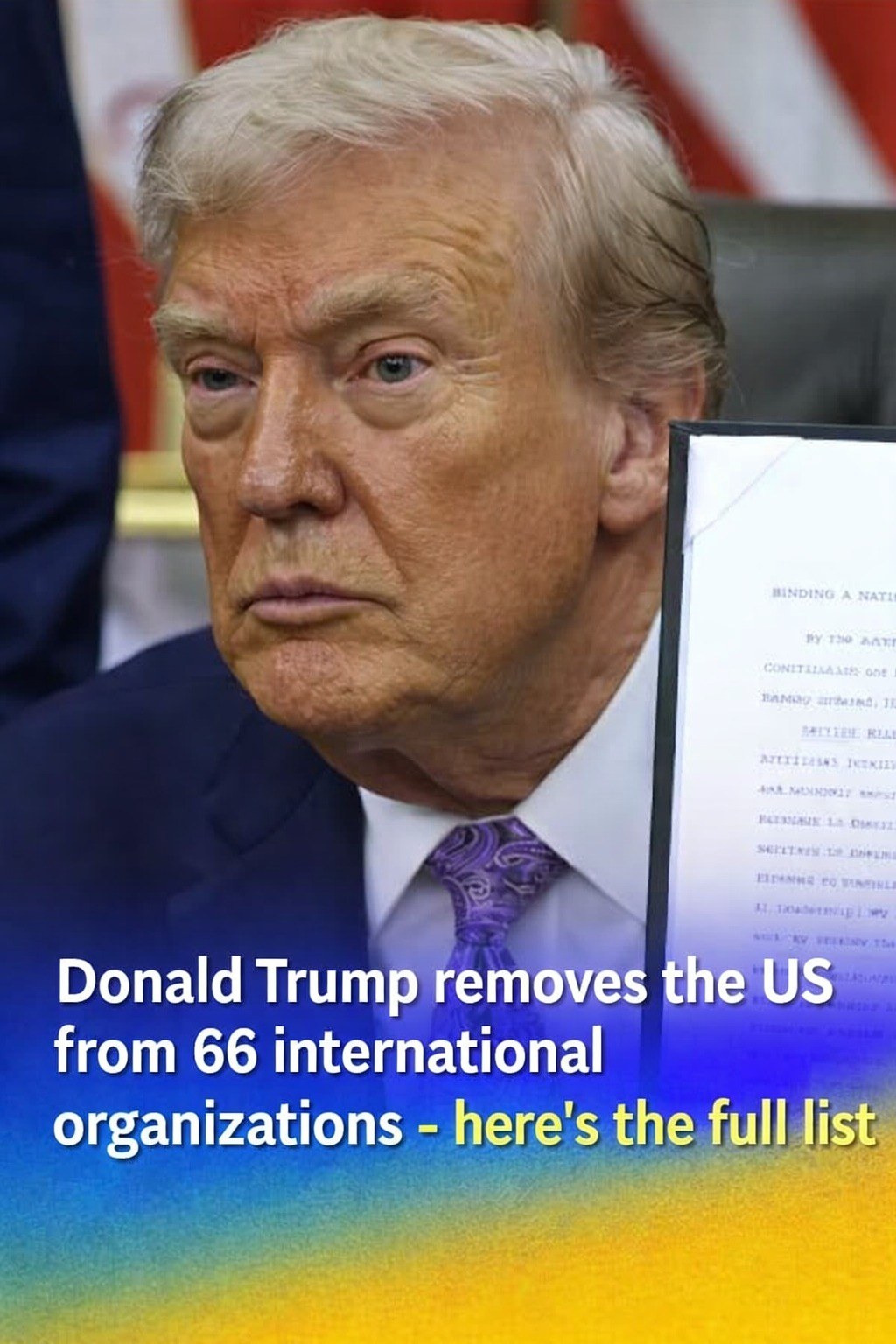
In a move that serves as a definitive cornerstone for the “America First” doctrine, President Donald Trump has announced a sweeping and unprecedented withdrawal from dozens of international and United Nations-affiliated organizations. The decision, outlined in an official White House memorandum, marks a profound recalibration of the United States’ role on the world stage, signaling a pivot toward absolute national sovereignty and a selective, transactional approach to global governance. According to the administration’s roadmap, the United States intends to sever ties with 35 non-UN international organizations and 31 distinct UN entities. This strategy emphasizes a redirection of focus toward domestic priorities, reflecting a deep-seated skepticism toward multilateral frameworks that the administration views as bloated, inefficient, or ideologically misaligned with American interests.

The Rationale: Sovereignty and Fiscal Prudence
The White House memorandum explicitly details the motivation behind these withdrawals, citing a “perceived misalignment” between U.S. strategic objectives and the agendas pursued by these global bodies. Administration officials have been blunt in their assessment, characterizing several of the targeted organizations as vehicles for “globalist agendas, radical climate policies, and ideological programs” that run counter to the sovereign interests of the American people.
By retracting resources and attention from these entities, the administration argues that billions in taxpayer funds can be better allocated to internal domestic initiatives. The proposed reallocation targets critical infrastructure development, healthcare improvements, and direct economic support programs for American citizens.
Notable Targets: Gender Equality and Reproductive Health
Among the most prominent organizations facing a total loss of U.S. support are UN Women and the United Nations Population Fund (UNFPA).
-
UN Women: For years, the U.S. has been a primary financier of this body, which was established to advance gender equality and empower women in the political and economic spheres globally.
-
UNFPA: This organization, which manages reproductive health and family planning programs across the globe, has frequently been a flashpoint for ideological debate.
The administration has explicitly linked these funding cuts to concerns over “ideological overreach,” signaling a major policy shift that distances the U.S. from international initiatives focused on gender and reproductive health.
A Pattern of Disengagement
This announcement is not an isolated event but rather the climax of a year defined by substantial foreign policy shifts. Building on the momentum of his first term—which saw the U.S. exit the Paris Climate Agreement and initiate a withdrawal from the World Health Organization (WHO)—the administration has intensified its trajectory of disengagement.
Last year, the U.S. notably abstained from the UN climate summit, an event it had participated in for nearly thirty years. The White House justified the absence as a defensive measure to protect U.S. economic interests and maintain autonomy over national environmental policies, arguing that global mandates often impose heavy obligations on the U.S. without providing tangible benefits to its citizens.
Legal and Multilateral Implications
The memo emphasizes that the process will involve ending participation or funding “to the extent permitted by law.” This is a critical distinction; because certain U.S. commitments are governed by formal treaties or specific congressional appropriations, the executive branch cannot terminate them via unilateral decree. Nevertheless, officials maintain that the majority of these changes are legally permissible under the current executive mandate.
The scope of the withdrawal extends far beyond climate and health, reaching into:
-
Trade and Economics: Affecting bodies that coordinate multinational trade agreements and facilitate development financing. The administration asserts that by exiting these frameworks, the U.S. can prioritize bilateral agreements that offer greater domestic economic flexibility.
-
Security and Environment: Agencies linked to carbon reduction, arms monitoring, and peacebuilding will see a sharp decline in U.S. involvement.
A Symbolic Shift in American Leadership
For decades, the United States has operated as the world’s leading donor and advocate for humanitarian crisis response, health emergencies, and systemic development. This withdrawal represents more than just a fiscal adjustment; it is a symbolic end to an era of American-led multilateralism.
The Debate: Influence vs. Independence
-
Critics argue that a total retreat risks ceding American influence to rival nations, thereby reducing the U.S.’s ability to steer international standards, trade regulations, and humanitarian initiatives in directions that favor American security.
-
Proponents contend that this is a strategic assertion of independence, claiming that U.S. sovereignty and taxpayer accountability must take precedence over the maintenance of globalist institutions that may not share American values.
In the realms of trade and economic oversight, the administration frames the move as a way to reduce expenditures on “inefficient” organizations. However, economic analysts caution that a lack of participation in bodies that monitor supply chains, trade tariffs, and export regulations could hinder the ability of American businesses to navigate global market disruptions.
As the administration moves forward with this massive deconstruction of international ties, the global community is left to contemplate a world where the United States is no longer a central pillar of its multilateral institutions, but a sovereign actor operating strictly on its own terms.
In the decade I’ve spent covering the tectonic shifts of American foreign policy, I have rarely seen a maneuver as structurally disruptive as the one we are witnessing now. This is not merely a policy adjustment; it is a fundamental uncoupling of the United States from the post-WWII multilateral order.
By withdrawing from over 60 international organizations, the administration is moving past rhetoric and into a hard-coded reality of “America First.” Here is an investigative look at the fallout and the strategic logic driving this unprecedented retreat.
The Strategy of Bilateralism
The administration’s central argument is one of agility. Supporters contend that by disengaging from sprawling multilateral bodies, the U.S. regains the “flexibility” to negotiate bilateral agreements—one-on-one deals tailored strictly to national interests. The memo suggests that these international forums have become slow, bureaucratic, and politically hijacked by the agendas of other nations.
This pivot reflects a deep-seated belief that multinational compromise is inherently a net loss for American sovereignty. It prioritizes domestic economic growth and job creation over the diplomatic niceties of global consensus.
Climate and Environmental Deconstruction
The most visible—and internationally volatile—aspect of this policy is the retreat from climate-focused UN bodies.
-
The Impact: For decades, agencies monitoring greenhouse gas emissions and coordinating carbon reduction have relied on the U.S. as a primary financier and technical engine.
-
The Rationale: The administration asserts that domestic environmental policy should be autonomous. It views international agreements as “shackles” that limit energy production and industrial competitiveness.
-
The Risk: Critics, including major environmental advocacy groups, warn that this creates a vacuum in leadership. Without U.S. participation, global carbon targets may become unreachable, and the coordinated research necessary to combat escalating disasters could stall.
The Humanitarian and Development Void
The withdrawal hits the “front lines” of global stability. Agencies dedicated to human rights, poverty, and refugee assistance are facing a sudden, massive shortfall in their operational budgets.
-
Key Agencies: The UNHCR (Refugees) and the UNDP (Development) rely heavily on U.S. contributions to manage conflict zones and humanitarian emergencies.
-
The Counter-Argument: Administration officials argue that funds “saved” from these organizations will be redirected to domestic needs or used for targeted, high-efficiency bilateral aid. They are betting that they can achieve better results through selective partnerships rather than broad-based funding.
-
The Expert Consensus: Many humanitarian experts caution that epidemics, disaster responses, and refugee crises are inherently global problems that cannot be solved through a purely bilateral lens.
Diplomatic Fallout: A Vacuum of Power
The reaction from traditional U.S. allies in Europe and Asia has been a mix of alarm and strategic calculation. Diplomats warn that by leaving the table, the U.S. is not just saving money; it is ceding influence.
“A seat at the table that remains empty is a seat that will be filled by another major power,” noted one European diplomat.
This raises the risk that international standards—from trade rules to human rights—will increasingly be shaped by nations whose interests are diametrically opposed to those of the United States.
Historical Context: Scale vs. Precedent
While the U.S. has occasionally suspended participation in specific UN agencies in the past, what makes this moment different is its breadth. Spanning more than 60 organizations across trade, energy, and human rights, this is the first time a nationalist, “America First” agenda has been applied as a comprehensive across-the-board mandate.
Looking Ahead: Long-Term Consequences
As the policy moves toward implementation, we face a series of critical “known unknowns”:
-
Global Norms: How will international trade and human rights standards shift without American leverage?
-
Alternative Funding: Can organizations like the UNFCCC survive without U.S. capital, or will other nations (like China) step in to fund and lead them?
-
Domestic Impact: Will the reallocated funds truly spark the domestic growth the administration promises?
Ultimately, this is a high-stakes gamble on the power of independence over the security of cooperation. The coming years will reveal whether the U.S. can effectively navigate an interconnected world while standing in deliberate isolation.