Border Enforcement Agent Linked to Minneapolis Incident Is Facing Threats, According to U.S. Official
The snowy streets of south Minneapolis have become the epicenter of a fierce national debate following the January 7 fatal shooting of 37-year-old Renee Nicole Good by an Immigration and Customs Enforcement (ICE) agent. The incident, which occurred during a massive federal enforcement surge, has not only ignited protests across the country but has exposed a profound rift between state leaders and the federal government over the limits of lethal force and the transparency of the resulting investigation. Renee Good—a poet, mother, and U.S. citizen described by local officials as a “legal observer”—was killed on Portland Avenue as agents conducted “Operation Metro Surge.” While the Trump administration has characterized the shooting as a justified act of self-defense against “domestic terrorism,” emerging video evidence and witness accounts have fueled a different narrative, suggesting the vehicle was moving away from the agent when the shots were fired.

Seconds of Chaos on Portland Avenue
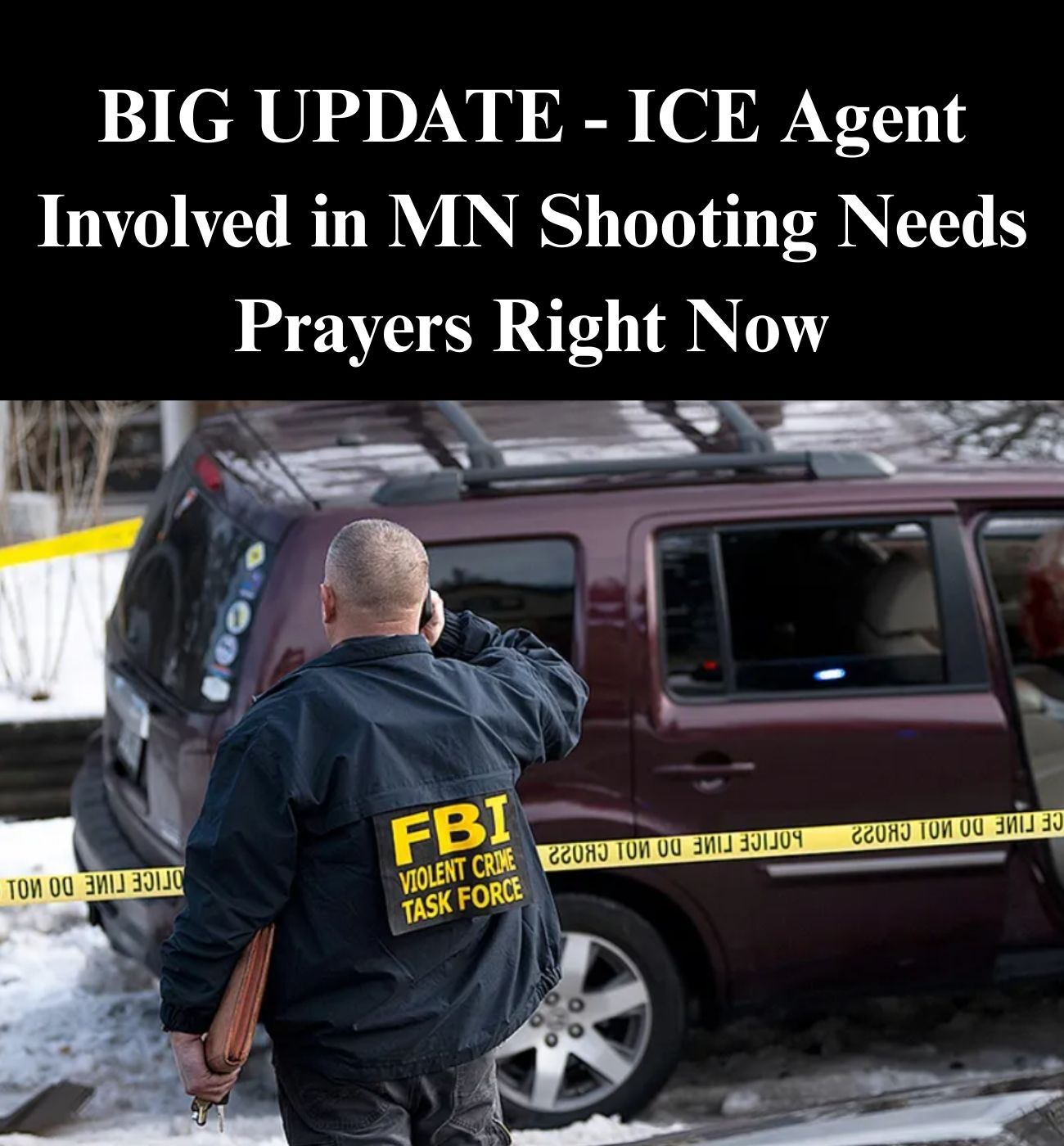
According to witness statements and verified video footage, the encounter began around 9:30 a.m. when federal agents blocked Good’s maroon Honda Pilot. As agents surrounded the vehicle and attempted to open the driver’s side door, Good put the SUV in reverse and then into drive.
The agent, identified through court records as Jonathan Ross, was positioned at the front-left of the vehicle. As Good began to pull forward—turning her wheels away from Ross—he discharged his firearm three times. The shots struck Good at close range; her vehicle subsequently careened down the street, crashing into parked cars. She was later pronounced dead at Hennepin County Medical Center.
A History of Trauma: The Agent Behind the Trigger
The identity of the shooter, Jonathan Ross, carries significant weight in this investigation. A veteran of the Iraq War and a 10-year veteran of ICE’s Special Response Team, Ross is no stranger to the dangers of the job.
Crucially, just six months prior, Ross was seriously injured in Bloomington, Minnesota, when he was dragged 300 feet by a fleeing suspect’s vehicle during an attempted arrest. Supporters, including Vice President JD Vance, argue that this prior trauma likely informed his split-second decision-making. “You think maybe he’s a little bit sensitive about somebody ramming him?” Vance asked during a White House briefing, defending the agent’s actions as a reflexive response to a perceived repeat of a near-fatal event.
Protests, Pepper Balls, and Political Fire
The reaction in Minneapolis was swift and visceral. What began as peaceful vigils at the site of the shooting escalated into tense standoffs. On Friday night, police issued 29 citations after demonstrators allegedly threw rocks and ice at officers. By Sunday, federal law enforcement deployed tear gas and pepper balls to disperse crowds gathered at the Whipple Federal Building.
The political fallout has been equally explosive:
-
The Administration: Secretary of Homeland Security Kristi Noem and President Trump have doubled down, claiming Good “ran over” an officer and labeling her an “agitator.”
-
Minnesota Leaders: Governor Tim Walz and Mayor Jacob Frey have called these claims “propaganda” and “garbage.” Frey, who has viewed several video angles, insisted the federal narrative is “bulls**t.”
-
Congressional Pushback: Representative Ilhan Omar and Senator Tina Smith have accused the administration of a “cover-up,” specifically citing the federal government’s decision to block state investigators from the probe.
The Investigation: A Lack of Access
One of the most contentious aspects of the aftermath is the jurisdictional battle over the investigation. Initially, the Minnesota Bureau of Criminal Apprehension (BCA) was slated to lead a joint probe with the FBI. However, the Department of Justice abruptly reversed course, granting the FBI exclusive control and denying state investigators access to scene evidence, witness interviews, and the weapon used in the shooting.
This “federal-only” approach has drawn sharp rebukes from Hennepin County Attorney Mary Moriarty and Attorney General Keith Ellison, who have urged the public to bypass federal channels and send any private video evidence directly to state authorities.
A Community in Mourning
Amid the high-level political posturing, the family of Renee Good is left to navigate a sudden and public tragedy. Her mother, Donna Ganger, described her as a “deeply compassionate” person who was simply terrified in the moment of the encounter. Good’s wife, Becca, released a statement emphasizing that while the agents had guns, the neighbors—seeking to protect their community from what they termed “terrorization” by ICE—only had whistles.
As Minneapolis remains under the watch of hundreds of additional federal agents dispatched by the DHS, the city waits to see if the exclusive FBI investigation will provide the accountability that local leaders and mourning residents are demanding.
As the investigation into the fatal January 7 shooting of Renee Nicole Good continues to fracture the national conscience, the debate has shifted from the snowy streets of Portland Avenue to the ethics of high-stakes philanthropy. Organizations supporting law enforcement have doubled down on their defense of ICE Agent Jonathan Ross, emphasizing the inherent, often invisible perils of federal enforcement. They argue that Ross—a veteran machine gunner and SWAT-trained tactician—was forced to make a split-second decision in a environment of extreme non-compliance, a scenario that can yield tragedy even when every federal protocol is followed to the letter.
On social media, this defense has sparked a firestorm. Hashtags both condemning and lionizing the agent have trended for days, turning the Minneapolis incident into a digital proxy war. For many, the case represents the ultimate stress test for the American legal system: a collision between officer safety, public accountability, and the civil rights of an American citizen who told her shooter “I’m not mad at you” just seconds before her death.
The Billionaire’s Intervention
The discourse reached a new level of complexity when billionaire investor Bill Ackman publicly confirmed a $10,000 donation to a GoFundMe campaign for Agent Ross. The fundraiser, which has since surpassed $630,000, was established to assist Ross with legal defense fees and the costs of relocating his family following a wave of doxxing and death threats.
Ackman’s involvement was not merely financial; it was a deliberate philosophical statement. The hedge fund titan explained that his contribution was intended to uphold the fundamental principle of due process, rather than to serve as a political endorsement of the shooting itself.
“I am a big believer in our legal principle that one is innocent until proven guilty,” Ackman wrote on X. He characterized the event as a “tragedy on all sides,” noting that he had also attempted to donate to the family of Renee Good, only to find their $1.5 million fundraiser had already closed after meeting its goal.
The Polarization of Philanthropy
Despite Ackman’s calls for “fairness and impartiality,” the public reaction has been split down the middle.
-
The Supporters: Praise Ackman for providing a financial shield against what they term “mob justice,” arguing that wealth can and should be used to ensure that a federal agent isn’t bankrupted by a politically charged investigation.
-
The Critics: Contend that a billionaire’s intervention carries a symbolic weight that distorts the search for justice. They argue that by funding an agent who fired at a woman while she was maneuvering her vehicle away from him—as bystander footage suggests—Ackman is signaling approval of aggressive enforcement tactics that disproportionately affect marginalized communities.
This case marks a growing trend in American civic life where private citizens with substantial resources can exert immediate influence over the narrative of a legal case. It raises a haunting question for 2026: When justice is being litigated in the court of public opinion, how much does a billionaire’s thumb on the scale actually weigh?
A System Under the Microscope
Federal investigators from the FBI and DHS are currently leading the review, though they have notably denied Minnesota state authorities access to key evidence—a move Governor Tim Walz has labeled “propaganda.”
Legal analysts suggest the investigation will hinge on “the reasonableness of fear.” Ross’s defense will likely lean on his prior trauma; just six months ago, he was dragged 300 feet by a fleeing suspect, an experience Vice President JD Vance suggested made him “sensitive” to being struck by a vehicle. Conversely, state investigators and civil rights attorneys point to video evidence showing Ross moving away from the front of Good’s SUV as he opened fire, questioning if the threat was truly imminent.
The Human and Political Toll
Beyond the legalities, the incident has highlighted the severe psychological strain on the agents involved. DHS reports that Ross and his family have been moved into protective custody following doxxing incidents. Meanwhile, the Minneapolis community remains in a state of high alert as hundreds of additional federal agents flow into the city to maintain the Trump administration’s “mass deportation” initiative.
As the political divide deepens—with Republicans framing the shooting as self-defense and Democrats calling it an “execution”—the Minneapolis case serves as a grim case study in modern American governance. It is a reminder that in a media-saturated society, a single event on a residential street can ripple through the halls of power, reshaped by social media, funded by billionaires, and left to be resolved by a justice system that is itself under intense scrutiny.