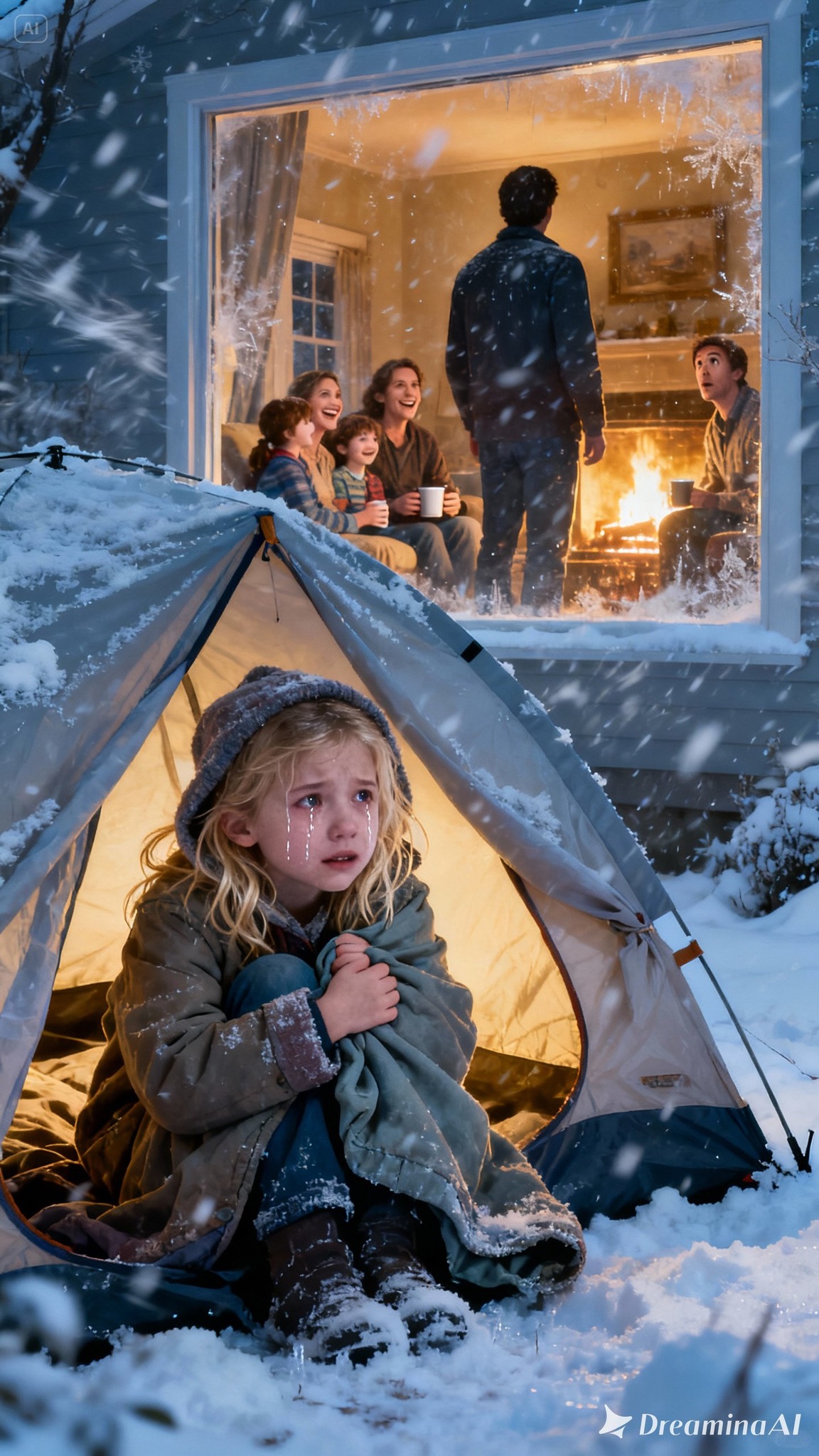
What DCFS did next destroyed their access to every grandchild!
The invitation sounded harmless, almost nostalgic, but the pressure underneath it was unmistakable.

“My parents really want us there for Thanksgiving,” my husband, Mark, said, scrolling on his phone like he wasn’t asking me to swallow a knot of dread. “It’s been years since everyone’s been together at the lake house.”
I stood at the sink, rinsing a plate that didn’t need rinsing, buying myself a moment. The lake house in northern Wisconsin was beautiful in the way postcards are beautiful—tall pines, cold water, clean air. But inside, it was a different climate entirely. One ruled by quiet hierarchies, favoritism, and cruelty wrapped in politeness.
“Mark,” I said carefully, “you know how your parents treat Lily.”
Lily was eight. Quiet, observant, endlessly creative. She drew instead of roughhousing, listened instead of shouting. To Carol and Richard Hayes, that made her an inconvenience. They adored their other grandchildren—the loud, athletic boys who fit neatly into their idea of what children should be. Lily didn’t.
“It’ll be different this time,” Mark said, finally meeting my eyes. “They’re trying. Please. For me.”
I saw it then: not the man I married, but the boy he used to be. Still desperate for approval. Still hoping this time would be different.
I exhaled. “If Lily is uncomfortable, we leave. Immediately.”
“Deal,” he said.
We arrived Wednesday evening. The temperature dropped with every mile north. By the time we turned onto the gravel driveway, it was hovering just above freezing. The house glowed warmly from the outside, but the moment we stepped in, Lily disappeared into the background.
Carol hugged Mark tightly, gave me a perfunctory peck, and didn’t acknowledge Lily at all.
“Dinner in an hour!” she announced cheerfully. “Go get settled.”
“Where?” I asked, glancing at the already crowded house.
“Oh, we’ll manage,” she waved off. “We always do.”
Dinner was loud and chaotic. Richard dominated the conversation with jokes that crossed into insults. The boys shouted, wrestled, spilled drinks. Lily sat beside me, quiet, pushing food around her plate.
After dessert, Carol clapped her hands. “Sleeping arrangements!”
She assigned rooms quickly. Master bedroom for her and Richard. Guest room for David and Amanda. Loft pull-out for Mark and me.
“And the kids will figure something out,” she added breezily.
I assumed sleeping bags. Air mattresses. The living room floor.
I was wrong.
Around ten, I went to the bathroom. When I came back, the living room was empty.
“Where’s Lily?” I asked Mark.
“Oh, Mom put the kids to bed,” he said distractedly.
I checked the loft. Empty. I went to the guest room. All three boys were sprawled comfortably inside, watching a movie.
“Where’s Lily?” I asked.
The oldest shrugged. “Grandma said there wasn’t room.”
“So where is she?”
“Outside. In the tent.”
Something in my chest went cold and hollow.
I didn’t walk. I ran.
Carol looked up from her knitting as I burst into the living room.
“Where is my daughter?” I demanded.
She barely looked concerned. “Oh, she’s fine. The boys needed the room. We set up a tent for her. She likes nature, doesn’t she?”
“It’s thirty-four degrees outside!” I shouted.
I yanked open the back door. The wind slammed into me, sharp and wet. Near the dock, a small pop-up tent shook violently, its thin fabric snapping in the wind.
I unzipped it.
Lily was curled into herself, teeth chattering uncontrollably, clutching a flimsy throw blanket. Her lips were bluish. Her skin was ice cold.
“Mommy?” she whispered.
I scooped her up and ran.
Inside, the warmth felt obscene. Mark stood frozen, staring.
“They put her outside,” I said, my voice shaking with fury. “In freezing weather.”
Carol stood. “You’re being dramatic. It’s camping. We gave her a blanket.”
“You gave the boys beds,” I said. “And you put my daughter in a freezer.”
Mark looked at Lily—really looked at her—and something finally cracked.
“I’m taking her to the hospital,” I said. “You can come with me, or you can stay.”
I didn’t wait for his answer.
The drive felt endless. Lily grew quieter. Her head lolled against my chest.
At the ER, the doctor didn’t sugarcoat it. “She’s hypothermic.”
They warmed her slowly. IV fluids. Heated blankets. I sat beside her, holding her hand, watching color creep back into her cheeks.
My phone buzzed. Carol.
You’re overreacting.
She wasn’t in danger.
You’re ruining Thanksgiving.
Bring her back.
I didn’t reply.
The doctor returned. “How did this happen?”
I handed him my phone.
He read the messages. His expression changed.
“This is neglect,” he said flatly. “I’m required to report this.”
Mark arrived an hour later, pale and shaken. He didn’t argue. He didn’t defend them. He just held Lily’s other hand.
DCFS got involved quickly. Statements were taken. Photos documented. Messages reviewed.
Carol and Richard were stunned. Furious. They called nonstop, demanding explanations, apologies, retractions.
Instead, they got a notice.
Pending investigation, they were barred from unsupervised contact with any grandchildren.
All of them.
David was furious—at them. Amanda refused to bring the boys over anymore. Other relatives backed away fast.
Carol called me screaming. Richard threatened lawyers. None of it mattered.
They had crossed a line that couldn’t be smoothed over with charm or denial.
Lily recovered fully. But she never slept in a tent again.
And my husband finally learned the difference between keeping the peace and protecting his child.
As for Carol and Richard, they still insist it was a misunderstanding.
But misunderstandings don’t involve shivering children in the dark.
And some doors, once closed, don’t reopen.