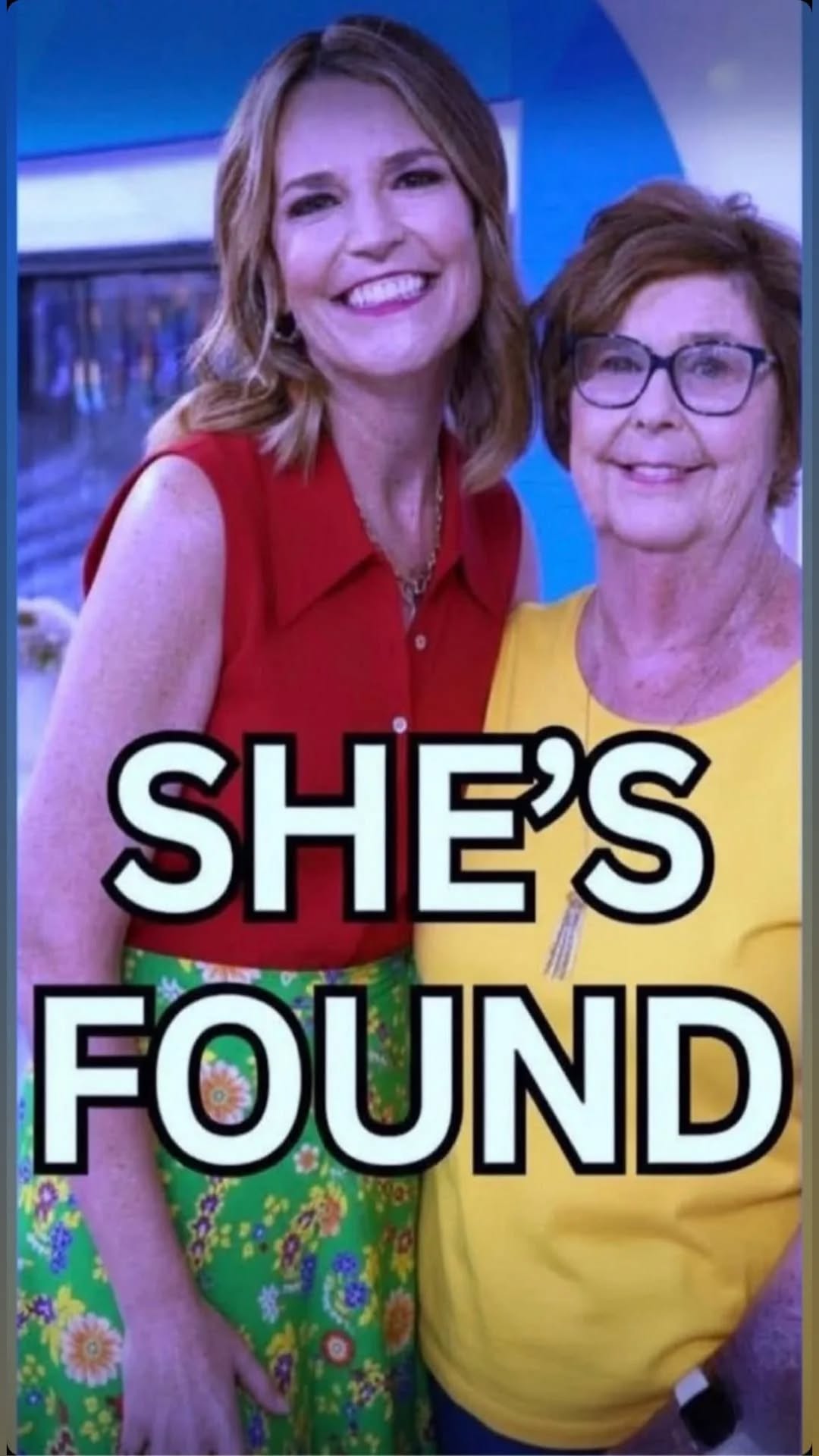
Developing Story: Online Claims Surrounding the Alleged Disappearance of Savannah Guthrie’s Mother
In recent days, social media platforms have been flooded with alarming posts carrying dramatic headlines about the supposed disappearance of Nancy Guthrie, described in viral content as the 84-year-old mother of Savannah Guthrie. The posts use emotionally charged language such as “horrifying update” and “dark turn,” drawing immediate attention and prompting widespread concern among readers.

However, as with many fast-moving stories circulating online, the situation requires careful examination, thoughtful analysis, and a strong commitment to verified information. When claims involve real people—especially public figures and their families—the responsibility to separate fact from speculation becomes even more critical.
This article explores what has been claimed, how such narratives spread, the role of digital devices in modern investigations, and why caution is essential before accepting viral reports as truth.
The Claims Circulating Online
According to widely shared posts, Nancy Guthrie was allegedly last seen on a Saturday evening at approximately 9:45 p.m. Concern reportedly arose when she failed to attend church the following morning, prompting family members to check on her well-being.
The viral reports further claim that investigators examined data from her medical devices, including her pacemaker and an Apple Watch, and discovered that the two devices stopped syncing around 2 a.m. Sunday. Because Bluetooth connections generally operate within a limited physical range, some online commentators interpreted this as a sign she may have been separated from her watch during the night.
Adding to the sense of alarm, the posts allege that the watch was later found inside her home. They also reference supposed signs of forced entry and the discovery of blood at the residence—details that have fueled speculation of a possible abduction.
Additionally, certain versions of the story cite statements allegedly attributed to Sheriff Chris Nanos, warning that Nancy requires daily medication and could be in serious danger without it. Former FBI agent Nicole Parker is also mentioned in some posts, suggesting that if the claims were accurate, the circumstances might indicate involvement by someone familiar with the home rather than a random intruder.
These elements combine to form a dramatic narrative: late-night medical device disruption, physical evidence at the scene, potential health vulnerability, and the involvement of a nationally recognized television personality’s family.
But there is a crucial issue: as of this writing, there has been no confirmed reporting from major national outlets verifying these claims.
The Importance of Verification
When a story spreads rapidly across platforms such as Facebook, X (formerly Twitter), TikTok, and Instagram, it can feel authoritative simply because of its visibility. Viral momentum often creates the illusion of credibility. However, visibility and verification are not the same thing.
High-profile disappearances typically receive immediate coverage from established media organizations. Given the prominence of Savannah Guthrie as co-anchor of NBC’s morning program, a confirmed disappearance involving her mother would likely generate consistent and widespread reporting from multiple credible news sources.
The absence of such coverage raises important questions.
In the digital age, fabricated or exaggerated stories frequently use the names of well-known public figures to gain traction. Emotional headlines are particularly effective at encouraging clicks, shares, and engagement. Words like “horrifying,” “dark turn,” and “missing” are designed to trigger urgency and emotional reaction before readers pause to verify authenticity.
This pattern is not new. Over the past several years, numerous viral posts have falsely reported deaths, arrests, or family tragedies involving celebrities—only for those claims to later be debunked.
Medical Devices and Modern Investigations
One aspect of the viral narrative that captured attention is the reference to medical technology. The story centers on data from a pacemaker and smartwatch connection, suggesting that device synchronization patterns can provide clues about movement or separation.
In reality, wearable technology and implantable medical devices have increasingly played roles in criminal investigations. Smartwatches can track heart rate, movement, GPS data, and timestamps. Pacemakers and other cardiac devices sometimes store information about heart rhythms or irregular events.
However, interpreting such data is complex. Bluetooth disconnections can occur for numerous benign reasons, including battery issues, device updates, signal interference, or simple distance beyond range within a home.
Without official confirmation from investigators and technical experts, it is impossible to conclude what such a disruption would signify.
It is also important to understand that investigators rarely release detailed device data early in a case. Law enforcement agencies typically withhold specific forensic findings to preserve the integrity of an investigation.
When highly technical details appear immediately in viral posts, that alone can be a reason to proceed cautiously.
The Human Impact of Viral Misinformation
Stories involving elderly individuals are especially sensitive. The mention of an 84-year-old woman allegedly requiring daily medication adds urgency and emotional weight to the narrative. Readers naturally feel concern for vulnerable individuals.
However, when such stories are unverified, the consequences extend beyond misinformation.
False reports can:
-
Cause emotional distress to families and friends.
-
Damage reputations.
-
Divert attention from legitimate missing-person cases.
-
Undermine public trust in real investigations.
Public figures, including journalists like Savannah Guthrie, often face a unique challenge: while their professional lives are highly visible, their family members are private citizens. Viral claims involving relatives can blur that boundary and create unnecessary intrusion.
Why Celebrity-Linked Stories Spread So Quickly
There are several reasons why stories tied to well-known figures tend to spread rapidly:
1. Familiar Names Drive Engagement
Readers recognize the celebrity and feel an immediate connection.
2. Emotional Headlines Increase Click Rates
Sensational language encourages impulsive sharing.
3. Algorithm Amplification
Social media algorithms often prioritize content that generates strong reactions.
4. Limited Initial Fact-Checking
When posts originate from unofficial blogs or pages, they may not undergo editorial review before publication.
This combination creates an environment where emotionally powerful but unverified stories can circulate widely before corrections—or silence—catch up.
Public Figures and Privacy Boundaries
The situation also highlights broader questions about privacy in the digital era.
Savannah Guthrie is a public-facing journalist who reports on national and global events. Yet her family members do not hold the same public role. When viral content involves relatives of public figures, it challenges the distinction between professional visibility and personal privacy.
Ethical journalism emphasizes accuracy, respect, and the avoidance of harm. Publishing unverified claims—especially about alleged crimes—can conflict with those principles.
The Role of Responsible Reporting
In legitimate missing-person cases, official updates typically come from:
-
Local law enforcement agencies
-
Confirmed press conferences
-
Verified news organizations
-
Family statements released through trusted channels
When none of these sources have confirmed an event, caution is essential.
Responsible readers can take several steps:
-
Check multiple reputable news outlets.
-
Look for official statements.
-
Avoid sharing emotionally charged headlines without verification.
-
Be wary of posts that rely heavily on dramatic phrasing without specific sourcing.
How Algorithms Shape Attention
Another important dimension of this story is attention economics. Online platforms reward engagement. Content that provokes strong reactions—fear, anger, shock—tends to be shared more frequently.
As a result, sensational stories often outperform measured, fact-based updates.
Even if a story is later disproven, the initial wave of engagement may already have reached millions. Corrections rarely travel as far as the original claim.
This dynamic creates a powerful incentive structure for click-driven content.
The Psychological Effect on Readers
Emotionally intense headlines can create what psychologists call “cognitive urgency”—a sense that immediate action (such as sharing) is necessary.
When readers encounter phrases like “dark turn” or “horrifying update,” the brain interprets the situation as urgent and potentially threatening. This can reduce critical thinking and increase impulsive behavior.
Recognizing this pattern is one of the most effective ways to counter misinformation.
A Broader Conversation About Digital Literacy
The alleged case also fits into a larger conversation about digital literacy.
In today’s information ecosystem:
-
Anyone can publish content instantly.
-
Headlines often prioritize emotion over nuance.
-
Verification requires intentional effort.
Developing strong digital literacy skills helps individuals navigate complex online narratives more effectively.
Key questions to ask include:
-
Who is the source?
-
Is the information corroborated?
-
Are there direct quotes from officials?
-
Are credible media outlets reporting the same facts?
If the answer to these questions is unclear, skepticism is healthy.
Why It Matters
Even if a viral story turns out to be fabricated or exaggerated, the ripple effects can linger. Search engines may continue to display the headline long after interest fades. Individuals associated with the claim may face repeated questions or confusion.
Accuracy matters—not just for truth’s sake, but for the well-being of real people.
What Is Confirmed?
At the time of writing:
-
There is no confirmed reporting from major national news organizations verifying the alleged disappearance.
-
There has been no widely documented public statement from Savannah Guthrie confirming the claims.
-
No official law enforcement press release widely recognized by established media outlets has substantiated the viral details.
Without such confirmation, the story remains unverified.
Moving Forward Responsibly
When confronted with emotionally charged stories involving recognizable names, the best course of action is patience. Verified information typically emerges through official channels.
If future updates are confirmed by credible sources, those updates should be evaluated carefully and shared responsibly.
Until then, caution is not only prudent—it is respectful.
Conclusion
The viral claims surrounding the alleged disappearance of Nancy Guthrie demonstrate how quickly a dramatic narrative can take shape in the digital age. By combining references to medical technology, late-night timing, potential physical evidence, and the name of a well-known television journalist, the posts created a compelling and emotionally charged storyline.
Yet compelling does not mean confirmed.
In an era where attention moves rapidly and algorithms amplify emotion, readers play an essential role in slowing the cycle of misinformation. Verification, patience, and critical thinking remain the strongest tools for navigating uncertain stories.
If official updates emerge, they should come from authorized law enforcement agencies or established news organizations. Until then, the situation should be approached with measured skepticism and respect for the individuals involved.
The modern media landscape ensures that visibility can happen instantly—but responsibility must move just as quickly.