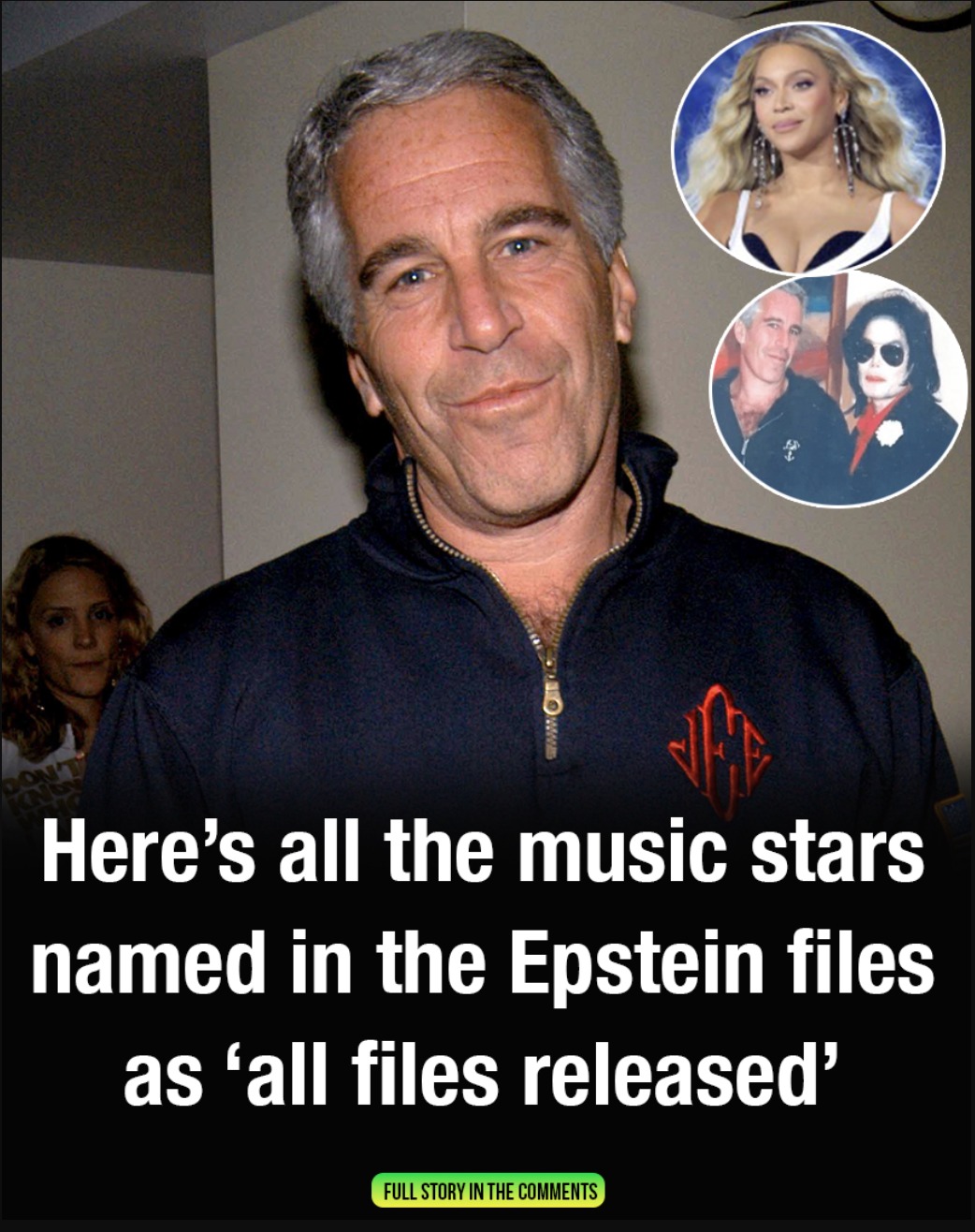
Epstein Files: Music Industry Names Mentioned in the Documents
A massive release of documents tied to the late financier Jeffrey Epstein has exploded across social media, sending shockwaves through politics, entertainment, and pop culture. The newly published files include hundreds of names—among them several of the world’s most famous music stars.

What Was Released—and Why It Matters
The latest document drop followed pressure on federal agencies to release previously sealed materials connected to Epstein and his network. The files span years of correspondence and records, revealing how deeply Epstein’s name appeared across elite social and professional circles. The sheer volume has fueled online speculation, even as officials urge the public not to jump to conclusions.
Music Icons Mentioned in the Files
Among the names referenced are several globally recognized artists from different eras and genres. Again, these mentions range from press clippings to emails about concerts and events—not evidence of misconduct. The musicians cited in the documents include:
- The Beatles
- Barbra Streisand
- Beyoncé
- Billy Joel
- Bon Jovi
- Bono
- Bruce Springsteen
- Freddie Mercury
- David Bowie
- Cher
- Courtney Love
- Creedence Clearwater Revival
- Eric Clapton
- Dolly Parton
- Elton John
- Elvis Costello
- Elvis Presley
- Gregg Allman
- Janis Joplin
- Jay-Z
- Keith Richards
- Kurt Cobain
- Mick Jagger
- Michael Jackson
- Paul McCartney
- Rod Stewart
- Roger Waters
- Steve Winwood
- The Who
In many cases, names appear in mundane contexts—such as emails about concert tickets, benefit events, industry news, or archived media articles Epstein saved. A few references include photos taken at public fundraisers or celebrity-packed events where many famous people were present.
Why This Sparked Such Intense Reaction
The public response has been explosive because the files blur the line between proximity and proof. In the age of viral headlines, names alone can fuel narratives—even when there’s no evidence of wrongdoing. Legal experts and advocates for Epstein’s victims have warned that careless sharing of these documents can retraumatize survivors and unfairly damage reputations.
Documents Removed After Victim Concerns
Following the release, federal authorities pulled thousands of documents from public access after lawyers for survivors said some materials risked exposing victim identities. Officials stated the files would be reviewed and corrected to prevent further harm.
The Bigger Picture
This moment underscores how fragile trust is in the digital age. Massive data dumps create transparency—but they also create confusion when context gets lost. The responsible takeaway: read carefully, avoid assumptions, and remember that being mentioned in records is not the same as being implicated in crimes.
What do you think—do large document releases help the public understand the truth, or do they create more noise than clarity? Drop your thoughts below and join the conversation.