What It Means If You See a Yellow Ladybug: Symbolism, Science, and Natural Significance
Ladybugs are among the most recognizable and widely appreciated insects in the world. Their rounded bodies, delicate wings, and distinctive spotted patterns have made them symbols of luck and positivity across cultures. While most people picture the classic red ladybug with black spots, nature offers a surprising range of variations—including yellow ones.

If you’ve ever spotted a yellow ladybug and wondered whether it carries special meaning, you are not alone. The sight of a differently colored insect can feel noteworthy. However, understanding what a yellow ladybug represents requires exploring both symbolism and science.
A yellow ladybug is not a mystical anomaly. It is a natural variation within the diverse and fascinating insect family known as Coccinellidae. At the same time, cultural traditions and psychological interpretations have assigned meaning to unexpected encounters with these small creatures.
This article explores both perspectives—what yellow ladybugs symbolize in various cultural contexts and what science tells us about their biology and ecological importance.
The Symbolic Meaning of Yellow Ladybugs
A Universal Symbol of Positivity
Ladybugs in general are often associated with good fortune, protection, and happiness. In many parts of the world, seeing a ladybug is considered a positive sign.
When the insect appears in yellow rather than red, people sometimes interpret the color as carrying additional meaning. Yellow is widely associated with:
-
Joy
-
Optimism
-
Warmth
-
Clarity
-
Renewal
Because yellow stands out vividly in natural settings, spotting a yellow ladybug can feel like a special moment—almost like a small signal to pause and notice something unusual.
Cultural Interpretations
Across different traditions, insects have often been viewed symbolically. While not all cultures specifically reference yellow ladybugs, the broader symbolism of yellow and ladybugs tends to merge in meaningful ways.
In color psychology, yellow is frequently linked to sunlight and energy. It can symbolize intellectual growth, new beginnings, or emotional clarity. When paired with the already positive symbolism of ladybugs, the combined meaning is often interpreted as:
-
A reminder to stay hopeful
-
Encouragement to embrace change
-
Recognition of small joys
-
A prompt to remain attentive to life’s details
These interpretations are cultural and personal rather than scientific, but they reflect how humans naturally assign meaning to unexpected experiences.
The Psychology Behind “Meaningful” Encounters
When something unusual happens—such as spotting a yellow ladybug instead of the common red variety—our brains take notice.
Psychologically, unexpected events trigger heightened awareness. The brain flags novelty as important, making the moment feel significant. That flash of yellow against green leaves or neutral surfaces stands out sharply, drawing attention.
This cognitive process can make the encounter feel symbolic, even though it is simply a natural variation. Humans are pattern-seeking by nature. We look for connections and assign meaning to unusual occurrences.
This doesn’t diminish the experience. Instead, it highlights how closely perception and interpretation are linked.
The Science of Yellow Ladybugs
While symbolism adds one layer of understanding, biology provides another.
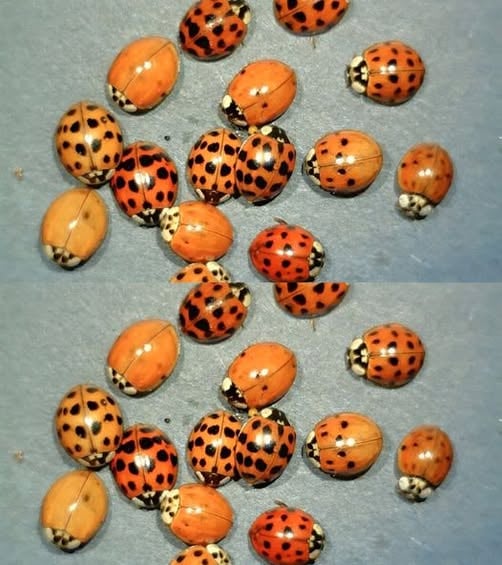
Yellow ladybugs are not rare anomalies. They are simply different species or color morphs within the Coccinellidae family. There are over 6,000 known species of ladybugs worldwide, and they come in a wide variety of colors, including:
-
Red
-
Orange
-
Yellow
-
Black
-
Pink
Color variations occur for several reasons, including genetics and environmental adaptation.
Why Are Some Ladybugs Yellow?
Genetic Variation
Like many organisms, ladybugs exhibit genetic diversity. Pigmentation differences can result in variations in shell color. Some species are naturally yellow throughout their life cycle.
Species Differences
Not all ladybugs are the same species. For example, the common red ladybug seen in many gardens differs from several yellow species found in North America, Europe, and Asia.
Some yellow ladybugs belong to species that specialize in feeding on mildew rather than aphids, which influences their habitat preferences and behavior.
Aposematic Coloration
One key scientific explanation for ladybug coloration is aposematic signaling.
Aposematic coloration refers to bright coloring used as a warning signal to predators. Insects with bold colors often produce chemicals that taste unpleasant to birds or other predators.
Bright yellow, like red or orange, signals that the insect may not be a desirable meal. This evolutionary adaptation increases survival by discouraging predation.
The warning coloration is not harmful to humans. It is simply a defensive strategy shaped by natural selection.
Are Yellow Ladybugs Harmful?
A common question is whether yellow ladybugs pose any risk to people, pets, or plants.
In general:
-
They do not sting.
-
They do not transmit diseases.
-
They rarely bite, and if they do, it is mild and defensive.
-
Many species are beneficial to gardens.
Some yellow ladybugs feed on aphids, while others consume fungi such as powdery mildew. In doing so, they help maintain plant health naturally.
This ecological role makes them allies in sustainable gardening.
Beneficial Insects in Your Garden
Ladybugs are widely regarded as beneficial insects. Their appetite for plant pests can reduce the need for chemical treatments.
Yellow ladybugs that feed on mildew play an especially helpful role. Powdery mildew is a common fungal issue affecting garden plants. Having natural predators in your garden ecosystem helps maintain balance.
Encouraging biodiversity in your yard—by planting native species, reducing pesticide use, and providing varied plant structures—can support beneficial insect populations.
Seeing a yellow ladybug may simply mean your garden ecosystem is healthy and functioning well.
Seasonal Behavior and Indoor Sightings
Sometimes ladybugs, including yellow species, appear indoors. This often occurs during cooler months when insects seek warmth and shelter.
While their presence can be surprising, they typically do not cause structural damage or create significant problems. Gently guiding them outside is usually sufficient.
Their indoor appearance is not symbolic of anything beyond seasonal behavior.
Biodiversity and Appreciation
The presence of different ladybug colors is a reminder of biodiversity’s richness. Nature rarely operates in uniform patterns. Variations in color, size, and behavior reflect millions of years of evolutionary adaptation.
Observing a yellow ladybug can serve as a prompt to notice the diversity present in everyday environments. Even familiar insects can surprise us.
Biodiversity contributes to ecosystem resilience. Each species plays a specific role, whether as predator, pollinator, decomposer, or food source for other animals.
Appreciating that complexity fosters environmental awareness.
Why Color Matters in Nature
Color in the natural world serves many functions:
-
Camouflage
-
Warning signals
-
Mate attraction
-
Temperature regulation
In ladybugs, bright coloration primarily serves as a deterrent to predators. This adaptation benefits not only individual insects but the species as a whole.
Understanding this helps reframe what might initially seem symbolic as part of a broader ecological strategy.
Symbolism and Science Can Coexist
It is possible to appreciate both the symbolic and biological aspects of a yellow ladybug encounter.
On one hand, science explains the insect’s coloration and ecological role. On the other, the experience of noticing something unusual can feel meaningful.
Meaning does not have to contradict biology. A moment of pause—sparked by a flash of yellow—can encourage mindfulness and curiosity about the natural world.
Observing closely, without disturbing the insect, allows you to appreciate its role without projecting unnecessary mystique onto it.
Encouraging Healthy Ecosystems
If you enjoy seeing ladybugs in your outdoor spaces, consider adopting environmentally supportive practices:
-
Limit chemical pesticides
-
Plant diverse flowering species
-
Provide natural habitats such as shrubs or ground cover
-
Maintain healthy soil
These practices support beneficial insects, birds, and pollinators alike.
A thriving ecosystem often reveals itself through small indicators—like the presence of diverse insect species.
When to Be Concerned
Most yellow ladybugs are harmless and beneficial. However, if you notice large infestations inside your home, professional pest control guidance may be appropriate.
It is important not to confuse native yellow ladybugs with invasive beetle species that resemble them. Consulting local extension services or wildlife organizations can help with identification.
In most cases, though, a single yellow ladybug sighting is simply a normal part of seasonal insect activity.
A Moment Worth Noticing
Seeing a yellow ladybug can feel like a small surprise—an interruption in routine. That brief pause can serve as an opportunity to reflect, observe, and reconnect with the natural environment.
Whether interpreted symbolically as a sign of optimism or understood scientifically as a product of genetic diversity and evolutionary adaptation, the encounter carries value.
It reminds us that:
-
Nature contains endless variation.
-
Small creatures play important ecological roles.
-
Awareness deepens appreciation.
Conclusion: Embracing Curiosity
A yellow ladybug is not a supernatural omen. It is a vibrant member of the Coccinellidae family, shaped by genetics and ecological necessity.
Yet the human experience of noticing one can still feel meaningful. The brightness of its color draws attention, inviting us to slow down and observe.
In a world often dominated by fast-paced routines, even small moments of connection with biodiversity can be grounding.
The next time you see a yellow ladybug, consider both perspectives. Appreciate its role in maintaining ecological balance. Recognize the evolutionary story written in its color. And allow yourself a brief moment of wonder at the quiet complexity unfolding all around you.
Sometimes, significance lies not in symbolism alone—but in understanding how science and perception intersect in everyday life.