Urgent Iran will strike America tonight and will start with the state of, See it!
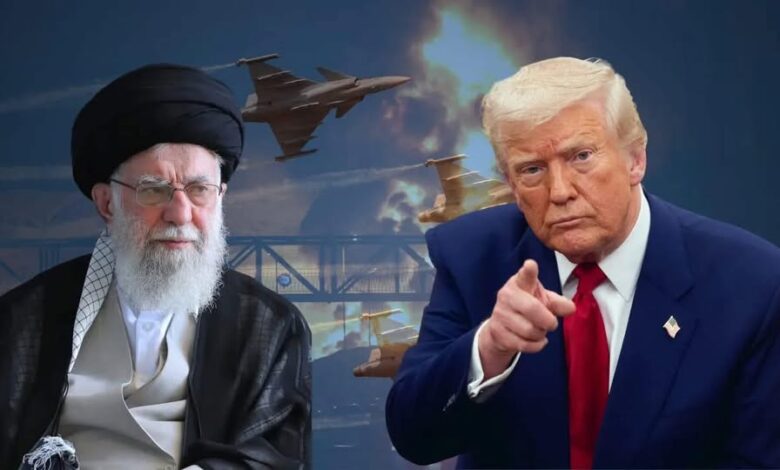
The global security landscape has shifted from a state of managed friction to one of open, high-intensity conflict. In the early hours of March 1, 2026, the long-predicted “hot war” in the Middle East finally ignited, following a massive and unprecedented joint military operation by the United States and Israel. Code-named “Operation Epic Fury,” the campaign began on the morning of February 28 with a series of coordinated decapitation strikes and the systematic bombardment of Iran’s nuclear and ballistic missile infrastructure. President Donald Trump, in a video statement from the White House, announced that “major combat operations” had commenced with the goal of “eliminating threats from the Iranian regime.” This operation has not only targeted hardware but the very leadership of the Islamic Republic, with reports confirming the death of Supreme Leader Ali Khamenei and several high-ranking military officials.

Tehran’s response was immediate, expansive, and far more aggressive than the “strategic patience” it had practiced in previous years. By the afternoon of March 1, Iranian state media announced a broad retaliatory offensive targeting the 27 U.S. military bases scattered across the Gulf region. This was not a limited strike; it was a regional barrage that transformed the sovereign territories of Bahrain, Qatar, Kuwait, and the United Arab Emirates into active combat zones. In Manama, the headquarters of the U.S. Navy’s Fifth Fleet was struck by Iranian ballistic missiles, sending plumes of black smoke over the Juffair district. Although initial reports suggest the U.S. and its partners intercepted many incoming threats, the sheer volume of the Iranian response has tested the limits of regional air defenses.
The escalations have effectively shuttered the world’s most critical energy artery. Within hours of the U.S.–Israeli strikes, Iran’s Revolutionary Guard warned that the Strait of Hormuz would become a “graveyard for terrorist aggressors.” While no formal block has been confirmed, the threat alone has paralyzed maritime trade. Over 150 tankers carrying nearly 15 million barrels of crude oil per day have dropped anchor in open waters, refusing to risk the transit. Consequently, global oil prices are expected to surge to historic highs as markets brace for a prolonged disruption. The economic fallout is compounded by a total shutdown of civil aviation in the region; major hubs in Dubai and Doha have suspended all flights, leaving thousands of travelers stranded as missiles and drones cross the desert skies.
The humanitarian and diplomatic consequences are equally staggering. In the UAE, drone strikes on a naval base in Abu Dhabi hosting French forces caused significant fires, while in Saudi Arabia, defense systems successfully intercepted missiles targeting Riyadh’s international airport and the Prince Sultan Airbase. The conflict has even reached as far as the British sovereign base areas in Cyprus, which were reportedly targeted by Iranian missiles. A coalition of thirteen nations has formed in a desperate attempt to stabilize the region, but with Moscow condemning the “unprovoked aggression” and Beijing expressing “grave concern,” the risk of this becoming a wider global conformational war is higher than at any point since the mid-20th century.
On the ground in Israel, the situation remains equally precarious. Despite the success of the initial strikes on Tehran, Israel has come under a sustained wave of retaliatory missile barrages. National emergency measures have been imposed, airspaces are closed, and citizens have been ordered to remain near shelters as the IDF continues its “decapitation strikes” against the remaining Iranian military command. The assassination of the Supreme Leader has created a power vacuum in Tehran that many analysts fear will lead to even more unpredictable and desperate actions from the Revolutionary Guard’s fragmented leadership.
For the United States, this operation represents the most significant military commitment in the region since 2003. The Pentagon has confirmed its first casualties—three service members killed and five wounded—during the initial retaliatory strikes. As the “Epic Fury” campaign continues into its second day, the stated objectives of “razing” the Iranian missile program and preventing the Axis of Resistance from harming U.S. interests seem increasingly difficult to achieve without a full-scale ground invasion. The regional states—Saudi Arabia, Qatar, and the UAE—find themselves in an impossible position: hosting the U.S. forces that are launching the attacks while suffering the direct consequences of Iran’s retaliation.
As night falls on March 1, the world watches the Persian Gulf with profound anxiety. The promise that “things are going to change” regarding the regional order has been kept, but the cost of that change is still being calculated in blood and burning oil. The “urgent news” of Iranian strikes on America and its allies is no longer a headline for tomorrow; it is the reality of tonight. The coming hours will determine if this conflict can be contained or if the “13-nation coalition” will be drawn into a war that reshapes the map of the modern world.