BREAKING – Iran Launches Over 40 Mi!
The geopolitical equilibrium of the Middle East has been thrust into a state of profound volatility following a high-stakes announcement from Tehran on March 9, 2026. In a broadcast that has sent shockwaves through international diplomatic circles, Iranian state television, acting as the official mouthpiece for the Islamic Revolutionary Guard Corps (IRGC), declared that more than 40 missiles were launched in a coordinated strike. This barrage is described by Iranian officials as the seventeenth wave of an expansive military campaign significantly titled “Operation Honest Promise 4.” The strikes reportedly targeted strategic positions linked to both Israel and the United States, marking a dramatic escalation in a region already simmering with decade-old tensions and modern proxy conflicts.

According to the statement released by the IRGC’s aerospace division—the specialized branch responsible for the regime’s most sophisticated kinetic assets—the missiles were directed toward what Tehran characterizes as “American and Zionist targets.” While the rhetoric remains familiar, the numbering of the operation suggests a sustained, multi-phased strategy of attrition designed to challenge the military hegemony of the United States and its primary regional ally. The aerospace force of the IRGC is the crown jewel of Iran’s unconventional warfare machine, managing a vast arsenal that includes short-range ballistic missiles (SRBMs), medium-range ballistic missiles (MRBMs), and increasingly precise “suicide” drones. Their central role in this seventeenth phase implies the use of precision-guided systems capable of bypassing or overwhelming modern integrated air defense networks.
Despite the gravity of the announcement, the information landscape surrounding the strike remains shrouded in the fog of information warfare. The Iranian report avoided providing specific coordinates for the impact zones, the exact nomenclature of the missile systems deployed, or a verifiable assessment of the damage inflicted. This lack of granular detail is characteristic of Iranian strategic messaging, which often prioritizes domestic propaganda and psychological signaling over immediate tactical transparency. As of this moment, international monitoring groups and independent satellite intelligence agencies have not yet released a definitive verification of the launch’s success or the scale of the resulting destruction.
The nomenclature “Operation Honest Promise 4” is a direct semantic lineage to previous Iranian retaliatory actions. This naming convention is intended to project a sense of inevitability and religious conviction, framing military aggression as the fulfillment of a sovereign pledge. Military analysts observing the region note that a “seventeenth wave” indicates a conflict that has moved beyond a singular flashpoint into a “war of the waves.” This suggests a coordinated effort unfolding over a long timeline, likely intended to test the endurance of the Aegis and Iron Dome defense systems while simultaneously putting political pressure on the Pentagon to reconsider its force posture in the Levant and the Persian Gulf.
The involvement of the IRGC’s aerospace division is particularly concerning for regional governments in Amman, Riyadh, and Abu Dhabi. Unlike the traditional Iranian military (the Artesh), the IRGC operates with a high degree of autonomy and is tasked specifically with the “defense of the revolution,” which often translates to aggressive regional expansion and the targeting of foreign assets. Their management of the country’s missile program has focused heavily on “circular error probable” (CEP) reduction, meaning their missiles are no longer just blunt instruments of terror but are increasingly capable of hitting specific hangars, command nodes, or naval vessels.
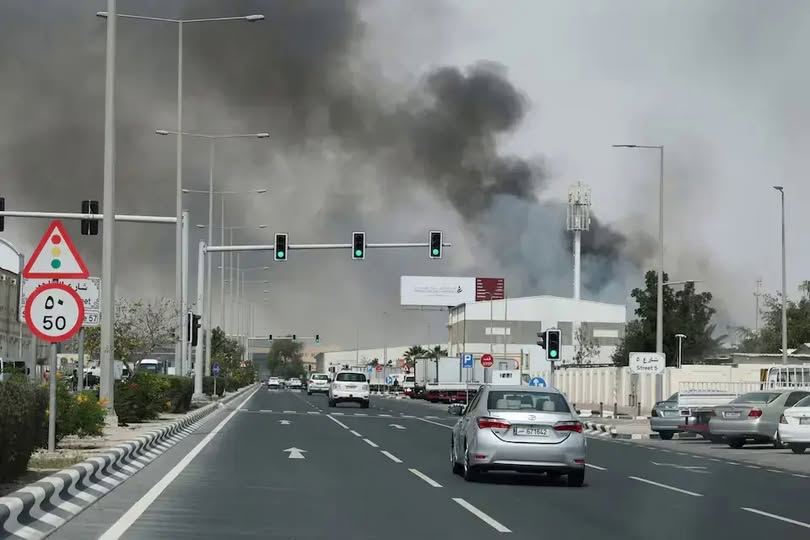
The reported launches have triggered a cascade of emergency consultations among international observers. Both Israel and the United States maintain a dense network of military assets and strategic partnerships across the Middle East, ranging from the massive Al-Udeid Air Base in Qatar to the advanced early-warning radar stations in the Negev Desert. Any missile activity in this theater is treated with the highest sensitivity, as the risk of a miscalculation leading to a full-scale regional war is at its highest point in years. The “Honest Promise” series has historically been Iran’s response to perceived violations of its sovereignty or the assassination of its high-ranking officials, suggesting that this seventeenth wave may be a reaction to a recent, perhaps undisclosed, intelligence or military setback for the Islamic Republic.
As the international community waits for the United States Central Command (CENTCOM) and the Israel Defense Forces (IDF) to issue their formal rebuttals or damage assessments, the economic impact is already being felt. Global oil markets have shown immediate flickers of instability, reflecting the fear of a broader disruption to the Strait of Hormuz—the world’s most critical energy transit chokepoint. For regional powers not directly involved in the exchange, the challenge is one of containment. The “seventeenth phase” underscores a reality where peace is no longer the absence of conflict, but rather the management of a low-intensity war that threatens to boil over at any moment.
Furthermore, the timing of the strike on March 9, 2026, coincides with heightened domestic pressures within Iran, leading some political analysts to suggest that the barrage is as much a performance for a restless internal audience as it is a tactical strike against foreign adversaries. By projecting power through the IRGC’s aerospace division, the regime seeks to solidify its image as an unyielding defender against “Western encroachment,” even as its economy struggles under the weight of prolonged sanctions and internal dissent.
In conclusion, the launch of over 40 missiles represents a perilous new chapter in the “Honest Promise” saga. It is a vivid illustration of the shift toward high-tech, remote-warfare strategies where the IRGC can project power hundreds of miles from its borders with the push of a button. While the world awaits independent confirmation of the damage, the psychological and political impact of the seventeenth wave is already undeniable. It reaffirms Tehran’s commitment to a strategy of persistent defiance and ensures that the Middle East remains the most volatile geopolitical theater on the planet. The question now is not if there will be an eighteenth wave, but whether the international community can find a diplomatic off-ramp before the “Honest Promise” leads to a final, catastrophic fulfillment.