Cremation and Faith – What Scripture Teaches and Where True Hope Is Found! See
The intersection of mortality and faith is a landscape defined by deep reverence, ancient tradition, and the search for eternal assurance. As the 21st century progresses, particularly in 2026, the shift toward cremation in the United States has reached a historic tipping point, prompting many people of faith to re-examine the spiritual implications of their final arrangements. For older adults who have spent a lifetime rooted in specific denominational traditions, the question of whether cremation aligns with Holy Scripture is not merely a logistical concern; it is a profound inquiry into the nature of the body, the promise of the resurrection, and the continuity of the soul. Understanding this transition requires a journey through biblical history, a look at the power of divine restoration, and a focus on the intention of the heart.

When examining the historical record of the Bible, it is undeniable that burial was the predominant and honored custom. From the early patriarchal narratives of Genesis to the apostolic accounts of the New Testament, the physical body was treated with a high degree of dignity through entombment. Abraham purchased the cave of Machpelah to bury Sarah, a site that would eventually hold his own remains and those of his descendants. The Hebrew kings were described as being “laid to rest with their fathers” in honorable sepulchers. Most significantly, the cornerstone of the Christian faith—the burial of Jesus Christ—involved his physical form being carefully wrapped in linen and placed within a rock-hewn tomb. For many, these examples establish a “biblical pattern” that emphasizes the body as a temple to be gently returned to the earth.
The symbolism of burial is deeply evocative, often summarized by the liturgical phrase “earth to earth, ashes to ashes, dust to dust.” This process reflects a humble acknowledgment of human origin and a patient, physical wait for the fulfillment of the promised resurrection. In this context, the grave is not viewed as a place of finality, but as a “dormitory” of sorts—a place where the faithful “sleep” until the call of the divine. This rich symbolism has shaped centuries of church architecture, liturgy, and family heritage, creating a strong emotional and spiritual attachment to the practice of interment.
However, a closer, more analytical reading of the biblical text reveals a significant distinction: while burial is consistently described as a cultural norm, it is never issued as a universal commandment. There is no verse in the Old or New Testament that explicitly forbids cremation or mandates burial as a requirement for salvation or future restoration. Biblical scholars point out that burial was the standard in the ancient Near East primarily due to cultural customs, environmental conditions, and the Judeo-Christian rejection of the pagan fire rituals practiced by neighboring tribes. In the absence of a direct “thou shalt not,” many modern theologians argue that the method of disposing of the body is a matter of Christian liberty and cultural adaptation rather than a moral imperative.
[Image illustrating the cross-section of an ancient rock-hewn tomb compared to modern memorial options]
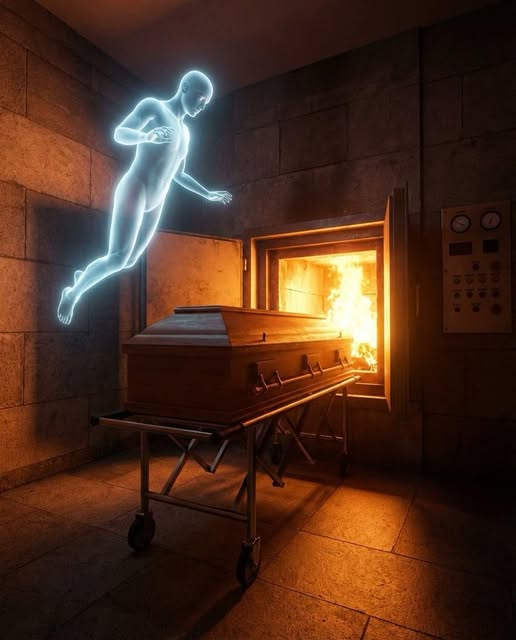
Central to the peace of mind for those considering cremation is the theological understanding of God’s omnipotence. Throughout history, countless believers have perished in ways that made traditional burial impossible—lost in the depths of the ocean, consumed by fire in disasters, or vanished in the chaos of war. Scripture never suggests that these individuals are beyond the reach of the Creator’s restorative power. On the contrary, the promise of the resurrection is rooted in the authority of a God who spoke the universe into existence from nothing. If the divine can form man from the dust of the ground, the transition of a body into ashes—whether through centuries of decay or an hour of cremation—poses no obstacle to the miracle of renewal. Resurrection is a work of the spirit and the divine word, not a biological reconstruction of ancient cells.
In 2026, many faith leaders are shifting the conversation away from the “mechanics” of the end-of-life process and toward the “intention” behind the decision. For many families, cremation is chosen out of practical necessity, financial stewardship, or the desire to simplify a complex time of grief. When these decisions are made with prayerful reflection and a heart of worship, they are seen by most modern denominations as fully compatible with a life of faith. The spiritual weight of a funeral lies in the celebration of the life lived, the comfort offered to the grieving, and the affirmation of the hope that lies beyond the physical realm. Whether a casket or an urn is present, the message of the Gospel remains unchanged: death has lost its sting, and the grave has no victory.
The role of individual conscience is also paramount in this discussion. Scripture encourages believers to “be fully persuaded in their own mind” regarding matters of tradition and practice. For those whose consciences are bound to the tradition of burial, honoring that conviction is an act of faith. For those who find peace in cremation, that choice, too, can be an act of trust in God’s ultimate care. Memorial services, regardless of the physical method of disposition, serve as a vital “liturgy of remembrance,” allowing the community to bear witness to a life and to point one another toward the eternal.
Some concerns persist regarding the “sanctity of the body.” Believers are reminded that the body is indeed a gift, a vessel that has housed the spirit and served as a means of worship. Treating the remains with respect—whether through a dignified burial or a reverent cremation and subsequent memorial—is a way of honoring that gift. The evolution of these traditions does not signal a decrease in faith, but a maturing understanding of the difference between the temporal vessel and the eternal soul. As our society continues to change, the church provides a steady anchor, reminding us that while our customs may shift, the foundational promises of God remain “yes and amen.”
Ultimately, the dialogue between cremation and faith is a conversation about where our true hope is anchored. Lasting assurance is not found in the preservation of the physical form, nor in the permanence of a granite monument. It is found in the promise of a future that is not defined by earthly limitations. Faith reminds us that we are travelers passing through a temporal world toward a destination of restoration and reunion. Whether we return to the earth through the slow process of the soil or the swift process of the flame, we rest in the hands of the One who holds the keys to life and death.
In the end, the choice between burial and cremation is a personal decision that invites us to look upward rather than downward. It is an opportunity to affirm that our identity is not lost when our physical form changes. The soul’s rest is found in the grace of God, and its future is secured by a promise that reaches far beyond the boundaries of this world. As we honor those who have gone before us, we do so with the confidence that the Creator who began a good work in us is fully capable of completing it, regardless of how we are laid to rest.