Eye‑Opening Poll Shows What Americans Really Think About Trump’s Iran Strategy
Donald Trump’s recent military action in Iran has sparked a wave of debate across the United States, leaving the nation deeply divided over the president’s approach to foreign policy and national security matters.

The airstrikes conducted by the United States and Israel over the past week have drawn criticism from various political quarters, raising questions about Trump’s decision-making, his adherence to campaign promises, and the potential long-term consequences.
Even some of Donald Trump’s most loyal supporters have voiced concerns over the strikes, suggesting that the administration’s decision has fractured previously solidified support within his base and fueled broader political tensions nationwide.
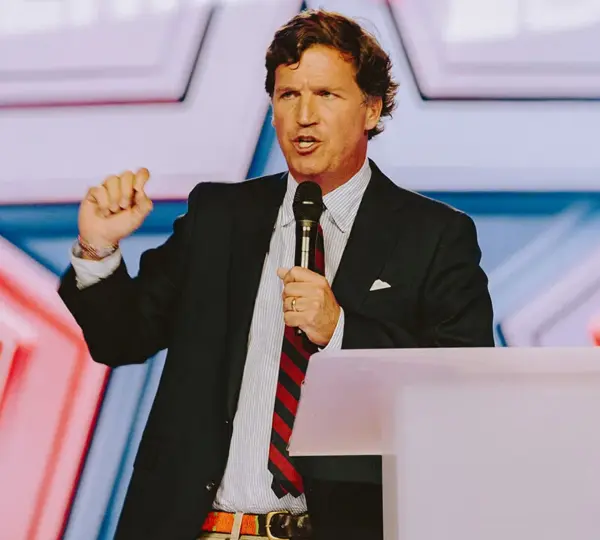
Conservative commentator Tucker Carlson condemned the military action, calling it “absolutely disgusting and evil.” Carlson warned that the decision could have serious repercussions for Trump’s political movement and the perception of his leadership among supporters.
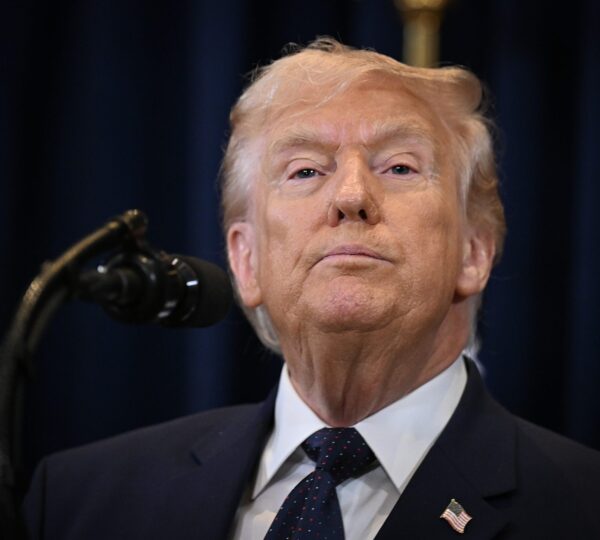
“Trump’s latest decision is going to shuffle the deck in a profound way,” Carlson remarked. His criticism reflects a growing unease among media figures and commentators regarding the administration’s escalation of tensions in the Middle East.
Popular pro-Trump podcaster Tim Pool also voiced his disapproval, stating that the administration’s approach did not reflect the principles many had expected from Trump. The criticism underscores a widening rift even among traditionally loyal followers.
MAGA influencers Keith and Kevin Hodge wrote in an online post: “Freeing the people of Iran is not why I voted for Trump.” Their comments emphasize disillusionment among certain segments of Trump’s core constituency.
They continued, “President Trump has completely lied to his voters, backstabbed our country, and has disgraced his legacy beyond repair at this point. This is the biggest fall from grace I have ever seen.”
Congressional leaders, particularly Democrats, have also spoken out against Trump’s decision. Many have expressed concern over the escalation of military operations and the potential for wider conflict, reflecting a partisan divide in opinions regarding foreign intervention.
Trump has publicly stated that he believes the conflict could end soon. However, when asked about deploying U.S. ground troops to secure highly enriched uranium stockpiles in Iran, he said no decision has been made, reflecting ongoing uncertainty.
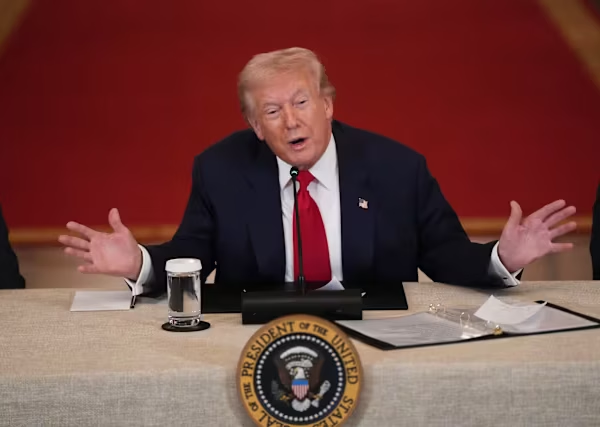
“We haven’t made any decision on that. We’re nowhere near it,” Trump told the New York Post. His statement underscores both the caution and ambiguity surrounding potential ground operations in Iran, leaving the public questioning the administration’s next steps.
According to a recent survey reported by The Hill, Americans overwhelmingly oppose sending U.S. ground troops into Iran. Seventy-four percent of respondents disapproved, while only twenty percent expressed support for such an escalation in military involvement.
The results highlight significant public apprehension regarding the prospect of American soldiers engaging directly in combat operations overseas, recalling the human and political costs of prior Middle East conflicts.
Some lawmakers advocate for stronger military intervention, arguing that decisive action is necessary to safeguard U.S. interests. Others caution that sending troops could escalate tensions and precipitate a larger, more destabilizing war in the region.
Many Americans remain wary of further military engagement, drawing comparisons to prior conflicts in Iraq and Afghanistan. Memories of these wars continue to influence public sentiment regarding the deployment of U.S. forces abroad.
As the November midterm elections approach, public opinion on Trump’s military decisions could have a significant impact. Analysts suggest that voter attitudes toward foreign policy may influence electoral outcomes and the political landscape for his party.
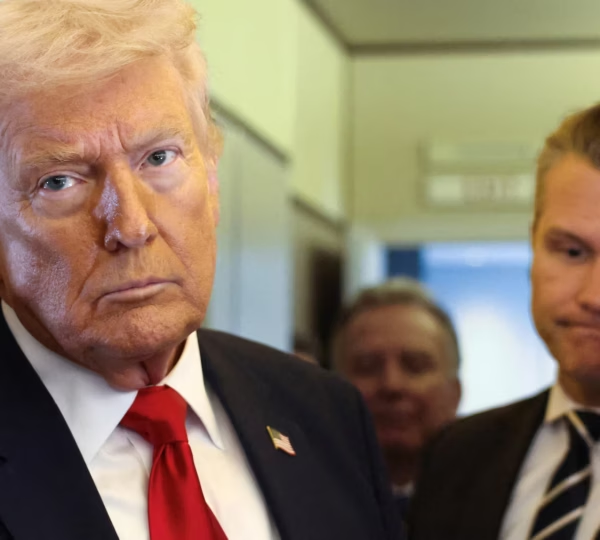
A recent Fox News poll explored public perceptions of Trump’s performance across multiple issues, including foreign policy, immigration, tariffs, and the economy, revealing a deeply divided electorate with polarized viewpoints along party lines.
Ninety-seven percent of Democrats disapproved of Trump’s performance, while Republican respondents expressed an eighty-seven percent approval rating, reflecting a stark partisan divide in the assessment of his presidency and policy choices.
Voters expressed mixed views on Immigration and Customs Enforcement (ICE). Approximately sixty percent disapproved of the agency’s operations, whereas forty-two percent viewed ICE’s work favorably, highlighting ongoing national debates about immigration enforcement.
Respondents identified the cost of living as the most pressing issue facing the nation, with fifty percent ranking it highest in concern. Government spending followed at eighteen percent, while job availability was a primary concern for ten percent of participants.
Other significant issues included income inequality, cited by nine percent, tariffs by eight percent, and taxation by four percent. These figures indicate the diverse range of concerns affecting Americans beyond immediate foreign policy matters.
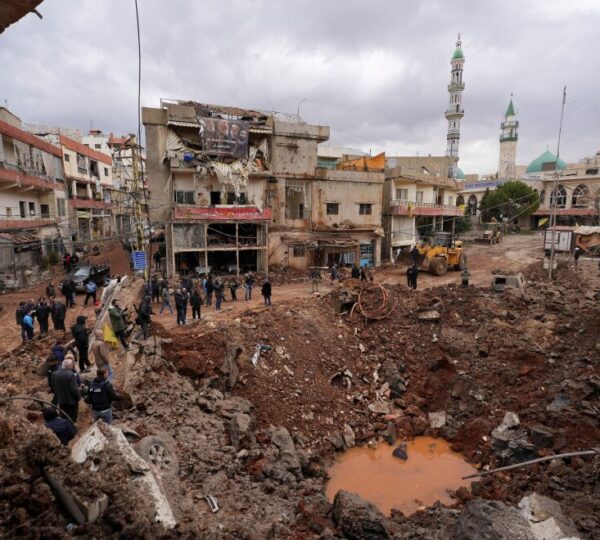
Trump fared better in public opinion regarding border security, with fifty-two percent of respondents approving of his handling. Forty-eight percent disapproved, reflecting a contentious but slightly favorable perception among voters on immigration and national security measures.
White House spokesperson Davis Ingle emphasized Trump’s comparative approval, noting that based on RealClearPolitics averages, his rating exceeded that of former presidents Barack Obama and George W. Bush at comparable stages of their second terms.
For reference, Obama and Bush held approval ratings of 42.5% and 38.7%, respectively, while Trump’s stood at 43.3%. Ingle cited the difference as particularly notable given what he described as “much tougher media coverage” of the current administration.
Public scrutiny of Trump’s Iran policy has intensified in light of these comparisons, with media analysis highlighting both his approval among certain constituencies and the broader national debate surrounding military intervention.
Critics argue that the decision to engage militarily complicates Trump’s foreign policy legacy, potentially alienating moderates and loyalists alike, while supporters contend it demonstrates decisive leadership aimed at protecting national interests.
Congressional responses have been sharply divided. Democrats generally condemn the military strikes, emphasizing diplomatic solutions and cautioning against escalation. Some Republicans, however, express conditional support, framing the strikes as necessary to counter perceived threats and maintain regional stability.
Trump’s approach has raised questions regarding executive power, congressional oversight, and the appropriate role of the U.S. in global conflict zones, prompting legal scholars, political analysts, and policymakers to weigh in on the constitutional implications.
The Iranian government has condemned the attacks, further complicating international relations. Global leaders are monitoring developments closely, as the conflict in the region has implications for oil markets, global security, and multilateral diplomacy.
Public opinion surveys indicate widespread concern about potential escalation. Many Americans fear that deploying ground troops could lead to prolonged military engagement, higher casualties, and significant economic costs, factors that weigh heavily on voter sentiment.
While Trump continues to defend his decisions as necessary for national security, critics argue that the administration’s messaging has been inconsistent, fueling confusion and undermining public confidence in foreign policy strategy.
The debate also reflects historical patterns of American engagement in the Middle East. Lessons from past conflicts, including Iraq and Afghanistan, influence both public perception and legislative approaches to current and future military operations.
Midterm elections may serve as a referendum on Trump’s foreign policy decisions, with candidates and voters evaluating the potential consequences of military strikes and leadership decisions on regional and domestic stability.
Analysts suggest that Trump’s approval ratings may fluctuate depending on developments in Iran, with public support contingent upon perceived effectiveness, the avoidance of extended conflict, and the administration’s communication strategy regarding outcomes.
Media coverage remains extensive and often critical, highlighting both domestic political ramifications and international consequences. The tone of reporting influences public perception, framing the administration’s actions in the context of broader geopolitical risk.
Surveys also show that Americans are prioritizing domestic concerns alongside foreign policy. Cost of living, healthcare, and government spending continue to weigh heavily on voters’ minds, indicating that foreign engagements are evaluated alongside pressing domestic challenges.
Trump’s approval among Republican voters underscores the resilience of his base, reflecting ongoing loyalty despite criticism. This contrasts sharply with Democratic disapproval, demonstrating persistent partisan polarization in assessments of presidential performance.
The complexity of public opinion highlights the challenges faced by political leaders in balancing military action with domestic approval. Leaders must consider both strategic objectives and the potential impact on electoral support and party cohesion.
Experts note that communication strategy is critical. Clear articulation of objectives, risks, and anticipated outcomes may influence public perception and mitigate backlash, shaping both voter attitudes and legislative responses to foreign interventions.
Trump’s comments on the potential deployment of ground troops indicate an ongoing deliberative process. While no immediate action has been confirmed, the possibility of escalation remains a focal point in both political discourse and media coverage.
Public debate continues to weigh the morality, legality, and strategic necessity of military engagement. Discussions span social media, mainstream outlets, and congressional hearings, reflecting deep societal engagement with questions of national security and executive authority.
Americans remain cautious about committing troops abroad, reflecting a collective memory of past wars, the human cost of combat, and economic implications of extended military campaigns, which shape both public opinion and political decision-making.
Internationally, the strikes have attracted attention from global powers and regional actors. Allies and adversaries alike monitor U.S. actions, evaluating implications for diplomacy, defense agreements, and regional stability in an already volatile Middle East.
Trump’s foreign policy is now a central point of contention for both supporters and critics. His actions are scrutinized not only for their immediate outcomes but for potential long-term effects on U.S. influence, credibility, and geopolitical alliances.
Despite polarized opinions, the debate illustrates the democratic process at work, with citizens, legislators, and media engaging in vigorous discussion about the role of the United States in international conflict and the responsibilities of its leadership.
Ultimately, the ongoing situation in Iran highlights the intersection of executive power, public opinion, and global strategy. Americans’ responses reflect a complex balance of caution, political loyalty, and concern for national interests.
The results of recent polls, congressional debates, and media commentary suggest that Trump’s decisions regarding Iran will remain a defining aspect of his presidency, influencing both the political landscape and public discourse in the months ahead.