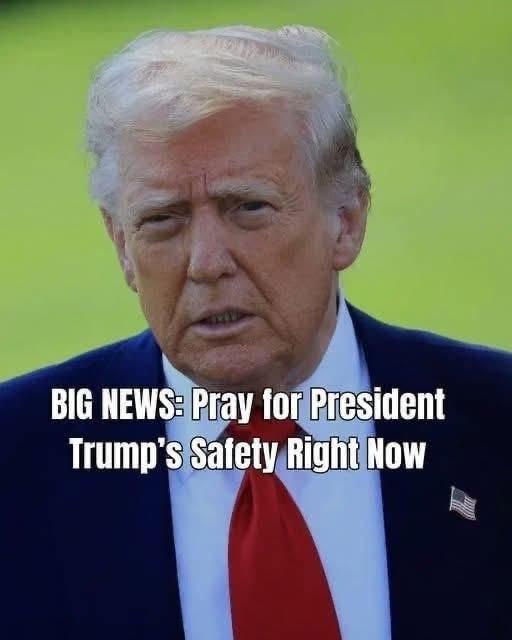
Shock Trumps! Condition?!
The political and legal foundations of the United States experienced a seismic shift when federal prosecutors unsealed a sweeping indictment against Donald Trump. This was not merely another chapter in a long-running partisan dispute; it was a historically unprecedented legal action involving allegations that strike at the very heart of the American democratic process. The charges detailed in the document are far removed from mere technicalities or administrative oversights. Instead, they represent a high-stakes effort by the Department of Justice to address actions taken in the aftermath of the 2020 presidential election—a period of national tension that continues to cast a long shadow over the halls of power in Washington and beyond.

The indictment articulates four specific, heavy-hitting counts: conspiracy to defraud the United States, conspiracy to obstruct an official proceeding, the actual obstruction of and attempt to obstruct that proceeding, and conspiracy to violate constitutional rights. Each count carries with it the weight of constitutional history. Prosecutors argue that these were not isolated incidents of political maneuvering, but rather a coordinated, multi-layered attempt to subvert the will of the American people and overturn the certified results of a free and fair election. By framing the case through the lens of conspiracy, the government suggests a structured and intentional effort to bypass the established legal and constitutional guardrails that ensure the peaceful transfer of power.
Central to the prosecution’s narrative is the period immediately following Election Day. In those weeks, the public arena was flooded with claims of widespread voter fraud. These allegations were not confined to the fringes of the internet; they were echoed at high-profile rallies, articulated in televised interviews, and filed in dozens of courtrooms across the country. However, the indictment presents a stark contrast between this public rhetoric and the private warnings delivered within the highest levels of the administration. According to court documents, a chorus of senior advisers, high-ranking Justice Department officials, and bipartisan state authorities repeatedly informed the former president that there was no evidence of fraud sufficient to alter the election’s outcome. Despite these consistent briefings, prosecutors contend that the promotion of these claims continued unabated, forming the basis for a broader strategy of disinformation and pressure.
The climax of this legal drama centers on the events of January 6, 2021—the date of the congressional certification of the Electoral College vote. Under the Twelfth Amendment and the Electoral Count Act, this process is traditionally a routine, ministerial function intended to formalize the decision of the states. However, in the winter of 2020, this constitutional ritual was transformed into a flashpoint of national controversy. The indictment alleges that the pressure campaign extended to the Vice President and members of Congress, seeking to exploit the certification process as a final opportunity to derail the election results. This focus on the “official proceeding” is a critical pillar of the government’s case, as it links the rhetoric of the previous months to a specific, tangible action intended to disrupt a core function of the federal government.
The significance of these charges extends beyond the courtroom and into the realm of historical precedent. For the first time in the nation’s history, a former commander-in-chief is being called to answer for actions taken while in office to influence the succession of power. Prosecutors argue that the conspiracy to violate constitutional rights is particularly poignant, as it involves the fundamental right of every citizen to have their vote counted and respected. By alleging a conspiracy against the right to vote, the Department of Justice is positioning the case as a defense of the democratic franchise itself, rather than a narrow prosecution of a single political figure.
As the legal proceedings move forward, the case is likely to ignite a complex debate over the boundaries of executive power, the limits of political speech, and the definition of criminal intent in the context of high-level governance. The defense is expected to argue that the former president’s actions were protected by the First Amendment and that he was acting on a sincere, if contested, belief that election irregularities had occurred. Prosecutors, meanwhile, will rely on the testimony of those within the inner circle who allegedly told the truth behind closed doors, creating a narrative of “guilty knowledge” that they hope will convince a jury.
The atmosphere surrounding the trial is unlike any other in modern memory. In a city where political scandals are common, this indictment is viewed as a generational event. It represents a test of the American legal system’s ability to handle a case of such immense political gravity with impartiality and rigor. The backdrop of Los Angeles, Washington, and state capitals across the nation serves as a reminder that the implications of this verdict will be felt in every corner of the country. Whether it results in a conviction or an acquittal, the mere existence of the case has already altered the historical record, ensuring that the transition of 2020 will be studied and litigated for decades to come.
Ultimately, the case is about more than just a single individual or a single election. it is about the resilience of the institutions that define the American Republic. The indictment describes a moment when those institutions were stressed to the breaking point, and the ensuing trial will be an examination of how they held—or failed to hold—under that pressure. As the details of the evidence emerge, the public will be forced to grapple with difficult questions about truth, accountability, and the nature of leadership. In an era where the divide between political camps feels wider than ever, the unsealing of these charges is a sobering reminder that the law remains the final arbiter of our collective history.
The “Shock Trumps! Condition” mentioned by observers in the media highlights the reflexive, intense reaction that follows any development in this ongoing saga. It is a state of perpetual anticipation, where every motion and every hearing is dissected for its potential to change the course of the future. As the search for justice continues, the world watches to see how the highest ideals of the Constitution are balanced against the gritty realities of contemporary politics. For now, the indictment stands as a roadmap of a journey through the most turbulent transition in modern times, leading toward a conclusion that will define the American experiment for the next century.