
Breaking: Three US F-15 Jets Reportedly Downed by Kuwaiti Air Defenses!
In the pre-dawn hours over a strategically critical partner nation, confusion erupted when three U.S. F-15E Strike Eagles were lost during a defensive mission, highlighting the extraordinary fragility of high-speed coalition air operations under extreme pressure.

Six American aircrew members were forced to eject from their cockpits, executing split-second survival maneuvers as their advanced aircraft became the unintended targets of allied air defense systems, emphasizing the dangers inherent in joint multi-national operations.
Initial reports suggested enemy engagement, but preliminary investigations quickly clarified a more complicated reality: the jets were mistakenly identified as hostile, demonstrating how even advanced systems can fail during rapid, high-stakes combat scenarios.
Operation Epic Fury, a multi-national campaign designed to intercept missile threats and unmanned aerial vehicles, had placed enormous operational stress on coalition forces, requiring near-instantaneous decision-making under conditions of minimal visibility and maximal threat.
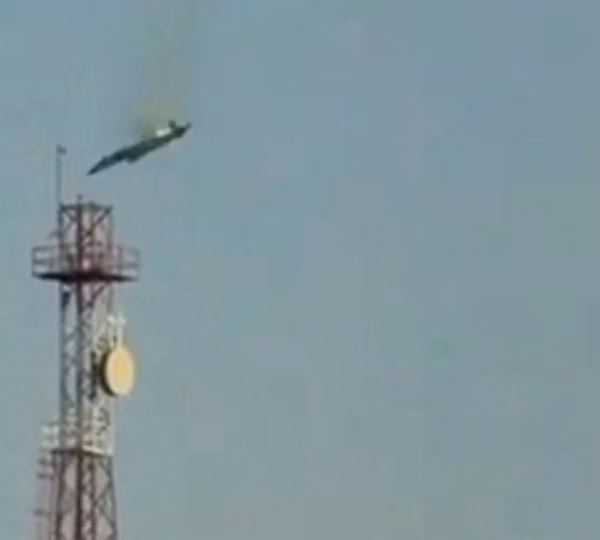
In the pitch-black pre-dawn mission, air defense batteries responsible for shielding allied airspace misidentified the returning Strike Eagles, which were following standard mission parameters, highlighting the critical importance of Identification Friend or Foe (IFF) accuracy.
IFF protocols, designed to digitally “handshake” aircraft with radar systems, are intended to prevent friendly fire incidents, but during this engagement, system failures and human errors combined, creating a perfect storm of operational misidentification.
Despite the loss of three F-15Es, all six aircrew survived, ejecting safely and subsequently recovered by rapid-response search and rescue teams, underscoring the effectiveness of Air Force survival training even in high-risk, complex environments.
Military leadership praised the crews’ composure, noting that rigorous emergency protocols, including ejection drills and survival strategies, were critical in preventing casualties amid what could have been a catastrophic incident.
The operational setback remains significant, however, representing the temporary loss of multi-million-dollar aircraft at a critical juncture when coalition forces were attempting to stabilize regional tensions through coordinated air defense measures.
Within hours of the event, state-aligned media outlets in Iran claimed responsibility, framing the incident as a tactical victory, illustrating how misinformation can spread rapidly before preliminary investigations clarify the true circumstances.
American commanders countered these claims by providing evidence that the aircraft were deep within allied-controlled airspace, emphasizing that the event was an accidental engagement rather than a hostile attack.
The incident shifted focus to coalition safety protocols, raising questions about communication gaps between aircrews and ground-based air defense operators, particularly under conditions of low visibility and complex electronic warfare environments.
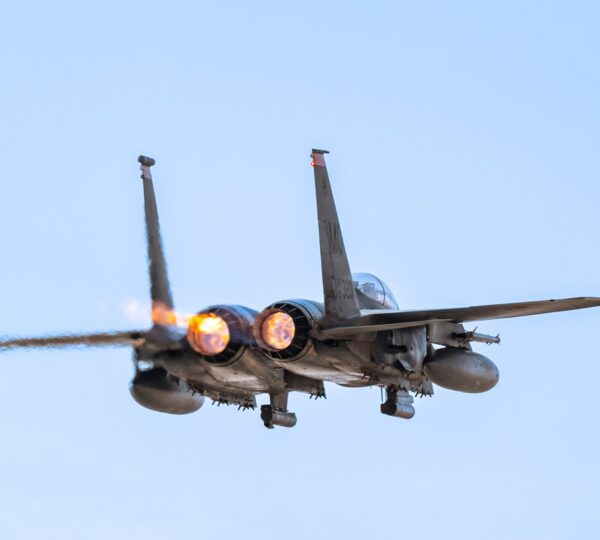
Technical failures in IFF transponders, communication delays, and radar clutter are all under scrutiny as potential contributors, demonstrating the delicate balance required when multiple nations operate sophisticated air defense and aircraft simultaneously.
Investigative teams from the United States and the partner nation are examining whether electronic interference, operator error, or misalignment of sensor data caused the misidentification of returning friendly aircraft.
Friendly fire, or “blue-on-blue” incidents, historically occur during periods of extreme operational stress, when radar operators must distinguish hostile targets from friendly units within seconds, often in densely congested airspace.
These errors, while rare, emphasize that even the most advanced technological safeguards cannot fully mitigate the inherent risks of high-intensity, multi-national combat operations where split-second decisions determine survival.
Coalition warfare today involves a dense network of aircraft, missile batteries, and radar arrays, requiring synchronization across different languages, equipment standards, and procedural doctrines to maintain a unified operational picture.
A single delayed communication or misinterpreted signal can result in tragic consequences, including the loss of life, expensive assets, and damage to international military relationships.

Operation Epic Fury’s leadership has emphasized that the investigation seeks to understand systemic stressors rather than assign blame to individual operators, focusing on improving resilience under high-tempo combat conditions.
Proposals under consideration include creating stricter no-fire zones for air defense systems and implementing secondary verification protocols before lethal engagement decisions are authorized in complex airspaces.
Software and procedural upgrades are being evaluated to ensure that integrated air defense networks can reliably differentiate between friendly and hostile aircraft under conditions of high threat saturation.
The event highlights that human judgment remains an indispensable component of modern warfare, even when advanced automation and digital identification systems are in place, reinforcing the necessity of rigorous operator training.
Investigators are analyzing the timing of radar scans, communication latency, and data link synchronization, seeking to identify exactly how the system misclassified the Strike Eagles as hostile.
Military analysts note that even minor glitches in transponders or delays in operator response can compound under pressure, converting safeguards into accidental hazards during high-stakes aerial operations.
The survival of the six aircrew members underscores the importance of ejection procedures, parachute deployment training, and coordination with search-and-rescue teams in preventing casualties during multi-layered operational errors.
Coalition commanders are taking additional steps to reinforce procedural redundancy and cross-check protocols, ensuring that mistakes in airspace identification are caught before any lethal engagement can occur.
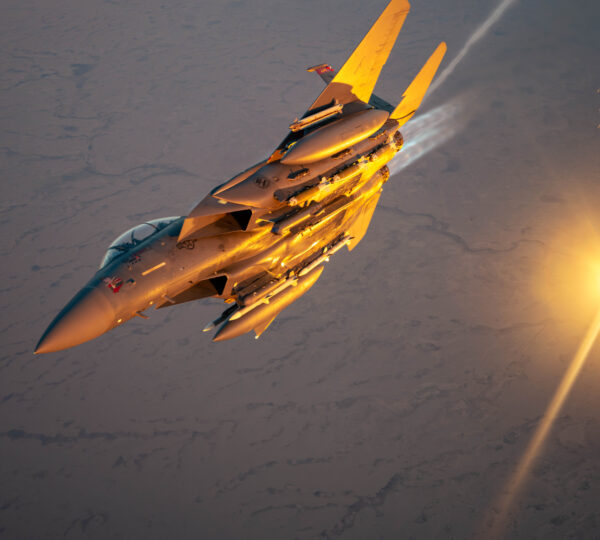
This event also demonstrates the broader challenge of maintaining trust between allied nations operating integrated defense systems, as a single incident can strain relationships and erode confidence in cooperative procedures.
Publicly, both nations involved have stressed that military partnerships remain robust, emphasizing that the investigation is a transparent, joint effort designed to improve operational safety rather than assign unilateral blame.
The focus remains on collective learning, integrating lessons from the misidentification into training programs and operational planning to prevent recurrence in future engagements across coalition theaters.
Operation Epic Fury continues, with adjustments to flight plans, air defense coverage, and digital tracking protocols being implemented based on preliminary lessons learned from the pre-dawn incident.
Experts note that the incident serves as a stark reminder of the fragility of modern air combat environments, where multiple nations’ aircraft, radar signals, and electronic systems intersect in fractions of a second.
The difference between safety and catastrophe often rests on a single digital signal or an operator’s decision, highlighting the extraordinary pressures placed on personnel in combat theaters with overlapping allied operations.
Further analysis will likely lead to recommendations for enhanced IFF system robustness, operator cross-training, and real-time verification methods to reduce the risk of future friendly fire events.
In the meantime, coalition forces are prioritizing both asset recovery and operational continuity, demonstrating that despite setbacks, mission objectives must continue without compromising regional security goals.
Technological improvements may include AI-assisted threat recognition, automated cross-checking of radar signals, and redundant communication links between aircraft and ground systems, further reducing the likelihood of misidentification.
Lessons from the incident underscore that coalition operations require not only advanced hardware but also cultural, procedural, and training alignment across partner nations to ensure safe, effective mission execution.
Operational leaders continue to stress that surviving personnel are a testament to rigorous training and emergency preparedness, highlighting the critical importance of crew resource management and resilience under duress.
The incident has prompted briefings to allied nations, highlighting that even sophisticated forces are vulnerable to the compounding effects of rapid decision-making, system stress, and imperfect communication.
Military doctrine experts suggest that such events should lead to broader revisions in coalition airspace management, emphasizing both technological safeguards and the indispensable role of human oversight in high-stakes missions.
As the investigation continues, every element of the engagement—from digital transponder codes to operator situational awareness—is being meticulously reviewed to prevent similar misidentifications in the future.
Ultimately, the pre-dawn confusion over allied airspace during Operation Epic Fury highlights that in modern coalition warfare, human skill, technological accuracy, and rapid response must all function flawlessly to prevent catastrophic errors.
The survival of the six aviators is a rare success in a potentially deadly scenario, emphasizing the critical interplay between training, technology, and composure in the most extreme operational environments.
This incident is now a case study in military academies and training programs, demonstrating how even advanced systems cannot entirely eliminate the human and technical risks of multi-national combat operations.
Coalition air forces are working to refine operational procedures, integrate redundancies, and improve real-time data sharing, ensuring that friendly aircraft are consistently identified and protected in congested, high-threat airspace.
Ultimately, the Operation Epic Fury incident serves as a sober lesson in the limits of technology, the necessity of rigorous protocol, and the extraordinary resilience required of military personnel in the fast-moving modern battlefield.