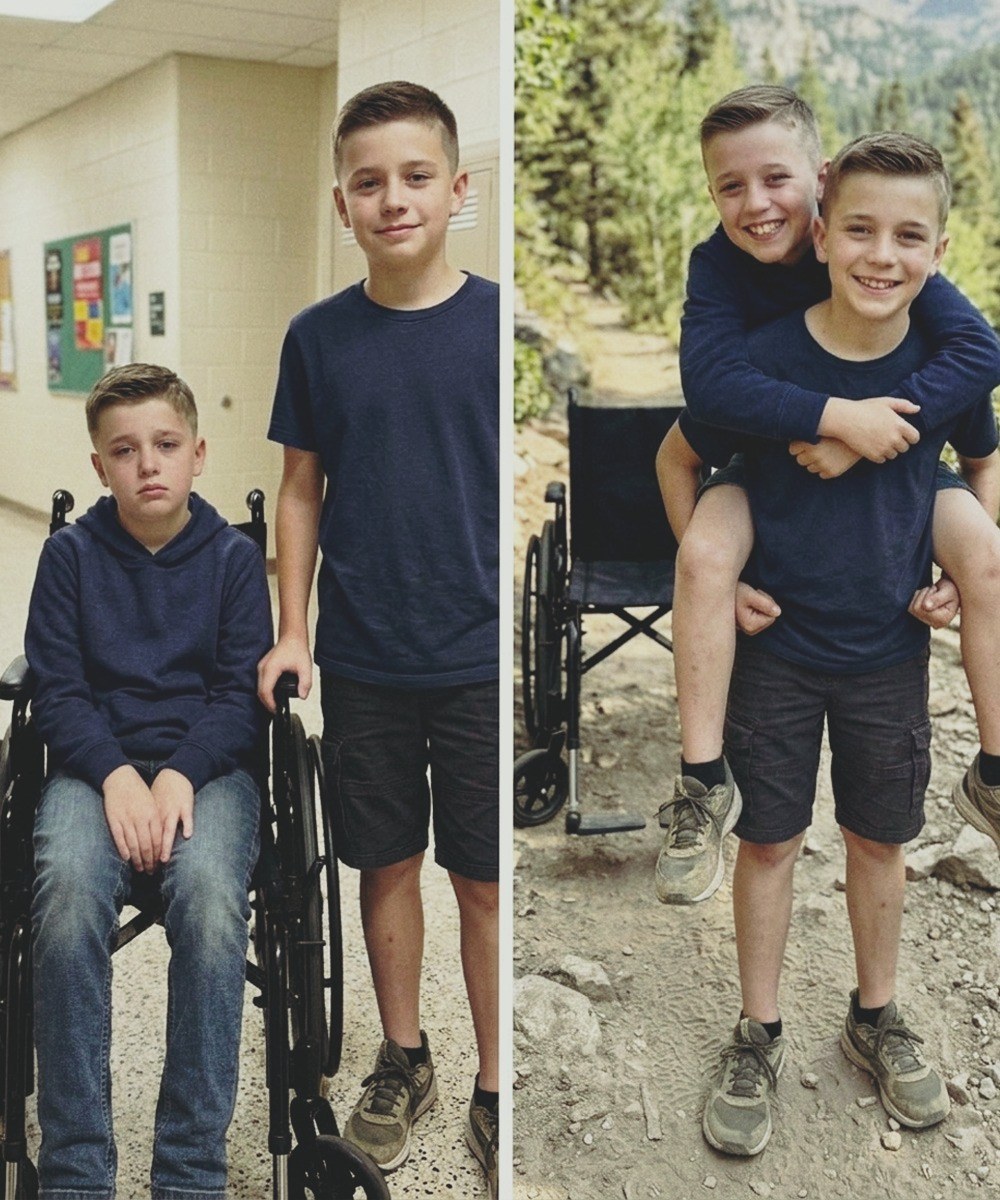
My 12-Year-Old Son Helped His Wheelchair-Using Friend Enjoy a Camping Trip — The Next Day, I Got an Urgent Call from the School
I didn’t think much about the trip at first. It felt like just another school activity, another permission slip tucked between overdue bills and daily responsibilities that never seemed to slow down. Nothing about it felt extraordinary.

The form sat on the kitchen counter for two days before I signed it. Hiking trip. Supervised. Safe. Routine. I remember thinking it might even be good for Leo, a break from his usual quiet world.
I’m Sarah, forty-five years old, and raising my son alone has reshaped everything I thought I knew about strength. Not the loud kind people admire, but the quiet endurance that builds slowly over time.
Leo is twelve now. Thoughtful, observant, and deeply sensitive in ways that often go unnoticed. He feels everything intensely, but he doesn’t always have the words to express it anymore.
That changed after his father passed away three years ago. Since then, Leo has carried his emotions inward, like something fragile he’s afraid might break if exposed too often.
A week before the trip, I noticed something different about him. It wasn’t excitement, not the loud kind kids usually show before an outing. It was softer, almost like a quiet anticipation.
He came home from school that day and set his backpack down more gently than usual. There was a pause before he spoke, like he was choosing his words carefully.
“Sam wants to go too,” he said, his voice low, measured. “But they told him he can’t.”
I turned away from the sink, drying my hands slowly. “The hiking trip?” I asked, though I already suspected the answer.
Leo nodded, his eyes fixed somewhere between the floor and the wall, avoiding direct contact. That’s how he speaks when something really matters to him.
Sam had been his closest friend for years. The kind of friendship built quietly, through shared lunches, small jokes, and an understanding that didn’t need many words.
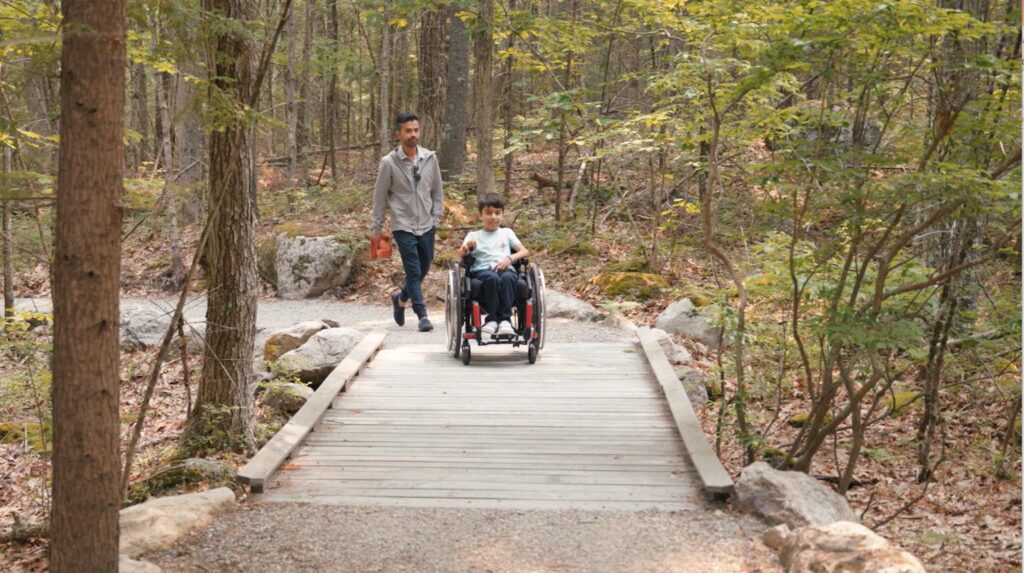
Sam used a wheelchair. He always had. And over time, people had grown used to quietly excluding him from activities that seemed too difficult or inconvenient to adapt.
“They said the trail’s too hard,” Leo added, his voice tightening slightly. “That it wouldn’t be safe for him.”
“And what did you say?” I asked, already sensing the answer.
He shrugged, but it wasn’t a careless gesture. It carried frustration, something unspoken. “Nothing,” he replied. “But it’s not fair.”
I thought that was the end of the conversation. Kids notice things, question them, and then move on. That’s what I told myself as I returned to my routine.
But something had shifted in him, something quiet and determined. I just didn’t understand it yet.
The day of the trip came and went without much thought. I stayed busy, filling my time with errands and work, trusting that everything was unfolding as expected.
The buses returned late Saturday afternoon. Parents gathered near the school entrance, chatting casually, exchanging small talk while waiting for their children to arrive.
I spotted Leo almost immediately as he stepped off the bus. And the moment I saw him, something inside me dropped.
He looked exhausted. Not just tired, but completely drained. His clothes were covered in dirt, his shirt clung to him with sweat, and his shoulders sagged under invisible weight.
As he walked toward me, I noticed the slight tremble in his legs. Each step looked heavier than it should have been, like his body was still recovering from something intense.
“Leo… what happened?” I asked, my voice catching somewhere between concern and confusion.
He looked up at me and gave a small, tired smile. “We didn’t leave him,” he said simply.
It took a moment for the words to register. And then another moment for their meaning to settle in.
Before I could ask anything else, another parent stepped closer, her expression soft, almost reverent.
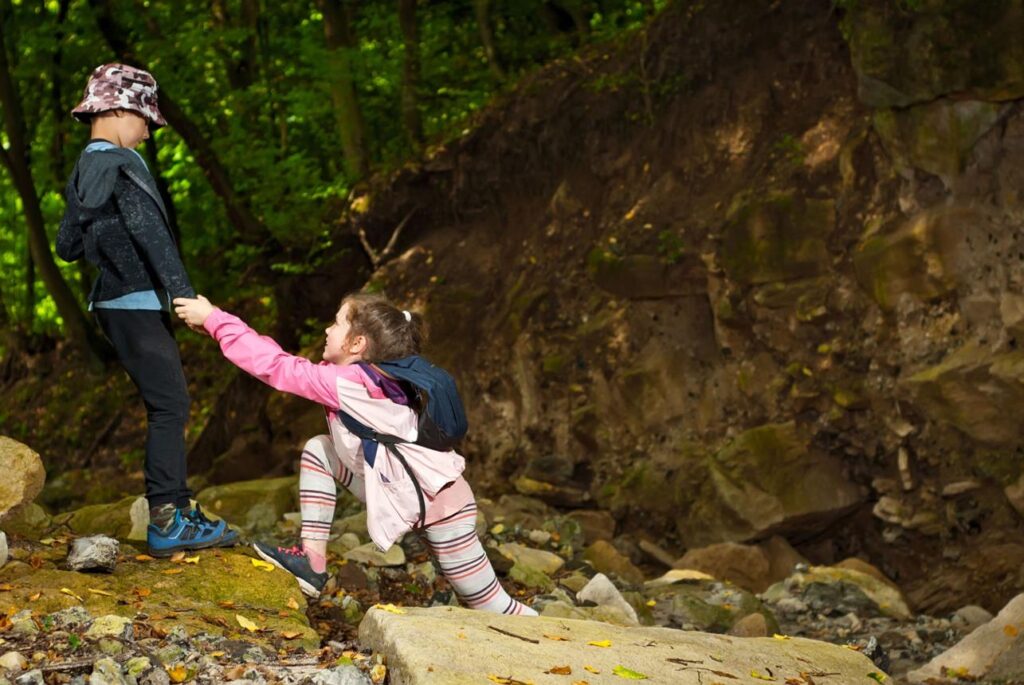
“He carried Sam,” she said quietly. “The entire way.”
My mind struggled to process it. Six miles. Rough terrain. A twelve-year-old boy carrying another child across a hiking trail not designed for him.
I looked back at Leo, really looked this time, and saw the truth in every detail. The exhaustion, the strain, the quiet pride hidden beneath it all.

“He kept telling him to hold on,” the parent continued. “Even when he could barely keep going himself.”
I felt something rise inside me, something stronger than worry. Pride, deep and overwhelming, mixed with disbelief.
Before I could say anything, his teacher approached, his expression tense, controlled but clearly frustrated.
“Your son broke protocol,” he said firmly. “He left the assigned route. It was dangerous. Students who couldn’t complete the trail were instructed to remain at the campsite.”
I nodded automatically, apologizing out of habit, even though part of me resisted the implication that Leo had done something wrong.
No one had been hurt. Everyone had returned safely. I assumed that would be the end of it.
But it wasn’t.
The next morning, my phone rang earlier than usual. The number on the screen made my chest tighten instantly. It was the school.
I answered quickly, already bracing for bad news.
“Sarah,” the principal said, her voice strained. “You need to come in right away.”
My heart dropped. “Is Leo okay?” I asked immediately.
There was a pause, just long enough to make everything worse. “There are men here asking for him.”
I didn’t ask any more questions. I grabbed my keys and left, my thoughts racing faster than I could control.
Every possible scenario played out in my mind during that drive, each one worse than the last. By the time I arrived, my hands were shaking.
And then I saw them.
Five men stood outside the school office, dressed in military uniforms. Their posture was still, composed, and somehow heavy with purpose.
The principal stepped closer to me, lowering her voice. “They said it’s about what Leo did yesterday.”
My throat went dry as I followed her inside. The room felt smaller than usual, like the walls had closed in around the tension.
Then Leo was brought in.
The moment he saw the uniforms, he froze. Fear replaced the quiet confidence I had seen the day before.
“Mom?” he said, his voice breaking slightly.
I crossed the room immediately and wrapped my arms around him. “I’m here,” I whispered. “It’s okay.”
But he wasn’t okay. I could feel it in the way he held onto me.
“I didn’t mean to cause trouble,” he said quickly. “I won’t do it again.”
Before I could respond, his teacher spoke again, his tone sharp. “He should have followed instructions.”
Leo panicked. “I’m sorry! Please don’t let them take me away! I just didn’t want to leave him behind!”
That was the moment something inside me shifted completely.
One of the officers stepped forward, his expression softening as he knelt slightly to meet Leo at eye level.
“We’re not here to punish you,” he said gently. “We’re here because of what you did.”
Leo’s grip on me loosened, just a little.
“We’re here to honor you.”
The room fell silent.
Then the door opened again, and Sam’s mother walked in. Her eyes were already filled with tears as she looked at Leo.
“He told me everything,” she said softly. “He said you refused to leave him. That you promised you wouldn’t.”
Leo shifted uncomfortably. “I just carried him,” he said quietly.
The officer shook his head. “No,” he replied. “You made a choice when it was difficult. That matters.”
He paused, then added something that changed everything.
“We knew Sam’s father. We served with him.”
The weight of those words settled over the room.

Sam’s mother nodded slowly. “He used to carry him too,” she said, her voice trembling. “Wherever he couldn’t go on his own.”
Tears slipped down her face as she continued. “I haven’t seen my son that happy in years.”
No one spoke for a moment. The silence felt full, not empty.
Then the officer stepped forward again, holding a small box.
“We wanted to recognize what you did,” he said. “Not just the action, but what it represents.”
He opened the box carefully.
“We’ve created a scholarship fund in your name,” he continued. “For your future.”
I felt my breath catch, overwhelmed by the magnitude of what was happening.
“And this,” he added, placing a patch gently on Leo’s shoulder, “you earned.”
I pulled Leo closer, my voice breaking as I spoke. “Your dad would be so proud of you.”
He didn’t say anything, but he nodded once, quietly.
When we stepped outside, Sam was waiting.
The moment he saw Leo, his entire face lit up with joy.
Leo didn’t hesitate. He ran to him, exhaustion forgotten for a moment.
“I thought I was in trouble,” he admitted.
Sam laughed, the sound light and genuine. “Worth it,” he said.
Leo smiled, tired but certain. “Yeah,” he replied. “It was.”
That night, I stood outside his room, the door slightly open. He was already asleep, his breathing steady and calm.
The patch rested on his desk, catching the soft light from the hallway.
And in that quiet moment, something settled deep inside me.
You don’t always get to choose the world your child grows up in.
But sometimes, you are given a glimpse of who they are becoming.
And when that happens, you understand something simple and powerful.
He didn’t walk away when it mattered most.
And neither will I.