Melania Trump Stuns in Pale Pink Dress at State Dinner With King Charles III and Queen Camilla — Photos
The recent state visit involving King Charles III, Queen Camilla, President Donald Trump, and First Lady Melania Trump drew widespread attention not only for its diplomatic significance, but also for its strong visual and cultural impact. Beyond the formal meetings and speeches, much of the public discussion focused on fashion choices, presentation, and symbolism. In high-level diplomatic events, clothing often becomes part of a broader narrative, reflecting tradition, personality, and subtle messaging between nations.

The White House state dinner held on April 28, 2026, became the central highlight of the visit. The event followed a series of formal engagements, including King Charles III’s address to Congress earlier that day. The evening was structured as a traditional white-tie banquet, attended by senior political figures, members of the royal household, and invited guests. The atmosphere was designed to reflect respect, formality, and long-standing diplomatic tradition between the United Kingdom and the United States.
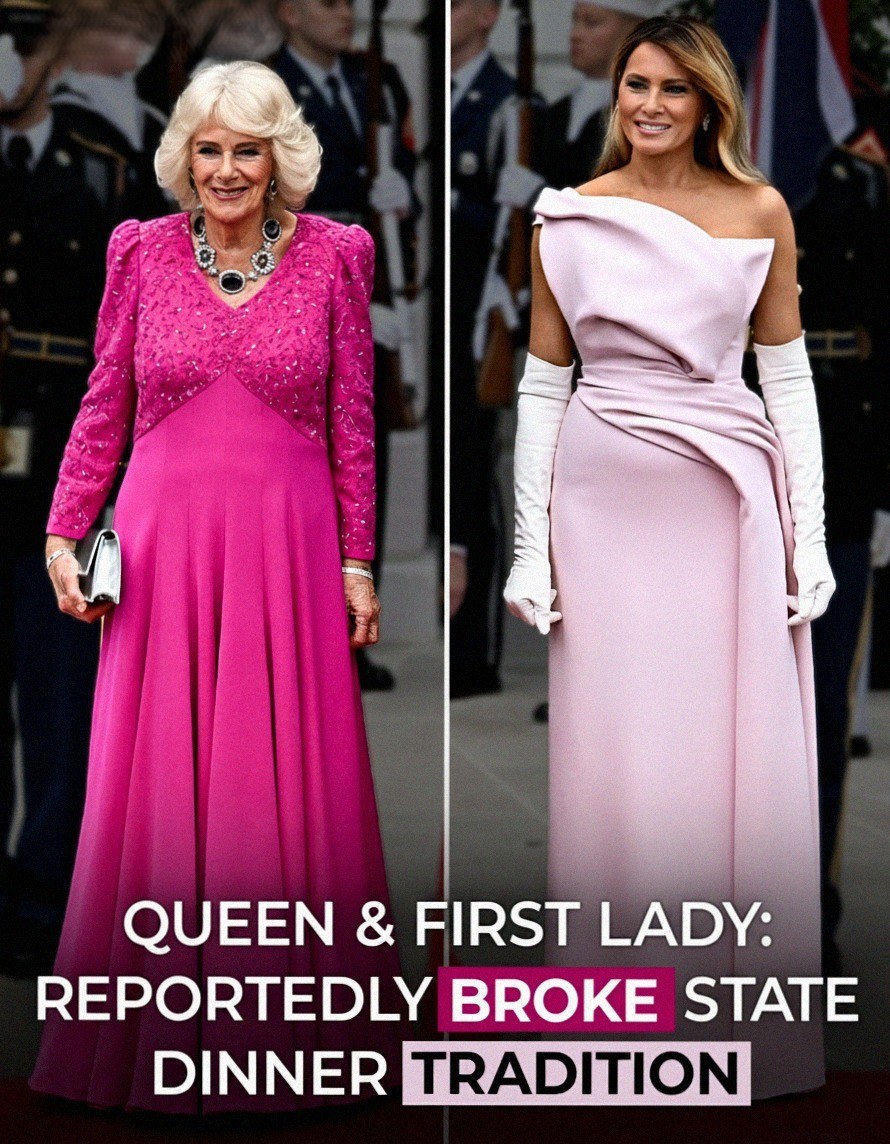
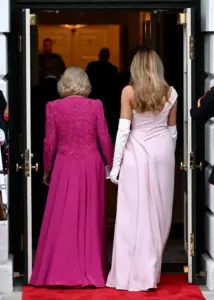
Melania Trump’s appearance at the dinner immediately became a focal point of public discussion. She wore a pale pink silk gown designed by Jonathan Anderson for Christian Dior, featuring a structured silhouette that emphasized simplicity and modern elegance. The gown was paired with long opera gloves in a soft neutral tone and coordinated heels, creating a refined and carefully balanced look. The overall styling suggested a deliberate effort to maintain a minimalist yet formal presence suitable for a high-profile diplomatic setting.
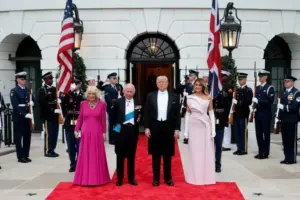
Observers noted that the color choice, a soft delphinium-inspired pink, may have carried subtle symbolic meaning. Delphinium flowers are often associated with admiration and positivity and are also known to be among King Charles III’s favored botanical references. While no official statement confirmed intentional symbolism, fashion analysts often interpret such choices within the broader context of diplomatic styling, where color coordination can reflect awareness of the event’s significance and host preferences.
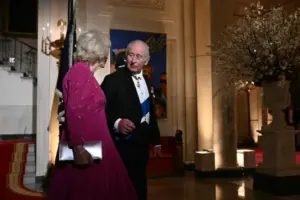
Queen Camilla also appeared in pink, though in a noticeably brighter and more traditional shade. Her gown followed a more classic royal silhouette and was complemented by a diamond necklace that added a formal and historic touch to her appearance. The contrast between the two outfits highlighted different interpretations of formal dressing—one leaning toward modern minimalism and the other toward established royal tradition. King Charles III and President Donald Trump both wore white-tie attire, reinforcing the formal structure of the evening.
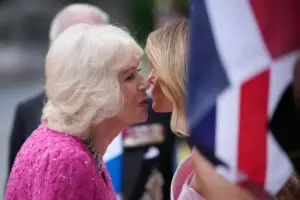
Following the event, public reactions across social media platforms were immediate and varied. Many viewers praised the elegance of the outfits, particularly highlighting the refinement of Melania Trump’s gown and the traditional presence of Queen Camilla’s attire. Others, however, expressed differing opinions, focusing on stylistic interpretations and personal preferences. As is common with high-profile public appearances, fashion choices quickly became a subject of widespread online discussion and debate.
Some commentators suggested that Melania Trump’s outfit reflected a modern approach to diplomatic fashion, blending simplicity with high fashion design. Others interpreted the look differently, comparing it to past formal styles and expressing mixed opinions on its overall impact. Queen Camilla’s outfit also received attention, with discussions focusing on its traditional structure and royal accessories, which many associated with long-established ceremonial dress codes.
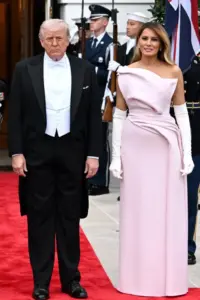
A broader discussion emerged around evolving fashion expectations at state banquets. Traditionally, white has often been considered a standard formal color for such occasions, symbolizing neutrality and elegance. Historical examples of state dinners have frequently followed this convention. However, more recent diplomatic events have shown greater variation in color choices, reflecting changing fashion norms and personal expression within formal protocol boundaries.
Earlier in the same visit, both women wore distinct outfits that appeared to reflect their respective national identities and designers. Melania Trump was seen in a butter-yellow tailored suit designed by an American designer, while Queen Camilla wore a soft white ensemble created by a British fashion house. These choices were widely interpreted by commentators as subtle acknowledgments of domestic fashion industries, adding another layer of meaning to the diplomatic visit.
Alongside fashion discussions, the visit also coincided with wider media attention involving public commentary and political debate. Statements and reactions from public figures generated additional online discussion, particularly around the intersection of entertainment, politics, and public perception. In such environments, fashion coverage often becomes intertwined with broader narratives, amplifying visibility and engagement across media platforms.
In parallel, commentary from public figures and media personalities contributed to ongoing conversations about humor, public speech, and media responsibility. These discussions, while separate from the diplomatic event itself, became part of the broader media cycle surrounding the visit. As a result, attention was divided between political developments, cultural commentary, and fashion analysis.
Despite the surrounding debates, the state dinner remained a formal diplomatic occasion intended to strengthen international relations. The presence of both the British royal family and U.S. leadership underscored the importance of continued dialogue between the two nations. Events of this scale often carry multiple layers of meaning, combining official diplomacy with cultural presentation and public engagement.
Fashion analysts emphasized that high-profile state visits frequently serve as platforms where clothing choices are interpreted beyond aesthetics. Colors, designers, and silhouettes can all be viewed through the lens of symbolism, cultural identity, and soft diplomacy. While interpretations vary widely, these discussions contribute to the broader understanding of how public figures present themselves in international settings.
Ultimately, the state visit demonstrated how modern diplomacy extends beyond formal speeches and meetings. Visual presentation, media coverage, and public interpretation all play a role in shaping how such events are perceived globally. Fashion, in particular, continues to serve as an important element of diplomatic visibility, often generating discussion that lasts long after the official ceremonies conclude.
The evening concluded as a formal success in diplomatic terms, while also leaving a strong cultural imprint through its visual and stylistic elements. As coverage continued in the following days, the combination of political engagement and fashion commentary reinforced the idea that modern state visits are as much about perception and symbolism as they are about protocol and tradition.