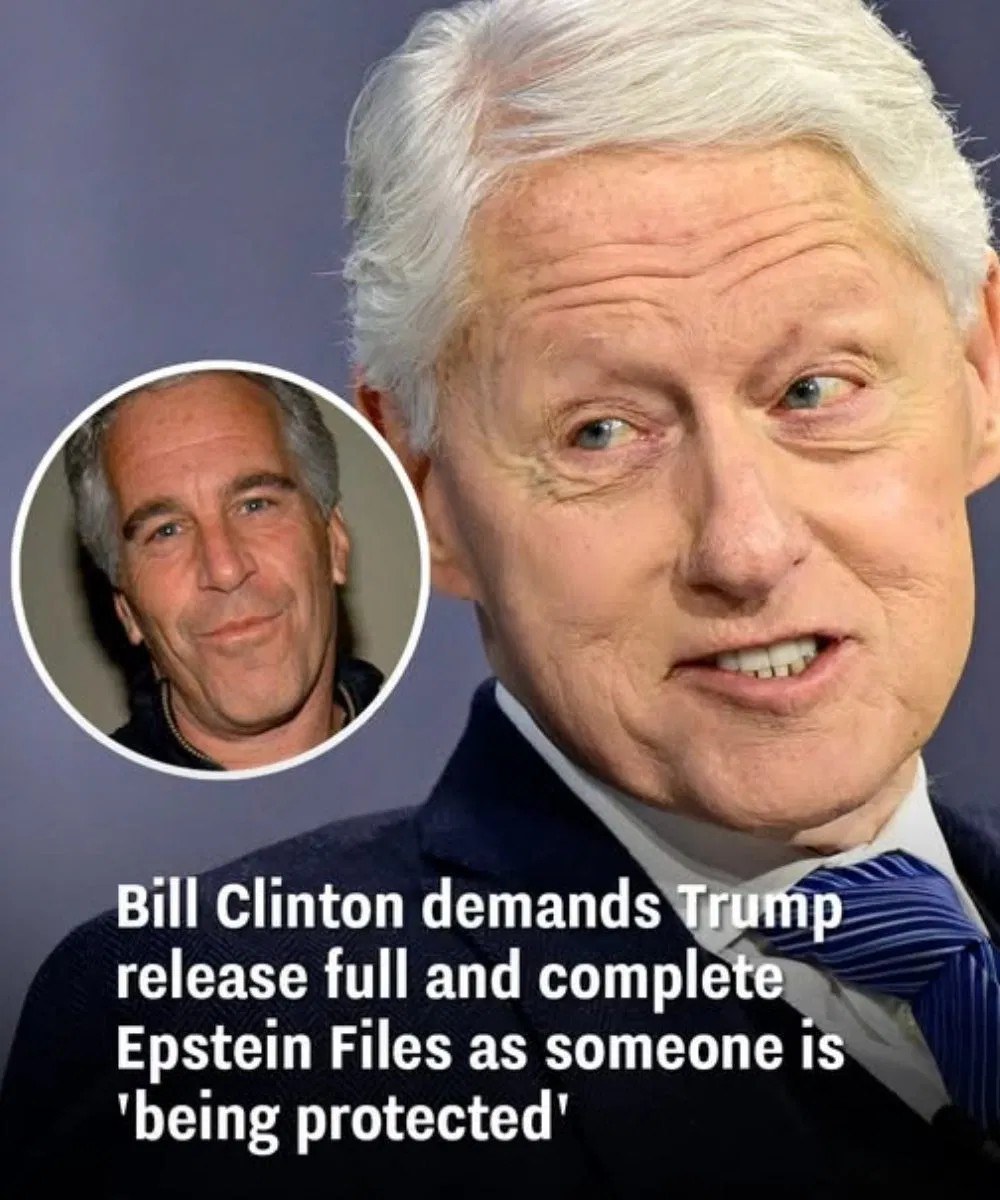
Clinton Urges Trump to Make Full Epstein Records Public, Citing Someone ‘Under Protection’
Former U.S. President Bill Clinton has once again stepped into the center of a national conversation regarding the Jeffrey Epstein scandal, but this time, he is the one demanding answers. In an aggressive push for public accountability, Clinton’s legal and communications teams are calling on federal authorities to release all unredacted documents and records related to the deceased financier, arguing that the current “selective disclosure” of files is distorting the truth and fueling misinformation. While Clinton has never faced allegations or criminal charges in connection with Epstein’s illicit activities, his name has appeared in several tranches of court documents. The circulation of photographs featuring the former president alongside Epstein and his convicted associate, Ghislaine Maxwell, has fueled a decade of media scrutiny—a dynamic Clinton’s representatives say can only be neutralized by total transparency.

The Redaction Dilemma: Selective Protection or Procedural Necessity?
Since the 2019 death of Jeffrey Epstein in a federal detention center, the Department of Justice has released nearly 300,000 files. These documents, ranging from depositions to investigative logs, offer a window into a vast network of abuse. However, the vast majority of these materials are heavily redacted—blacked out to protect the identities of minors, witnesses, and ongoing investigations.
Clinton’s spokesperson, Angel Ureña, argues that while redactions are standard, their application in this specific case has created a “misleading impression.” According to Ureña, the inconsistent nature of these edits suggests a narrative of selective protection.
“What has been released so far suggests someone is being protected,” Ureña said in a recent statement. “President Clinton requires no such protection, and the American public deserves a clear, unvarnished picture of the facts.”
Context in the Age of Viral Misinformation
The push for unredacted files is a direct response to the “guilt by omission” that often thrives on social media. Clinton’s team contends that when a document is partially obscured, the public is left to fill in the blanks with speculation.
The historical context of the relationship remains a point of intense public interest. It is well-documented that Clinton traveled on Epstein’s private jet on multiple occasions during his post-presidency years, primarily for travel related to the Clinton Foundation’s global initiatives. While reports suggest these interactions were philanthropic in nature, the lack of full documentary context allows photographs taken in public or social settings to be interpreted as evidence of impropriety.
“Incomplete disclosure allows narratives to form based on what is hidden rather than what is factual,” Ureña added.
The Legal Framework: The Epstein Files Transparency Act
The formal request for disclosure cites the Epstein Files Transparency Act, a legal mechanism designed to facilitate the release of records related to the case. Clinton’s team is not frameing this as a defensive maneuver, but as a principled demand for fairness.
They argue that the Department of Justice’s current handling of the files risks eroding confidence in the judicial process. By providing the public with “contextual accuracy,” the former president’s team hopes to ground public discourse in evidence rather than the “viral nature of social media,” where nuanced depositions are often reduced to out-of-context snippets.
Broader Implications for Government Integrity
Beyond the personal stakes for the former president, the call for full disclosure touches on a larger ethical concern: how government agencies manage high-profile cases. Legal analysts note that balancing the privacy of victims with the public’s right to know is a delicate operation. However, Clinton’s representatives maintain that when redactions are so extensive that they misrepresent the context of interactions, they cease to be protective and become obstructive.
Next Steps: The Ball is in the Government’s Court
Federal authorities have not yet indicated if they will move to lift the redactions in response to Clinton’s request. The process remains fraught with complexity, as any move to unseal records must be balanced against standing court orders and the safety of Epstein’s victims.
Nonetheless, Clinton’s team appears prepared to pursue all available legal avenues. Their strategy signals a shift in tone—moving from a posture of quiet distance to one of active engagement with the records themselves.
Conclusion As the nation continues to untangle the legacy of Epstein’s crimes, the demand for “unvarnished facts” represents a critical test of the American legal system’s transparency. For Bill Clinton, the goal is clear: ensure the public sees the full story so that history is written based on fact, not conjecture.