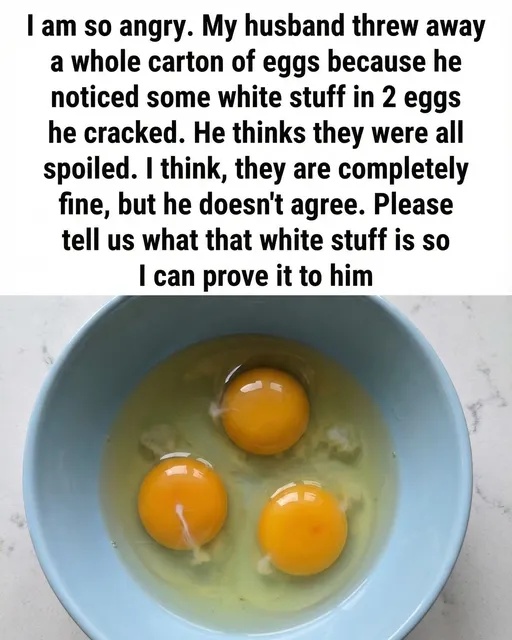
What Is the White Strand in Eggs? A Simple Explanation
When you crack open an egg, you might notice a thin, white, string-like strand attached to the yolk. At first glance, it can look unusual and may even cause concern if you’re not sure what it is. Some people assume it’s a sign the egg has gone bad or that something is wrong. Fortunately, that’s not the case. This small detail is completely natural and safe. In fact, it’s often a sign that your egg is fresh.

The white strand is known as the chalaza. It’s a rope-like structure made of protein that serves an important purpose inside the egg. Its main role is to keep the yolk centered and stable within the egg white. Think of it as a built-in support system. As eggs are moved or handled, the chalaza helps prevent the yolk from shifting too much or pressing against the shell.
Most eggs actually contain two chalazae—one on each side of the yolk. However, depending on how the egg is cracked and how it lands in the bowl or pan, you may only notice one of them clearly. The size and visibility of the chalaza can vary from egg to egg.
Interestingly, the chalaza can also give you a clue about freshness. In fresher eggs, it tends to be thicker, firmer, and more noticeable. As eggs age, the chalaza gradually becomes thinner and less defined. So if you see a prominent white strand, it usually means the egg hasn’t been sitting around for too long. Rather than being a flaw, it’s often a positive sign.
From a food safety standpoint, the chalaza is completely edible. It’s made of the same kind of protein found in egg whites and poses no health risk. When cooked, it blends into the rest of the egg and becomes virtually undetectable. Whether you’re scrambling, frying, boiling, or baking, it won’t affect flavor or texture in most everyday recipes.
The only time you might consider removing it is when preparing dishes that require an especially smooth consistency, such as custards, puddings, or delicate sauces. Even then, removing it is more about achieving a silky texture than addressing any safety concern.
Understanding what the chalaza is can help make cooking with eggs feel more straightforward and reassuring. Food often contains natural structures that may look unfamiliar at first but serve a specific purpose. Learning about these details helps build confidence in the kitchen and reduces unnecessary worry.
So the next time you see that white strand attached to the yolk, there’s no need to second-guess your ingredients. It’s simply part of the egg’s natural design—an indicator of freshness and a small example of how thoughtfully nature organizes even the simplest foods.
Looking Deeper: How the Egg Is Designed
To better understand the white strand inside an egg, it helps to take a closer look at the egg’s internal structure as a whole. Eggs are carefully designed natural systems, with each part serving a specific function. What may appear simple on the outside is actually a highly organized structure meant to protect and nourish.
An egg consists of several key components:
-
The shell
-
The outer and inner membranes
-
The egg white (albumen)
-
The yolk
-
The air cell
-
And the chalaza
Each of these parts plays a role in maintaining freshness, protecting nutrients, and supporting the egg’s internal balance.
The shell provides a protective outer layer while still allowing minimal air exchange through tiny pores. Just beneath the shell are two thin membranes that add another layer of defense. Inside, the egg white cushions the yolk and supplies water and protein. The yolk contains fats, vitamins, and minerals.
And then there is the chalaza — the natural stabilizer that quietly keeps everything centered.
Why the Yolk Needs Support
You might wonder why the yolk needs to stay centered at all. The answer lies in both structure and freshness.
The yolk is the most nutrient-dense part of the egg. It is also more delicate than the surrounding egg white. Without support, it could shift too much, weaken, or come into contact with the shell.
The chalaza works like a gentle anchor. It connects the yolk to the egg’s membranes, holding it in place while still allowing slight movement. This positioning helps protect the yolk from damage and keeps the egg’s internal balance intact.
When you crack a very fresh egg onto a flat surface, you may notice that the yolk sits tall and rounded. That’s partly due to the firmness of the albumen and the strength of the chalaza. In older eggs, the yolk may flatten more easily because internal structures gradually weaken over time.
The Science Behind Freshness
Egg freshness changes naturally as time passes. Even when properly refrigerated, eggs slowly lose moisture and carbon dioxide through the shell’s tiny pores. As this happens:
-
The air cell inside the egg grows larger.
-
The egg white becomes thinner.
-
The chalaza becomes less firm.
This is completely normal. It does not mean the egg is unsafe — just that it is aging.
The chalaza’s appearance can actually be a helpful indicator. A thick, clearly visible strand usually suggests the egg is relatively fresh. A faint or barely visible one often means the egg has been stored longer.
This subtle detail is something many home cooks don’t realize. What looks unusual at first glance can actually provide useful information.
Does the Chalaza Affect Taste?
A common concern is whether the white strand affects flavor. The simple answer is no.
The chalaza is composed of protein, just like the egg white. It has no distinct taste of its own. When cooked, it blends seamlessly into the rest of the egg.
In scrambled eggs or omelets, it disappears entirely. In baked goods such as cakes, muffins, or breads, it becomes completely undetectable. Even in boiled eggs, it remains subtle and does not change texture in a noticeable way.
The only time texture may matter is in delicate culinary applications where smoothness is key — such as custards, pastry creams, or certain sauces. In those cases, straining the egg mixture removes any visible strands, creating a silkier result.
For everyday cooking, however, there is no practical reason to remove it.
Common Myths About the White Strand
Over time, several misconceptions have developed about the chalaza. Let’s clear up a few of the most common ones.
Myth 1: It Means the Egg Is Fertilized
The presence of a chalaza has nothing to do with fertilization. All eggs — fertilized or not — contain chalazae. They are a normal structural feature of egg development.
Myth 2: It Indicates Spoilage
Spoiled eggs usually show other signs, such as a strong unpleasant odor or unusual discoloration. The white strand alone is not a sign of spoilage. In fact, it often suggests freshness.
Myth 3: It Should Always Be Removed
There is no health or safety reason to remove it. Leaving it in does not affect nutritional value or quality.
Understanding these points helps reduce unnecessary waste. Many perfectly good eggs have likely been discarded simply because someone misunderstood what they were seeing.
Nutritional Value of Eggs
Since we’re exploring egg structure, it’s also helpful to appreciate their nutritional profile.
Eggs are widely valued for being:
-
A complete source of protein
-
Rich in essential amino acids
-
A source of vitamins such as B12 and D
-
Containing minerals like selenium and phosphorus
The chalaza, being made of protein, contributes in the same way egg white does. Though small, it fits into the egg’s overall nutritional design.
When eaten as part of a balanced diet, eggs can be a versatile and nourishing food choice.
Egg Storage and Handling Tips
To keep eggs fresh and maintain their internal structure, proper storage matters.
Here are a few practical guidelines:
-
Store eggs in the refrigerator rather than at room temperature.
-
Keep them in their original carton to protect from moisture loss and odors.
-
Avoid washing eggs before storage, as this can remove protective coatings.
-
Use older eggs first to maintain rotation.
Freshness affects not only the chalaza but also overall texture and cooking performance.
Visual Differences in Egg Whites
While discussing the chalaza, it’s worth noting that egg whites themselves can vary in appearance.
Fresh egg whites are typically:
-
Thicker
-
More cohesive
-
Less watery
Older egg whites may spread more quickly across a pan.
These changes are natural and part of the egg’s aging process. The chalaza is just one visible piece of that larger picture.
Cultural and Culinary Perspectives
Across different cuisines, eggs are prepared in countless ways. From soft-boiled breakfasts to baked desserts and savory dishes, eggs play a central role in cooking worldwide.
In professional kitchens, chefs are trained to recognize every part of an egg and understand its function. The chalaza is simply accepted as part of the egg’s anatomy.
In some cases, pastry chefs strain eggs before mixing them into batters to ensure maximum smoothness. But in most cooking styles, the chalaza is left untouched.
This awareness highlights an important idea: knowledge reduces confusion. When we understand ingredients better, cooking becomes more intuitive and less intimidating.
Teaching Kids About Food Structure
The chalaza can even serve as a small learning opportunity. For children who are curious about food, cracking open an egg and spotting the white strand can spark questions.
Explaining that it helps hold the yolk in place introduces basic ideas about structure and biology. Food becomes not just something to eat, but something to explore and understand.
Encouraging curiosity in the kitchen builds confidence and healthy food habits over time.
Why Natural Variations Matter
One of the most valuable lessons from noticing the chalaza is that natural foods are not perfectly uniform. Unlike heavily processed products, whole foods vary slightly in shape, texture, and appearance.
These variations are signs of authenticity, not defects.
Eggs may differ in:
-
Shell color
-
Yolk shade
-
Albumen thickness
-
Chalaza visibility
All of these differences fall within normal ranges.
Recognizing that natural variation is normal can help reduce unnecessary concern when cooking.
When to Discard an Egg
While the chalaza itself is harmless, it’s helpful to know actual signs of spoilage.
An egg should be discarded if:
-
It produces a strong unpleasant odor when cracked.
-
The egg white appears unusually cloudy or discolored.
-
The yolk has an abnormal color or texture.
If you’re ever unsure, the smell test is often reliable. Fresh eggs have little to no odor.
Again, the presence of the white strand alone is not a warning sign.
Appreciating Simple Foods
Sometimes, small details like the chalaza remind us that even the most common foods have thoughtful structure behind them.
An egg may seem ordinary, yet it contains carefully arranged components designed for protection, balance, and nourishment. The chalaza is just one small example of how natural systems function efficiently.
Understanding this can make everyday cooking feel more meaningful. Instead of seeing something unfamiliar and worrying, you can recognize it as part of a natural process.
Final Thoughts
The white strand inside an egg — the chalaza — is a normal, safe, and functional part of the egg’s structure. Rather than being a flaw, it often signals freshness and stability.
It keeps the yolk centered, protects internal balance, and blends seamlessly into food once cooked. There is no need to remove it in typical recipes, and it poses no health risk.
By learning about simple details like this, we build confidence in the kitchen and develop a better understanding of the foods we prepare.
The next time you crack open an egg and notice that thin white strand, you’ll know exactly what it is — a natural support system, quietly doing its job.
And sometimes, the more we learn about everyday ingredients, the more we appreciate how thoughtfully even the simplest foods are designed.