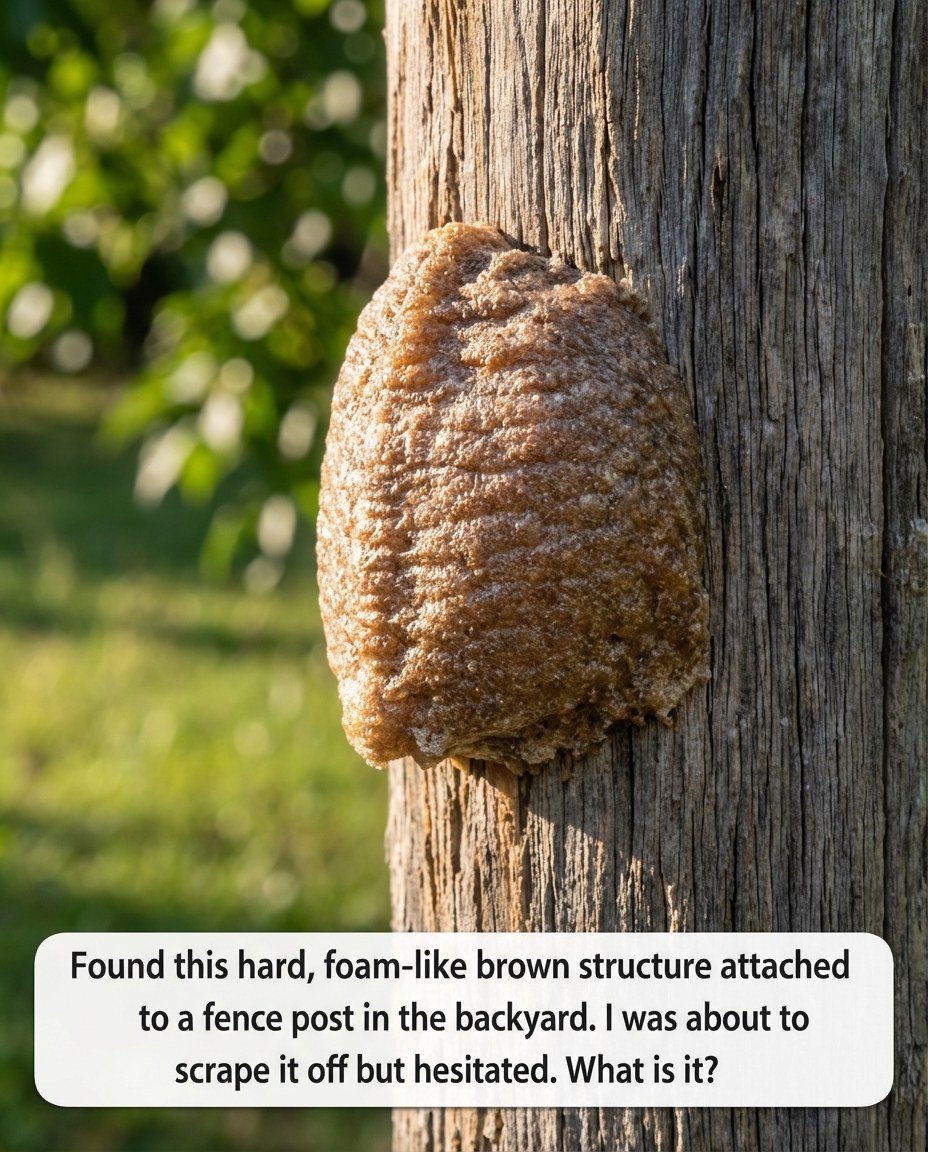
Found a Hard, Foam-Like Brown Clump on Your Fence? Here’s What It Could Be
If you’ve recently noticed a strange, hard, foam-like brown lump attached to a fence post, branch, or garden structure, your first instinct might be to scrape it off or wonder if it’s harmful. At first glance, it might look like an odd growth, a clump of dirt, or even some sort of fungus. But before you remove it, take a closer look — this peculiar mass is often a sign that your backyard ecosystem is thriving in ways you may not have realized.

What That Brown Clump Really Is
In many cases, this mysterious structure is actually a praying mantis egg case, scientifically called an ootheca. After mating in late summer or early fall, female mantises produce a frothy substance that hardens into a protective shell. Inside, dozens — sometimes hundreds — of tiny eggs develop through the winter months. The ootheca is tan to light brown, roughly one to two inches long, and has a slightly spongy, ridged texture that helps it blend in with twigs, fence posts, and other natural structures.
This casing is remarkably durable, designed to withstand cold temperatures, rain, and predators. It ensures that the next generation of mantises emerges safely when the weather warms in spring. Although it may appear small and unassuming, the ootheca is a remarkable example of nature’s engineering and survival strategy.
Why Praying Mantises Are Good for Your Garden
Once the eggs hatch in spring, tiny mantises emerge ready to hunt. They are natural predators, feeding on insects like aphids, flies, caterpillars, and other common garden pests. This makes them valuable allies for gardeners, especially those seeking to reduce chemical pesticide use.
The presence of an ootheca in your yard often indicates a healthy, balanced ecosystem. It shows that predatory insects are thriving, which usually corresponds to a diverse garden with ample food sources and shelter. In other words, that mysterious brown clump is a small but meaningful sign that your outdoor space supports beneficial wildlife.
How to Handle an Ootheca
If you find a mantis egg case attached to a branch or post, it’s generally best to leave it undisturbed. Oothecae are harmless to humans and pets, and disturbing them can prevent the eggs from hatching successfully.
If the egg case is in a high-traffic area or somewhere that could be damaged, it can be carefully relocated. The safest way to do this is to:
-
Trim the small branch or surface it’s attached to.
-
Move it to a protected spot in your yard, ideally somewhere with shrubs or garden plants that offer shelter.
-
Secure it upright, mimicking its original orientation, so the eggs can develop properly through winter.
With a little care, you can help the next generation of mantises survive and continue contributing to your garden’s health.
Identifying an Ootheca
While they can vary slightly in appearance, most mantis egg cases share some common characteristics:
-
Color: Typically tan, light brown, or beige.
-
Shape: Oval or elongated, roughly the size of a small walnut.
-
Texture: Ridged and slightly spongy, sometimes described as foam-like.
-
Location: Often found on branches, fence posts, or garden stakes where they can be somewhat concealed.
Some people confuse oothecae with insect nests or fungal growths, but careful observation usually reveals their distinctive foam-like, ridged texture and their secure attachment to a surface.
Fun Facts About Praying Mantis Eggs
-
A single ootheca can contain 50 to 400 eggs, depending on the species.
-
The eggs are typically dormant through winter, only hatching when temperatures rise in spring.
-
Mantises are cannibalistic in adulthood, but the eggs develop safely inside the protective ootheca.
-
Different species produce slightly different egg case shapes, but all share the protective frothy shell characteristic.
Encouraging Beneficial Insects
Spotting a mantis ootheca can inspire gardeners to create habitats that support beneficial insects. Consider leaving shrubs, tall grasses, or other cover where egg cases can be safely attached. By providing shelter and reducing pesticide use, you help maintain a balanced garden ecosystem, attracting not only mantises but also ladybugs, lacewings, and other helpful predators.
When Not to Worry
It’s normal to feel uneasy when encountering something unfamiliar in your yard. However, mantis egg cases are completely harmless to humans, pets, and plants. Unlike wasp nests or fungus, there’s no need for chemical removal or treatment. Simply observing, appreciating, and gently relocating if necessary is enough.
Conclusion
What may initially appear as a hard, odd, brown clump on a fence post is often a praying mantis egg case, a small but fascinating element of nature at work. It protects hundreds of future garden predators, supports a thriving ecosystem, and reminds us that even the smallest discoveries outdoors can have significant ecological importance. Next time you spot one, take a moment to admire it — it’s a signal that your backyard is alive, balanced, and ready to flourish come spring.
Different Species of Mantises and Their Oothecae
While many backyard gardeners are familiar with the common Chinese mantis (Tenodera sinensis), there are actually several mantis species in North America, each producing slightly different egg cases. For instance:
-
Chinese Mantis (Tenodera sinensis): Produces large, elongated oothecae, often 1.5–2 inches long, tan or light brown in color. These are the most commonly seen egg cases in gardens.
-
Carolina Mantis (Stagmomantis carolina): Typically smaller, with egg cases around 1 inch long. They often attach to stems or twigs close to the ground.
-
European Mantis (Mantis religiosa): Produces oothecae similar in size to the Chinese mantis but with a smoother texture. These are less common in most U.S. gardens but are occasionally spotted in northern states.
Understanding the species can help gardeners anticipate when and where the eggs will hatch. For example, oothecae of the Chinese mantis may overwinter in areas that experience frost, whereas Carolina mantis eggs are slightly more sensitive to extreme cold.
Seasonal Life Cycle and Hatching
The mantis life cycle is closely tied to seasonal temperature changes. After the female lays her eggs in late summer or early fall, the ootheca hardens to protect them through winter. During this time, the eggs remain dormant, impervious to frost and moderate snow.
As spring arrives and temperatures rise, the eggs begin to hatch. This usually occurs when daytime temperatures consistently reach 65–75°F (18–24°C). Depending on the species, dozens to hundreds of tiny mantises emerge at once, often within the same week. These juveniles, known as nymphs, are fully equipped to start hunting immediately.
The nymph stage is critical: mantises are tiny and vulnerable, so a well-placed ootheca — protected from predators and harsh conditions — can significantly improve survival rates. By spring, these emerging predators help control populations of aphids, caterpillars, flies, and other garden pests.
How to Protect Oothecae Over Winter
Gardeners who wish to help mantises thrive can take a few precautions during winter months:
-
Leave Oothecae Undisturbed: The safest approach is to allow the egg case to remain in place where it was laid. Moving it unnecessarily can damage the eggs.
-
Provide Shelter: If an ootheca is in a highly exposed location, consider relocating it to a sheltered spot that still receives some sunlight. Shady, overly damp locations may encourage mold growth.
-
Avoid Chemical Sprays: Pesticides and fungicides can destroy eggs. Minimize chemical use near oothecae to ensure the next generation can hatch successfully.
-
Secure Delicate Branches: If a small twig is the attachment point, gently support it so that wind and heavy snow don’t dislodge the egg case.
Following these steps helps maintain healthy populations of beneficial insects in your garden, reducing reliance on artificial pest control.
The Role of Mantises in Integrated Pest Management
Praying mantises are often called “garden guardians” because they naturally regulate insect populations. They are a prime example of integrated pest management (IPM) — a sustainable approach to pest control that emphasizes natural predators over chemical solutions.
By encouraging mantises, gardeners can reduce infestations of common pests without harming plants or beneficial insects. Mantises are generalist predators, meaning they consume a wide range of insects, which helps maintain balance in the garden ecosystem. Unlike chemical pesticides, mantises do not leave harmful residues or disrupt soil health.
Observing and Learning from Oothecae
Finding an ootheca offers a unique opportunity for education and observation. Families with children can use the egg cases to teach lessons about insect life cycles, biology, and the interconnectedness of ecosystems. Simple activities include:
-
Sketching or Photographing: Documenting oothecae before winter provides a record of where mantises are likely to emerge in spring.
-
Timing Hatch Dates: Observing the hatching process can teach children about temperature-dependent development in insects.
-
Garden Journals: Recording which plants are near oothecae can reveal patterns about preferred mantis habitats.
By engaging with nature in this hands-on way, people of all ages gain a better understanding of biodiversity and the importance of predatory insects in sustainable gardening.
Common Misidentifications
While mantis egg cases are often distinctive, they can sometimes be mistaken for other structures:
-
Fungal Growth: Some fungi, especially brown or tan shelf fungi, can resemble oothecae at a glance, but fungi are softer and often have spores visible on the surface.
-
Other Insect Nests: Certain wasps and leafhoppers build foam-like nests, but these are usually smaller, differently shaped, and located in clusters.
-
Debris or Sap Clumps: Occasionally, hardened sap or compacted plant material may be confused with egg cases, but they are irregularly shaped and lack the ridged texture of a true ootheca.
Proper identification ensures that gardeners leave beneficial oothecae undisturbed rather than removing them accidentally.
The Ecological Message
Discovering a mantis egg case is a small but powerful reminder of the complexity and resilience of local ecosystems. Even in urban or suburban backyards, these insects play a crucial role in maintaining ecological balance. Their presence indicates that your garden provides food, shelter, and a relatively pesticide-free environment — all vital elements for a thriving ecosystem.
Encouraging a Healthy Backyard Environment
Gardeners can further support mantises and other beneficial insects by:
-
Planting native shrubs and flowers to attract prey species.
-
Providing water sources, such as shallow dishes or small birdbaths.
-
Reducing chemical pesticide use to avoid harming predators.
-
Creating vertical habitats with trellises, stakes, or garden structures where egg cases can attach safely.
Even small changes can significantly improve survival rates for mantis populations, benefiting the garden long-term.
Conclusion
That hard, foam-like brown clump you may have noticed on a fence post, tree branch, or garden structure is likely a praying mantis egg case — a fascinating and harmless sign that your backyard ecosystem is active and balanced. Inside each ootheca are dozens or hundreds of future garden predators ready to hatch in spring, helping control pests naturally.
By recognizing and protecting these egg cases, gardeners contribute to the health of their outdoor spaces, reduce reliance on chemicals, and gain an up-close connection with nature. The next time you spot one, pause and appreciate this tiny, hidden marvel — a small but extraordinary testament to life quietly unfolding in your own backyard.