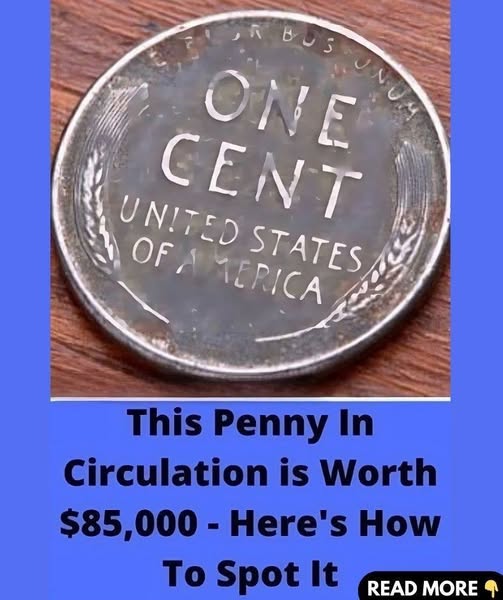
How to Spot the 1943 Penny That Could Be Worth $85,000
Coin collectors and casual enthusiasts alike are buzzing over a rare find: a 1943 copper penny that, if in pristine condition, could be worth as much as $85,000. Multiple sources, including Coin Trackers, the New York Post, KHOU, and Daily Mail UK, have highlighted this remarkable coin, which is considered one of the most valuable accidental rarities in modern U.S. coinage.

Why 1943 Pennies Are Unique
To understand the value of this rare penny, it helps to know a bit of history. In 1943, during the height of World War II, the United States government needed copper for military purposes, including ammunition and other wartime materials. As a result, the U.S. Mint made a significant change to the composition of pennies that year.
Instead of the traditional copper, all 1943 pennies were struck on steel planchets and coated with zinc to prevent rust. The zinc-plated steel pennies were meant to conserve copper while still allowing coins to circulate normally. According to Coin Week, “Because copper was needed for purposes relating to World War II, all 1943 cents were planned to be struck on zinc-coated steel planchets.”
How a “Mistake” Penny Came to Be
Despite strict quality control, a few copper blanks accidentally slipped into the minting process in 1943. These rare errors are now known as “1943 copper wheat pennies.” Unlike the standard steel cents, these pennies are solid copper and carry the same design as other wheat pennies from that era, featuring the classic Lincoln head on the obverse and the wheat ears on the reverse.
What makes these coins exceptionally valuable is their extreme rarity. Only a handful of confirmed copper 1943 pennies are known to exist. Most are in private collections, while a few have surfaced at auctions over the decades, often fetching sums in the five- and six-figure range.
Value and Condition
The worth of a 1943 copper penny depends heavily on its condition. Coins in mint or near-mint condition — free from scratches, discoloration, or other damage — can command prices up to $85,000, according to collectors and dealers. Even pennies with minor imperfections are highly sought after, though their value may be slightly lower.
Experts, including Royal Coin and Jewelry, a Houston-based dealer specializing in rare coins, emphasize that verifying authenticity is essential. Because of the coin’s potential value, counterfeit versions exist, often made by coating steel pennies in copper or altering regular pennies to mimic the rare 1943 copper variety. Professional grading and verification are recommended before buying or selling one.
How to Identify a 1943 Copper Penny
If you think you may have stumbled upon a valuable coin, here’s what to look for:
-
Weight: Copper pennies weigh slightly more than steel pennies. A genuine copper 1943 penny weighs about 3.11 grams, while the steel version weighs around 2.7 grams.
-
Magnet Test: Steel pennies are magnetic; copper pennies are not. If a penny sticks to a magnet, it’s not the rare copper type.
-
Color: Copper pennies have a reddish-brown hue, whereas steel pennies appear silver or gray.
-
Mint Mark and Date: Confirm that the coin is dated 1943 and check for the mint mark to ensure it matches known copper examples.
Historical Significance
Beyond its monetary value, the 1943 copper penny is a fascinating piece of American history. It serves as a reminder of the impact of World War II on daily life, including something as ordinary as coinage. The minting error highlights how even carefully controlled processes can produce unexpected anomalies that become treasured collectibles decades later.
Collectors also appreciate the story behind the coin — a small, seemingly insignificant object that gained importance due to historical circumstances. In many ways, it’s more than just a coin; it’s a tangible connection to the era and the extraordinary events that shaped the world at that time.
Tips for Collectors
For anyone searching through coin rolls or inherited collections, it’s worth keeping an eye out for 1943 pennies. Even if you don’t find a copper version, examining coins carefully can sometimes reveal other rare or valuable minting errors, such as doubled dies or off-center strikes.
If you do believe you’ve discovered a 1943 copper penny, experts recommend:
-
Handle it carefully: Oils and dirt from fingers can reduce the coin’s value. Use gloves or hold it by the edges.
-
Have it graded: Trusted grading companies can verify authenticity and provide a condition rating, which heavily influences price.
-
Seek professional advice: Before selling or auctioning, consult reputable coin dealers or auction houses to ensure a fair transaction.
Final Thoughts
The 1943 copper wheat penny is more than a rare coin — it’s a piece of history, a symbol of wartime innovation and scarcity, and a reminder that even mistakes can become treasures. With values reaching $85,000 for mint-condition examples, it captures the imagination of collectors and casual observers alike.
Next time you handle coins, take a closer look. You might be holding a small piece of history that could turn out to be incredibly valuable. With the right knowledge and a bit of luck, the next great discovery could be just a penny away.
Notable Sales and Auction Records
Over the years, a handful of 1943 copper pennies have surfaced at auctions, often fetching staggering prices. For example, one of the earliest known specimens sold in the late 20th century for around $100,000, highlighting the coin’s rarity and desirability among collectors. Another example appeared in a high-profile auction in the 2010s and sold for a six-figure sum to a private collector. Each new discovery drives excitement in the coin-collecting community, and every transaction reinforces the coin’s status as one of the most coveted mint errors in American numismatics.
Collectors are particularly interested in documented provenance — a verified history of ownership that traces the coin back to its discovery. Coins with clear provenance tend to command higher prices, as buyers have confidence in authenticity. Auction houses and coin grading services often require detailed documentation, including photographs, sale records, and professional assessments, to ensure that the 1943 copper penny maintains its high value.
Why Copper vs. Steel Makes a Difference
The metal composition is the key factor behind the 1943 penny’s value. Steel pennies, coated in zinc, were common during the wartime era and are generally inexpensive, often worth only a few cents to a few dollars depending on condition. Copper, on the other hand, is much rarer in this context because only a few accidental blanks entered the minting process.
The rarity of the copper penny, combined with its historical significance, creates a perfect storm for collectors. It’s not merely about the material itself — it’s about the story behind the coin. Each copper penny represents a “what if” scenario in minting history, making it an artifact of both numismatic and historical interest.
Identifying Authentic Copper 1943 Pennies
Because of the coin’s value, counterfeit versions are not uncommon. Some sellers attempt to create fake copper pennies by coating steel pennies with copper paint or electroplating. To protect yourself as a collector or seller, it’s essential to know the proper identification methods:
-
Weight Test: Authentic 1943 copper pennies weigh approximately 3.11 grams, while steel pennies weigh about 2.7 grams. A precise scale is necessary to confirm this.
-
Magnet Test: Copper is non-magnetic. If a penny sticks to a magnet, it is almost certainly steel and not a true copper error.
-
Color and Luster: Genuine copper pennies have a distinct reddish-brown color, while coated steel pennies often appear unnaturally shiny or uneven in hue.
-
Professional Grading: Certified grading services, such as PCGS or NGC, can authenticate and grade coins, providing confidence in both condition and value.
Collectors are advised to avoid cleaning rare coins themselves, as even mild polishing or harsh chemicals can drastically reduce value. Preservation of original patina is crucial for maintaining high auction prices.
Historical Context: Wartime Coinage
The story of the 1943 copper penny is deeply intertwined with the global context of World War II. Copper was a critical material for ammunition, electrical components, and other military needs. By switching pennies to steel, the U.S. government ensured that resources could be diverted to the war effort while still maintaining coin circulation.
This change demonstrates how global events can influence everyday objects in unexpected ways. A simple coin, normally overlooked, became a reflection of national priorities and wartime scarcity. The accidental copper pennies are reminders of how even minor production errors can gain immense value over time, especially when paired with historical significance.
Tips for Collectors and Enthusiasts
For anyone interested in pursuing rare coin collecting, the 1943 copper penny serves as both inspiration and a cautionary tale. Here are a few practical tips:
-
Check Inherited Collections: Many rare pennies have been hiding in old coin rolls, jars, or family collections for decades. A careful inspection of coins from the 1940s could reveal unexpected treasures.
-
Use Professional Resources: Books, online databases, and coin forums can provide guidance on identifying mint errors and verifying authenticity.
-
Avoid DIY Alterations: Never attempt to enhance or clean a rare coin. Doing so can destroy its value, sometimes permanently.
-
Seek Expert Opinions: When in doubt, consult reputable coin dealers, appraisers, or grading services to confirm authenticity before attempting to sell or trade.
Why Collectors Value Errors
Minting errors, such as the 1943 copper penny, are particularly prized because they combine scarcity, uniqueness, and a tangible story. Collectors are drawn to anomalies that break the expected pattern of coin production. Whether it’s a misplaced mint mark, a doubled die, or a metal composition error, these imperfections become symbols of rarity and opportunity.
In the case of the 1943 copper penny, the story is compelling: a single wartime decision — to switch pennies from copper to steel — inadvertently created one of the most valuable coin errors in U.S. history. Each coin carries the legacy of that decision, making it more than just a collectible but a piece of living history.
The Cultural Impact
Beyond collectors, the 1943 copper penny has captured public imagination. Media coverage by outlets like the New York Post and Daily Mail UK has highlighted its story, turning it into a cultural talking point. People are fascinated by the idea that a small, everyday object could carry such immense value. It’s a reminder that history often hides in the most ordinary places — even in our loose change.
This fascination also extends to educational contexts. Schools and museums sometimes use rare coins like the 1943 copper penny to teach lessons about economics, history, and the impact of global events on everyday life. It’s a tangible way to connect abstract concepts like wartime resource allocation to real-world objects.
Final Thoughts
The 1943 copper penny is more than a minting error — it’s a symbol of history, scarcity, and opportunity. Worth up to $85,000 in mint condition, it reminds us that even small objects can hold immense value when chance and circumstance align.
For collectors, historians, or anyone with an eye for rare finds, this coin represents both a financial prize and a story of resilience, resourcefulness, and the unexpected consequences of historical events. The next time you sift through old pennies, remember: you might be holding more than just copper — you might be holding a piece of history that could change your life.