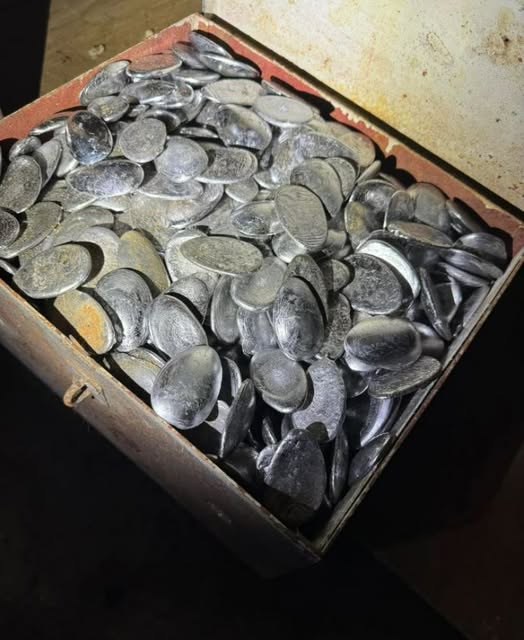
A Look Back: The Unexpected History of the Cast Iron Spoon Bullet Mold
Introduction: An Ordinary Object with an Extraordinary Story
Have you ever discovered an old household item tucked away in a drawer, attic, or workshop and wondered about its original purpose? Sometimes the most unassuming objects carry the most fascinating histories.

At first glance, a heavy cast iron spoon might seem like nothing more than a rustic kitchen tool. Its thick bowl and sturdy handle suggest it once stirred soups over an open hearth or served hearty meals in a farmhouse kitchen. But certain cast iron spoons were never meant for cooking at all.
Some of these spoons were actually bullet molds — practical tools once used in homes to create small metal projectiles or fishing sinkers. Far from factory-made specialty equipment, these were everyday tools used by families who depended on self-reliance and craftsmanship to meet their needs.
Today, the cast iron spoon bullet mold stands as a reminder of a time when households produced many essential items themselves. Its story reflects ingenuity, resourcefulness, and a way of life that prioritized skill over convenience.
Life Before Mass Production
Before industrial manufacturing became widespread, many families — particularly in rural communities — relied heavily on their own abilities. Stores were not always nearby, and ready-made goods were not always affordable or available.
In that environment, practical knowledge mattered. People repaired their own tools, preserved their own food, sewed their own clothing, and in some cases, produced their own hunting or fishing supplies.
Cast iron spoon molds were part of this broader culture of independence. Rather than depending entirely on commercial supply chains, families adapted what they had to serve multiple purposes.
The spoon-shaped design was especially useful. Cast iron could withstand high temperatures, making it suitable for handling molten materials safely. Its durability ensured it could be used repeatedly without warping or cracking. Over time, this practical design became a staple in certain households.
A Tool Rooted in Necessity
In earlier centuries, especially throughout frontier regions and rural America, hunting and fishing were not hobbies — they were often essential sources of food. Having reliable supplies was crucial.
Because transportation networks were limited and commercial goods were scarce in some areas, families frequently produced what they needed at home. Metal casting, though requiring care and skill, became one of those household crafts.
The cast iron spoon mold made this task more manageable. Its deep bowl allowed for controlled pouring into shaped molds, which formed small metal items used in everyday life. These included fishing weights and, in some contexts, simple ammunition for hunting.
The key takeaway is not the object produced, but the mindset behind it: self-sufficiency.
Nothing was wasted. Scrap materials were repurposed. Broken household items were melted down and transformed into something useful again. This approach reflected a culture that valued practicality and efficiency long before recycling became a modern movement.
Craftsmanship as Education
One of the most compelling aspects of tools like the cast iron spoon bullet mold is their role in family learning.
In many households, skills were passed down directly from one generation to the next. Children learned by observing, assisting, and eventually participating under careful supervision.
These were not casual lessons. They required patience, focus, and a respect for materials and tools. Working with heated metal demanded discipline and responsibility. Over time, young learners developed steady hands and careful habits.
More importantly, they absorbed a philosophy: the idea that knowledge and skill were valuable assets.
In an era without instructional videos or formal workshops, education happened at home. Parents taught not just techniques, but judgment — when to act, when to wait, and how to remain attentive throughout a task.
The process fostered confidence and resilience. It demonstrated that with preparation and care, people could create what they needed.
The Broader Culture of Self-Reliance
The cast iron spoon bullet mold represents something larger than its immediate function. It symbolizes a time when households were miniature workshops.
Daily life often required practical ability:
-
Repairing farm equipment
-
Building fences or sheds
-
Preserving harvests
-
Sewing and mending garments
-
Crafting tools for fishing or hunting
These skills were not hobbies; they were integrated into survival and sustainability.
Families who mastered such crafts enjoyed greater independence. They were less vulnerable to shortages and less dependent on distant suppliers. This independence cultivated a sense of pride — the satisfaction of solving problems through effort and creativity.
The spoon mold was simply one piece of a much broader ecosystem of hands-on knowledge.
A Symbol of Resourcefulness
Perhaps the most impressive aspect of tools like this is the way they reflect resourcefulness.
Cast iron itself was chosen for durability and longevity. It retained heat effectively and resisted damage. Many of these tools lasted decades — sometimes generations.