A Mother’s Tough Love: How One Letter Sparked a Viral Parenting Lesson
Parenting teenagers can often feel like navigating a shifting landscape. Adolescence is a period of rapid change, emotional turbulence, and testing boundaries. Parents are often faced with defiance, rebellion, and the challenge of instilling values while maintaining authority and respect. When a child begins acting out or showing disrespect, even the most experienced parents can feel frustrated, helpless, or unsure if they are doing enough to guide their child toward maturity.

The Letter That Changed the Dynamic
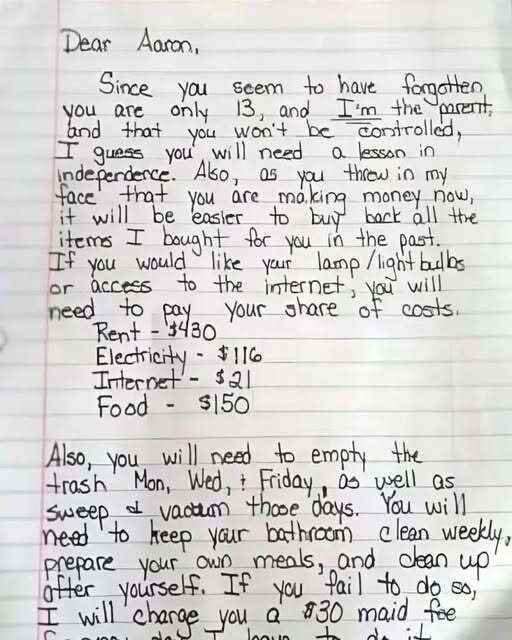
Heidi’s approach was both straightforward and creative. Instead of lecturing or issuing threats, she wrote a handwritten note that addressed the issues directly. In her letter, she highlighted how Aaron’s behavior had made her feel more like a roommate than a parent, expressing her concern in a calm but firm tone.
“I have done my best to raise you,” she wrote, “but it has become clear that you have taken me for granted. I need you to understand what it really means to live in this house.”
The letter continued with an unconventional twist—Heidi included a detailed breakdown of household expenses, including rent, utilities, groceries, and other costs. The total amounted to over $700. While this was not an expectation that Aaron would actually pay, it served as a tangible lesson in responsibility, showing him the hidden costs of running a household and the effort required to maintain a home.
This method transformed what might have been a simple lecture into a concrete experience. By illustrating the value of the home environment, Heidi encouraged Aaron to view his life through a lens of appreciation and accountability rather than entitlement.
Going Viral: A Lesson Resonating Worldwide
After completing the letter, Heidi shared it on her personal social media page. Initially, her intention was simply to share her experience with friends who could relate, hoping for understanding and advice. However, the response quickly escalated far beyond her expectations. Within hours, her post had gone viral, reaching parents, educators, and families across the globe.
Readers shared their own struggles raising teenagers, applauding Heidi’s creativity, honesty, and commitment to teaching her child important life skills. Many commented on how refreshing it was to see a real-life approach to tough love, one that balanced discipline with empathy. Heidi’s letter sparked a widespread conversation about effective parenting, respect, and the challenges of adolescence.
Importantly, Heidi emphasized that the purpose of her letter was not to shame Aaron or publicly embarrass him. In a follow-up post, she reassured her audience that she never expected him to actually pay the bill:
“This is about teaching him responsibility. It’s about understanding the value of what he has and recognizing the effort that goes into creating a home,” she explained.
Teaching Gratitude and Responsibility
Heidi’s approach underscores a key principle in parenting: children often need concrete, real-world examples to internalize abstract concepts like responsibility and gratitude. By assigning a metaphorical cost to household living, Heidi was able to help Aaron visualize the effort, time, and resources invested in maintaining a family environment.
The intention was clear—teaching Aaron that life is not simply about receiving without effort. He began to understand that contributing, helping, and appreciating the people around him were essential parts of being a family member.
Heidi reassured readers that she was not abandoning her child or treating him harshly. Instead, the exercise was a lesson in life preparation, showing him the value of effort, consideration, and mutual respect.
“This is not about money,” she clarified. “It’s about understanding gratitude, hard work, and the effort that often goes unseen.”
Small Changes, Big Impact
The results of Heidi’s approach were subtle but meaningful. At first, Aaron’s behavioral changes were small—he started cleaning up after himself, helping with chores, and being more mindful of shared spaces. These actions reflected an internal shift in perspective, indicating that the lesson was beginning to resonate.
The turning point came unexpectedly. One evening, Heidi returned home to find Aaron attempting to cook dinner. The result was a bit chaotic—flour on the counters, sauce on the stove, overcooked noodles—but the intention was sincere. Aaron wanted to show gratitude through action, making a gesture of appreciation for his mother’s hard work.
“I was gonna cook for you,” Aaron said, “like… to say thanks. For, you know, everything.”
Heidi stepped in to help salvage the meal, and together they laughed at the mess. The significance wasn’t in the food itself, but in the effort and thought behind the act—a tangible expression of gratitude and accountability.
Later that night, Aaron handed Heidi a small envelope containing $14 in cash, along with a handwritten note:
“First payment toward rent. I’ll pay more when my next video gets views. Love, your son (and not your roommate).”
This simple gesture, though minor in monetary terms, reflected a meaningful change in attitude. Aaron had begun to internalize the lessons of respect, responsibility, and appreciation in a way that was uniquely his own.
The Power of Intentional Parenting
Over the following weeks, Heidi observed further positive changes. Aaron became more engaged in household responsibilities, often taking initiative rather than waiting to be asked. His attitude softened, and he showed increased awareness of his actions’ impact on others.
This experience reinforced an important principle: parenting with intention and consistency produces results over time. It’s not about immediate compliance or perfection but about guiding children to develop lifelong skills such as accountability, gratitude, and empathy.
Parenting is a long-term endeavor. Sometimes, the lessons planted today may take months or years to bear fruit. Heidi’s story demonstrates that patience, creativity, and strategic communication can lead to meaningful growth and strengthened family relationships.
Lessons for Other Parents
As her story spread, Heidi became a source of inspiration for other parents navigating similar challenges. Many reached out seeking advice on managing defiance, establishing boundaries, and fostering responsibility in their children. Heidi shared her insights, emphasizing that tough love is not synonymous with neglect or harshness.
“Tough love doesn’t mean you don’t care,” she said. “It means you love enough to help your child understand their responsibilities and their role in the world.”
Her approach highlights several key strategies for effective parenting:
-
Communication: Address issues directly and honestly without resorting to public shaming or humiliation.
-
Concrete Lessons: Use tangible examples to illustrate abstract concepts like responsibility or respect.
-
Consistency: Follow through with expectations to reinforce learning.
-
Empathy: Recognize the child’s feelings while maintaining firm boundaries.
-
Positive Reinforcement: Celebrate small improvements to encourage continued growth.
By blending firmness with empathy, parents can guide adolescents toward developing essential life skills while maintaining strong emotional connections.
Beyond the Letter: The Lasting Impact
Heidi’s letter to Aaron became more than a personal parenting tool—it became a symbol of creative, intentional parenting in the modern age. It sparked dialogue among families worldwide, showing that innovative strategies can effectively instill values in teenagers while respecting their individuality.
The viral nature of her story highlights a universal truth: parents everywhere face the challenge of teaching responsibility and gratitude, and relatable, thoughtful approaches can resonate far beyond the original context.
Ultimately, the lesson is clear: teaching respect, responsibility, and appreciation requires a combination of creativity, patience, and consistent guidance. Simple gestures, when intentional, can foster profound change in children and strengthen family bonds.
Building Lifelong Skills Through Tough Love
Heidi’s approach also underscores an important aspect of parenting: teaching children to manage real-world responsibilities prepares them for life beyond the home. By introducing the concept of accountability early, parents can help adolescents develop skills that will serve them well in school, friendships, and eventually in careers. Aaron’s small steps—cleaning up after himself, helping with meals, and even offering his first “rent” payment—illustrate how seemingly minor actions can have a profound impact on a child’s development.
Importantly, Heidi’s method shows that discipline does not have to feel punitive. Instead, when framed around growth and understanding, lessons in responsibility can empower children rather than discourage them. Adolescents often respond better when they feel respected and trusted, even as boundaries are firmly set. Heidi’s letter struck this balance perfectly: firm, clear, and instructive, but never cruel.
Encouraging Empathy and Gratitude
Another key takeaway from Heidi’s story is the power of empathy in parenting. By showing Aaron the effort behind household management, she helped him step outside his own perspective and consider how his actions affect others. Gratitude is a learned skill, and children often need guidance to understand the labor, time, and care invested by their parents or guardians.
Aaron’s eventual gestures—helping with chores, attempting to cook, and offering his small payment—demonstrate the subtle but meaningful ways that children can internalize lessons when they are communicated thoughtfully. These moments of connection, small as they may seem, often leave a lasting imprint, shaping how children relate to their family and community in the years to come.
Parenting Lessons That Resonate
Heidi’s story went viral because it speaks to a universal experience. Parenting adolescents is rarely straightforward. Every family faces challenges, misunderstandings, and moments of tension. Yet, the letter shows that thoughtful, intentional communication—paired with clear expectations—can transform conflict into opportunity.
By choosing to approach her son with honesty, creativity, and love, Heidi created a teaching moment that not only improved her relationship with Aaron but also inspired countless other parents. Her story is a reminder that parenting is a journey, one that requires patience, persistence, and sometimes a bold act of tough love to help children grow into responsible, empathetic adults.