Understanding Modern Naval Defense: How Advanced Technology Addresses Drone Swarm Threats
In recent years, discussions about modern naval warfare have increasingly focused on the evolving role of unmanned systems. Among these developments, drone swarms—large numbers of relatively inexpensive unmanned aerial vehicles operating together—have attracted significant attention from military planners, defense analysts, and policymakers worldwide.

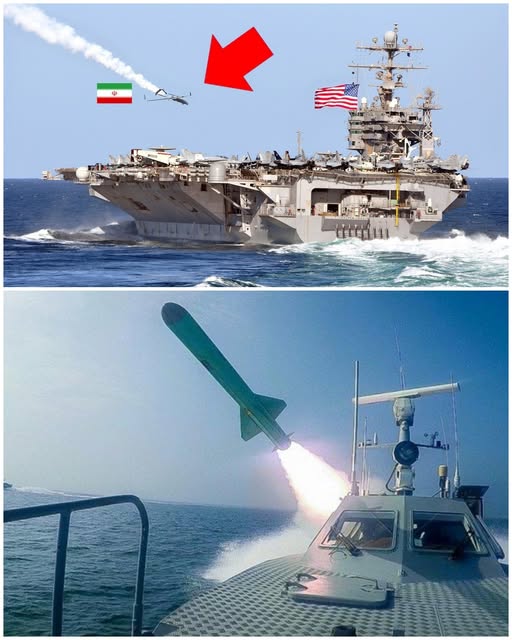
The concept has often appeared in public debates and media reports, sometimes illustrated through demonstrations or simulated scenarios designed to highlight the potential impact of mass-produced drones against high-value naval assets. These scenarios frequently show how a large number of low-cost drones could challenge expensive and complex platforms such as aircraft carriers.
However, the reality of modern naval operations is considerably more complex than simplified portrayals might suggest. Military forces invest heavily in layered defense systems, integrated sensor networks, and emerging technologies designed specifically to address evolving threats.
This article examines how contemporary naval defense systems work, how drone swarm tactics are evaluated by analysts, and how new technologies—including directed-energy systems—may influence the future balance between offense and defense at sea.
The Emergence of Drone Swarm Concepts
Unmanned aerial vehicles (UAVs), commonly referred to as drones, have transformed military planning across the globe. Originally used primarily for surveillance and reconnaissance, drones now serve a variety of roles including intelligence gathering, communication relay, and defensive support missions.
In recent years, the concept of drone swarms—coordinated groups of drones operating simultaneously—has become an area of active research and experimentation. The basic idea behind a swarm strategy is that large numbers of relatively inexpensive systems could create challenges for traditional defenses that were originally designed to counter fewer, more complex threats.
The theoretical advantage lies in volume and cost efficiency. A single high-performance interceptor missile may cost significantly more than an individual drone. As a result, some analysts argue that deploying large numbers of inexpensive drones could place pressure on defensive systems by forcing defenders to respond repeatedly.
These discussions have become especially prominent in strategic regions where naval forces regularly operate near contested waterways.
Strategic Importance of Maritime Regions
Several of the world’s most critical shipping routes lie within relatively narrow maritime corridors. Among them is the Strait of Hormuz, a passage that connects the Persian Gulf with the Gulf of Oman and the Arabian Sea.
Because a substantial portion of global energy shipments travels through this route, stability in the region is closely monitored by international observers and governments alike.
Naval forces from multiple countries operate in nearby waters to ensure maritime security, support international trade, and maintain situational awareness. As part of their strategic planning, these forces regularly evaluate a wide range of possible scenarios, including the use of unmanned systems.
While public demonstrations or simulations sometimes attract media attention, real-world military planning tends to focus on detailed operational analysis rather than dramatic visual portrayals.
Why Simplified Scenarios Can Be Misleading
Simulations showing large numbers of drones targeting a naval vessel often highlight a straightforward narrative: inexpensive systems overwhelming expensive platforms.
However, such demonstrations usually omit many of the factors that shape real-world operations.
Naval defense is rarely dependent on a single system or platform. Instead, it relies on layered protection, where multiple technologies and units work together to detect, track, and respond to potential threats at different distances.
A carrier strike group, for example, functions not as a single ship but as an integrated network of vessels, aircraft, sensors, and command systems.
Each component contributes to a shared operational picture that helps commanders understand what is happening in the surrounding environment.
Early Detection and Situational Awareness
One of the most important elements of naval defense is early detection. Identifying potential threats at long distances provides valuable time for commanders to evaluate the situation and choose an appropriate response.
Airborne early-warning aircraft play a key role in this process. Aircraft such as the E-2D Hawkeye operate at high altitudes and use powerful radar systems capable of scanning large areas of airspace.
From this vantage point, these aircraft can detect small aerial contacts that might be difficult to observe from sea level. Data collected by airborne sensors is transmitted to ships and other assets through secure communication networks.
This shared data environment enables multiple units to coordinate their responses effectively.
Integrated Sensor Networks
Modern naval forces rely heavily on integrated sensor networks. Instead of each ship operating independently, information from radar systems, aircraft, satellites, and other sensors is combined into a unified operational picture.
This integration allows commanders to track objects across wide areas and coordinate defensive actions more efficiently.
If one unit detects a potential threat, other units within the network can immediately access that information. This approach reduces blind spots and improves response times.
The result is a distributed defense system in which many different platforms contribute to the protection of the group.
Layered Defensive Systems
Once a potential threat is detected, naval forces can rely on multiple layers of defense. These layers are designed to engage incoming objects at different ranges and with different technologies.
Long-Range Interceptors
At extended distances, interceptor missiles may be used to neutralize incoming threats before they approach the fleet. These missiles are designed to track and intercept targets at high speed and high altitude.
Medium-Range Defensive Weapons
If a target continues toward the fleet, additional systems can engage it at closer distances. These systems often rely on guided missiles or rapid-response launchers capable of responding quickly to changing conditions.
Close-Range Protection
For threats that approach within short distances, ships are equipped with automated defense systems designed to protect the vessel directly. These systems may include rapid-fire guns or specialized missile launchers designed to intercept incoming objects within seconds.
Together, these layers create overlapping zones of protection.
The Role of Directed-Energy Technology
In addition to traditional defensive weapons, naval forces have been exploring directed-energy technologies, including lasers and high-powered microwave systems.
These systems represent an emerging approach to addressing challenges such as drone swarms.
Unlike conventional interceptors that rely on explosive warheads, directed-energy systems use focused electromagnetic energy to disrupt or disable electronic components.