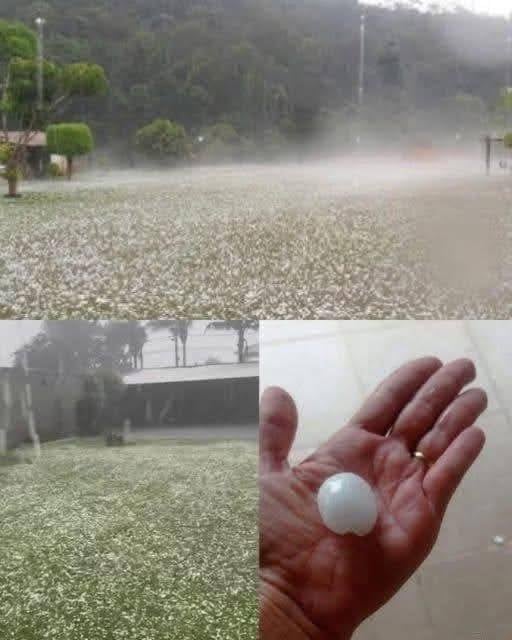
Massive Hailstorm Batters Small Town, Leaving Widespread Damage
Residents expected an ordinary evening, but within minutes a powerful storm transformed the quiet atmosphere into a scene of chaos. A sudden burst of extreme weather brought giant hailstones crashing down on a small town, startling families and damaging homes, vehicles, and buildings across the area.

The Science Behind Large Hailstorms
To understand how a storm like this can produce such large hail, it helps to look at what happens high above the ground inside a thunderstorm. Severe hail typically forms within powerful cumulonimbus storm clouds, where strong upward air currents—known as updrafts—carry water droplets far into the colder parts of the atmosphere.
Once those droplets reach freezing temperatures, they begin to form small pieces of ice. As the updrafts continue to push them upward, the ice particles collide with additional water droplets that freeze onto their surface. Each time this cycle repeats, a new layer of ice forms, making the hailstone larger and heavier.
Eventually, the hailstones become too heavy for the storm’s updrafts to support. When that happens, gravity pulls them back toward the ground. In particularly strong storms, the hailstones may travel up and down inside the cloud multiple times before falling, allowing them to grow to impressive sizes.
Meteorologists say this repeated cycle is the reason some hailstones develop layered structures, almost like rings inside a tree trunk. When cut open, large hailstones often reveal these layers, each representing a trip through different parts of the storm cloud.
Why Some Storms Produce Larger Hail
Not every thunderstorm produces damaging hail. For hail to grow large enough to cause destruction, several conditions must come together at the same time.
One of the most important factors is strong updrafts within the storm. The faster air rises inside the cloud, the longer hailstones can remain suspended and continue collecting ice.
Temperature differences in the atmosphere also play a role. Warm, moist air near the ground combined with much colder air higher in the atmosphere can create ideal conditions for strong thunderstorm development.
Wind patterns can also influence hail formation. When winds at different heights move in varying directions or speeds—a phenomenon known as wind shear—storms can organize into powerful systems capable of sustaining large hail production.
When all of these ingredients come together, storms can become intense very quickly, producing the kind of sudden hail events that residents experienced during this recent weather outbreak.
The Financial Impact of Hail Damage
Although hailstorms may last only a short time, the damage they cause can be costly. In many regions, hail is actually one of the most expensive weather-related hazards in terms of property damage.
Vehicles are often among the first casualties. Even relatively small hailstones can dent metal surfaces or crack windshields. Larger stones can break glass entirely or damage mirrors, headlights, and body panels.
Homes can also suffer significant damage. Roofing materials, especially shingles, may become cracked or loosened when struck by hail. Over time, these small impacts can lead to leaks if repairs are not made.
Siding, gutters, skylights, and outdoor equipment may also be affected. In some cases, the full extent of the damage may not be immediately visible and may require professional inspection.
For communities experiencing a major hail event, repair work can continue for weeks or even months as homeowners coordinate with contractors and insurance companies.
Community Support During Recovery
After storms like this, community cooperation often becomes one of the most important factors in recovery. In many neighborhoods affected by the hailstorm, residents quickly began helping one another clear debris, cover broken windows, and check for additional hazards.
Simple acts—such as sharing tools, offering temporary shelter, or helping someone move damaged property—can make a significant difference for families dealing with unexpected damage.
Local officials and emergency services also play a key role in coordinating recovery efforts. Public works crews may focus on clearing streets and ensuring that storm drains remain open, while inspectors may help identify potentially unsafe structures.
In situations where power outages occur, utility crews work to restore electricity as quickly as possible so residents can return to normal routines.
Preparing for Future Storms
Although it is impossible to prevent severe weather, experts say there are steps homeowners can take to reduce potential damage from hailstorms.
Parking vehicles in garages or covered areas during severe weather alerts can help protect them from falling hail. Installing impact-resistant roofing materials may also reduce the risk of roof damage during strong storms.
Some homeowners also keep emergency supplies ready, including flashlights, portable chargers, and weather radios, which can be helpful during sudden storms or temporary power outages.
Most importantly, staying informed through local weather alerts allows families to take protective actions quickly when storms develop.
A Reminder of Nature’s Power
For residents who experienced the hailstorm, the evening served as a powerful reminder of how quickly weather can change. One moment the skies appeared calm, and the next, a fierce burst of ice was striking homes, cars, and streets across the community.
Yet despite the shock and the damage left behind, many residents also expressed gratitude that the storm passed without causing serious injuries.
As the town moves forward with repairs and cleanup, the event will likely be remembered as a night when nature briefly took control—testing the resilience of the community while also bringing neighbors closer together.
Storms like these may arrive unexpectedly, but the response they inspire often reveals the strength and unity of the people who face them together.