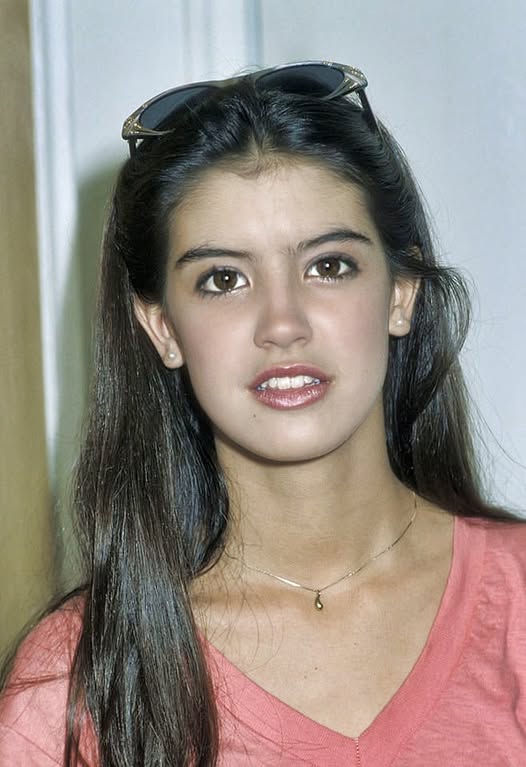
A Familiar Face Then and Now: The Remarkable Journey of Phoebe Cates
For many film lovers who grew up during the 1980s, certain actors instantly bring back memories of a vibrant era in cinema. One such face is Phoebe Cates. Known for her natural charisma and memorable performances, she quickly became one of the most recognizable young actresses of her generation.

At a time when teen-focused movies were shaping popular culture, Cates stood out with her unique blend of confidence and relatability. Her roles captured the spirit of youth during the early 1980s and helped define the era’s cinematic style.
Films like Fast Times at Ridgemont High and Gremlins played a major role in establishing her place in Hollywood history.
Yet what makes her story especially fascinating is not only her rise to fame, but also the choices she made later. Just as her acting career appeared to be gaining momentum, Cates gradually stepped away from the spotlight.
Instead of pursuing decades of Hollywood fame, she chose a quieter life focused on family, creativity, and personal priorities. Decades later, she remains a beloved figure among movie fans, and her performances continue to be rediscovered by new audiences.
Her journey—from rising film star to entrepreneur and devoted parent—shows that success can take many different forms.
Growing Up Surrounded by Creativity
Phoebe Cates was born in New York City into a family closely connected to the entertainment world.
Her father, Joseph Cates, worked as a successful television producer and director. Because of his career, the household often revolved around discussions of theater, television, and film.
Growing up in such an environment exposed Phoebe to creative expression from a young age. However, acting was not her first ambition.
Her early passion was ballet.
As a child, she trained seriously in dance and hoped to become a professional ballerina. Ballet requires strict discipline, years of practice, and physical endurance. Like many young dancers, she dedicated countless hours to lessons and rehearsals.
Unfortunately, a knee injury changed those plans.
The injury prevented her from continuing the demanding training required for professional ballet. While the setback was disappointing, it also opened the door to other opportunities.
Soon afterward, she began exploring modeling and acting—two fields that would ultimately shape her future career.
From Modeling to Acting
After stepping away from ballet, Cates entered the modeling world as a teenager.
Her distinctive features and confident presence helped her quickly gain attention in the fashion industry. She appeared in magazines and advertising campaigns, gaining experience in front of cameras and in visual storytelling.
Modeling introduced her to the world of media and entertainment, but it also sparked a deeper interest in acting.
Transitioning from modeling to film is not always easy, yet Cates approached it with determination. She began studying acting and auditioning for roles.
One of her early film appearances came in the 1982 movie Paradise. Although the film received mixed responses, it allowed her to gain valuable experience and introduced her to movie audiences.
However, her true breakthrough was still ahead.
The Role That Made Her Famous
In 1982, Cates appeared in what would become one of the most memorable teen films of its time: Fast Times at Ridgemont High.
Directed by Amy Heckerling and based on a book by Cameron Crowe, the movie offered a humorous yet realistic look at teenage life in Southern California.
Cates played Linda Barrett, a confident high school student whose character became one of the film’s most recognizable figures.
The movie also introduced audiences to several actors who would later become major stars, including Sean Penn, Jennifer Jason Leigh, and Judge Reinhold.
While the film itself gained a reputation as a classic of 1980s cinema, Cates’ performance played a significant role in its lasting popularity.
For many viewers, her appearance in the movie captured the spirit and cultural shifts of the early 1980s.
Another Hit: Gremlins
Two years after her breakthrough role, Cates appeared in another widely popular film: Gremlins.
The movie was produced by Steven Spielberg and directed by Joe Dante. Its unusual blend of comedy, fantasy, and suspense helped it stand out from other films of the era.
Cates played Kate Beringer, a character caught in the middle of chaos caused by mischievous creatures known as gremlins.
The film became a major box-office success and introduced audiences to the lovable character Gizmo, who quickly became a pop-culture icon.
Cates’ performance added warmth and humor to the story, helping make the film memorable for audiences around the world.
Exploring Different Roles in Film
Throughout the 1980s, Cates continued building her acting career by taking on a variety of roles.
Some of her notable films during this period included:
-
Private School
-
Bright Lights, Big City
-
Shag
These projects allowed her to explore different genres, from lighthearted comedies to more serious stories.
Later in her career, she starred in Drop Dead Fred alongside Rik Mayall.
Although the movie initially received mixed reviews, it eventually gained a dedicated fan base and is now considered a cult favorite.
A Love for Theater
While Cates achieved success in films, she often expressed appreciation for theater.
Stage acting offers a very different experience from filmmaking. Instead of multiple takes and editing, performers must deliver their entire performance live in front of an audience.
For many actors, this environment provides a deeper emotional connection to the role.
Cates found theater appealing because it allowed greater artistic exploration and offered more complex opportunities for character development.
As her career progressed, she became increasingly selective about the projects she accepted.
Marriage and Family Life
In 1989, Phoebe Cates married actor Kevin Kline.
Kline was already well respected for his work in both film and theater and later received an Academy Award for his role in A Fish Called Wanda.
Together, the couple built a life focused largely on family rather than constant public attention.
They eventually welcomed two children, and Cates made the decision to step away from acting to concentrate on raising them.
This choice surprised some fans, especially because her acting career was still active at the time.
However, for Cates, family life became her primary focus.
Life Beyond Hollywood
After leaving the film industry, Cates began exploring new creative ventures.
In 2005, she opened a boutique called Blue Tree in New York City.
The shop reflects her personal style and artistic interests. Instead of operating like a typical retail store, it features a carefully curated mix of clothing, gifts, artwork, and unusual items sourced from designers around the world.
Customers often describe the boutique as imaginative and charming, reflecting Cates’ personality and creative taste.
Running the store allowed her to remain engaged in creative work while maintaining a lifestyle far removed from the constant attention of Hollywood.
A Lasting Cultural Influence
Although Cates’ acting career lasted only about a decade, her influence continues to be felt.
Films like Fast Times at Ridgemont High and Gremlins remain widely recognized and frequently revisited by fans.
Streaming platforms, television broadcasts, and film retrospectives regularly introduce these movies to new generations of viewers.
Because of this continued interest, Cates’ work remains an important part of 1980s film history.
Choosing Balance Over Fame
What makes Phoebe Cates unique in Hollywood is her decision to prioritize personal life over long-term celebrity status.
In an industry where constant visibility is often expected, she chose a path that valued privacy, family, and independence.
Rather than pursuing continuous media attention, she focused on creating a fulfilling life outside the film industry.
Many fans admire this decision because it reflects authenticity and self-awareness.
Why Her Story Still Fascinates Fans
Decades after her most famous roles, audiences remain interested in Cates’ life and career.
Part of this interest comes from nostalgia. Her films capture the atmosphere and style of a particular moment in cinema history.
But another reason lies in her relative privacy.
Unlike many celebrities who maintain a constant presence in the media, Cates has kept a low profile, which naturally sparks curiosity about her life today.
A Life Shaped by Personal Choices
Ultimately, the story of Phoebe Cates is about more than fame or film roles.
It is about the power of personal choices.
For some individuals, success is measured through awards, headlines, and public recognition. For others, it comes from building meaningful relationships and pursuing personal passions.
Cates chose a life centered on family, creativity, and independence.
And in doing so, she showed that sometimes the most fulfilling path is the one that leads away from the spotlight.
For many admirers, Phoebe Cates represents a reminder of a unique period in film history when character-driven stories and youthful energy shaped popular culture. Her performances helped define the tone of early 1980s cinema, and her roles continue to resonate with audiences who appreciate classic films from that era. Even though she stepped away from acting years ago, interest in her work remains strong. Fans often revisit beloved movies such as Fast Times at Ridgemont High and Gremlins, discovering new details and moments with each viewing. Her story also highlights how individuals can evolve beyond their original careers. By choosing to focus on family life with Kevin Kline and building her boutique Blue Tree in New York City, she created a different kind of legacy—one defined by balance, creativity, and personal fulfillment rather than constant fame.