Pawn Stars’ Corey Harrison Speaks Out After Serious Accident: Recovery, Financial Struggles, and a Message to Fans
For many viewers of the long-running reality television series Pawn Stars, the personalities who appear on screen feel almost like extended family. Over the years, audiences have watched the cast negotiate deals, share stories about historical artifacts, and joke with one another inside the iconic Gold & Silver Pawn Shop. Among those familiar faces is Corey Harrison, often affectionately called “Big Hoss” by fans.

For more than a decade, Corey Harrison’s presence on the show has helped shape the program’s success. Known for his straightforward personality and ability to evaluate valuable items brought into the shop, he became one of the most recognizable figures associated with the series. But recently, Harrison’s life took an unexpected and deeply personal turn.
A serious motorcycle accident during a trip abroad has placed the reality television star in one of the most challenging situations he has ever faced. The incident left him with significant injuries, required multiple medical procedures, and created financial difficulties that he had not anticipated. Now, as he works toward recovery, Harrison has turned to the people who have supported him for years—his fans—with a heartfelt message about resilience, gratitude, and the difficult road ahead.
A Familiar Face From a Popular Reality Show
Before the accident, Corey Harrison had already established himself as a well-known personality on Pawn Stars, a program that debuted on the History Channel in 2009. The series follows the day-to-day operations of a family-run pawn shop in Las Vegas, where customers bring in everything from rare collectibles to unusual historical artifacts.
Harrison works alongside his father, Rick Harrison, as well as other cast members who contribute to the shop’s lively atmosphere. Over time, the show gained international popularity, becoming one of the network’s most successful reality series.
Viewers appreciated the show’s combination of history, negotiation, and personality-driven entertainment. Each episode introduces unique items—from vintage coins and antique firearms to pop-culture memorabilia—and follows the process of determining their value.
Corey Harrison’s role in these negotiations made him a central figure in the program. His ability to balance business judgment with humor helped make the show relatable and engaging for audiences worldwide.
Yet despite the familiarity viewers feel with television personalities, the reality is that their lives outside the camera can be far more complicated than what appears on screen.
An Unexpected Accident Abroad
According to reports shared by Harrison himself, the turning point came during a trip to Tulum, a coastal destination in Mexico known for its beaches, cultural sites, and tourism.
While traveling in the area, Harrison was involved in a serious motorcycle accident. The crash left him with multiple injuries and required immediate medical attention. For someone accustomed to the energy of running a busy pawn shop and filming television episodes, the sudden shift to a hospital bed was a shocking and frightening experience.
In interviews and social media updates, Harrison described how the accident unfolded and how quickly the situation escalated. What began as a vacation turned into a medical emergency that would ultimately change his life for weeks—and possibly months—to come.
The Physical Impact of the Crash
Motorcycle accidents can be particularly severe because riders have little protection compared to passengers inside vehicles. In Harrison’s case, the injuries were serious enough to require extensive medical care.
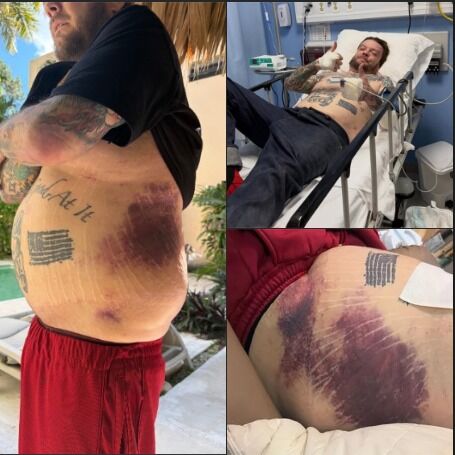
Reports indicate that he suffered numerous broken ribs along with a concussion and other trauma related to the impact. Broken ribs alone can cause intense pain because every breath, cough, or movement places pressure on the injured bones.
Doctors often monitor such injuries carefully because they can affect breathing and oxygen levels. Recovery from rib fractures can take weeks or even months, depending on the severity and whether complications arise.
In addition to the fractures, Harrison reportedly required medical observation and treatment to ensure his body could stabilize after the accident. The recovery process involved pain management, monitoring vital signs, and addressing other injuries sustained during the crash.
Facing Medical Challenges Far From Home
Experiencing a serious injury while traveling internationally can introduce additional complications. Patients may find themselves navigating unfamiliar healthcare systems, language differences, and unexpected costs.
Harrison initially received treatment at a hospital in Mexico, where doctors worked to stabilize his condition. For days, medical staff focused on managing pain, monitoring his breathing, and evaluating whether additional procedures might be necessary.
According to Harrison’s own account, the hospital stay became increasingly difficult not only because of the physical pain but also due to the financial strain associated with extended medical care.
Medical treatment abroad can be costly, especially for specialized care or private facilities. While travel insurance sometimes covers such expenses, not every traveler has coverage that fully addresses complex emergencies.
The Financial Reality of Medical Treatment
As Harrison continued receiving treatment, the financial aspect of the situation quickly became a major concern. Extended hospital stays, surgeries, medication, and specialized care can accumulate significant costs.
In many medical emergencies, patients must balance their health needs with financial realities. Harrison later explained that the expenses associated with his care rose rapidly as the days passed.
The combination of medical procedures and hospital services reportedly resulted in bills reaching substantial levels. For someone unable to work while recovering from serious injuries, the situation created understandable stress.
Facing mounting costs, Harrison eventually made the difficult decision to leave the initial hospital earlier than planned and seek additional care elsewhere.
Continuing Treatment and Surgery
After leaving the first medical facility, Harrison sought treatment through other healthcare providers who could continue managing his injuries.
The process included additional medical procedures designed to address the trauma from the accident. Recovery from injuries like fractured ribs and internal trauma often requires multiple stages of care, including observation, medication, and sometimes surgery.
Doctors monitored Harrison’s breathing and overall health closely, ensuring that complications such as infection or respiratory issues did not develop.
Recovery from such injuries is rarely quick. Even after leaving the hospital, patients often face weeks of limited movement, physical therapy, and gradual rehabilitation.
Adjusting to a Slower Pace of Life
For someone accustomed to running a busy business and appearing regularly on television, the sudden need to slow down can be difficult.
Harrison has spoken about how challenging it has been to adapt to recovery. Tasks that once seemed routine—walking, working, or traveling—now require careful consideration as his body heals.
Many people recovering from serious injuries experience similar challenges. Physical pain, fatigue, and emotional stress can all play a role in the healing process.