Russia conducts a nationwide warning siren test amid rising tensions!
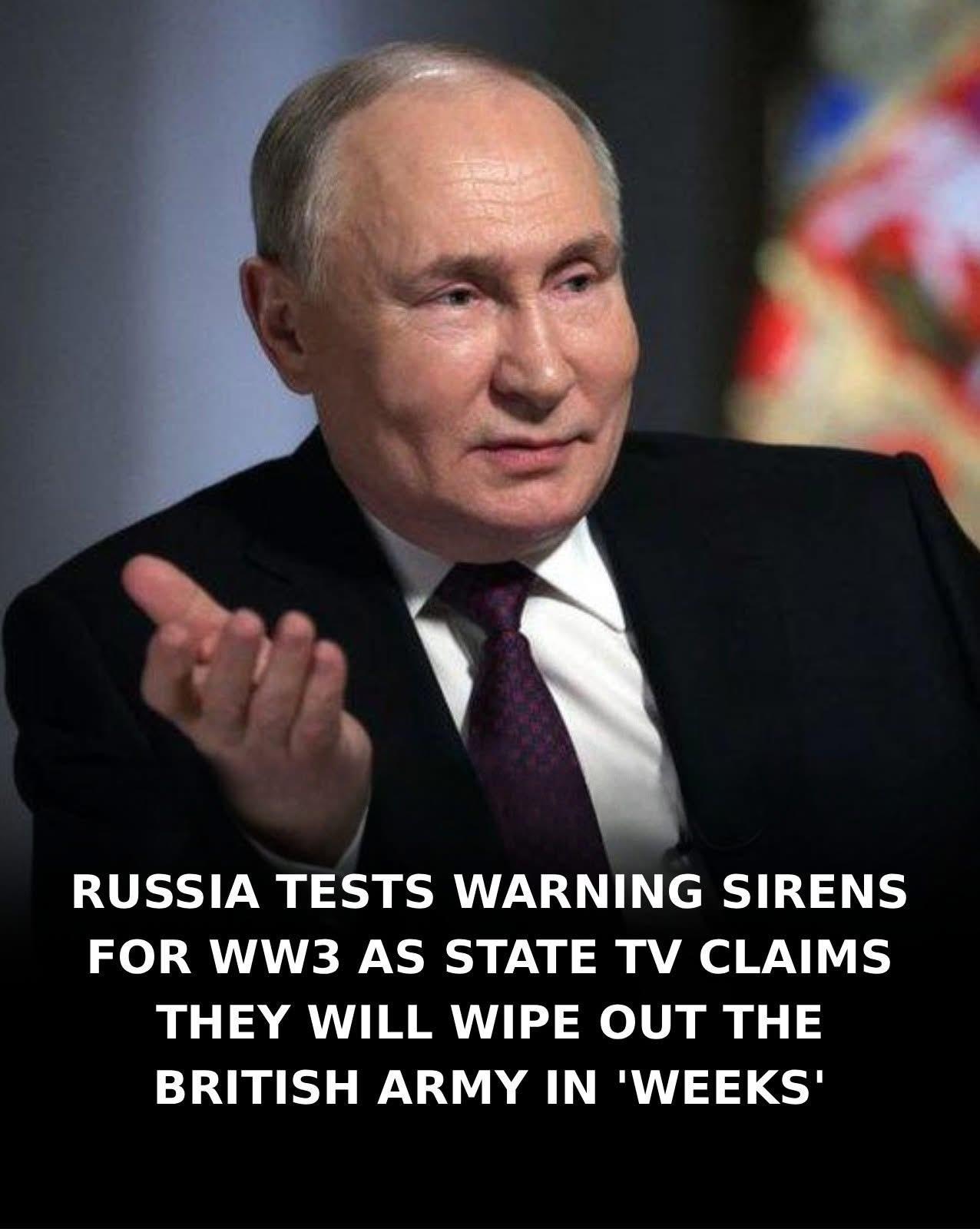
The chilling wail of air-raid sirens recently rippled across the vast expanse of the Russian Federation, echoing through every corner of the country’s eleven time zones. From the edges of the Baltic Sea to the distant reaches of the Pacific coast, the synchronized testing of the national public warning system served as a stark, auditory reminder of the current geopolitical climate. While Russian officials were quick to issue statements urging calm—characterizing the event as a routine, semi-annual civil-defense drill designed to ensure technical readiness—the timing of the exercise did not escape international scrutiny. In a world currently defined by overlapping crises, a nationwide siren test in Russia is rarely viewed as just a mechanical check; it is seen as a deliberate pulse-check of the global security temperature.

This atmospheric tension is further compounded by a steady drumbeat of escalatory rhetoric emanating from Moscow. Only days before the sirens were activated, Dmitry Medvedev, the former president and current deputy chairman of Russia’s Security Council, issued another of his characteristic warnings. He suggested that the continued and deepening confrontation between Russia and the West was pushing the world toward the precipice of a global conflict. Analysts who monitor the Kremlin’s messaging note that while Medvedev’s language is often hyperbolic, it serves a specific strategic purpose: it is designed to cultivate a sense of “strategic ambiguity.” By oscillating between routine administrative actions and apocalyptic warnings, Moscow maintains a psychological pressure on Western policymakers, even when imminent military action is not actually on the table.
The global backdrop against which these events are unfolding is remarkably complex. As the war in Ukraine enters another grueling phase, the geopolitical focus has been forced to divide itself across multiple theaters. The deepening instability in the Middle East—characterized by direct and indirect clashes involving Iran, Israel, and the United States—has created a secondary front of global concern. Russia occupies a unique and somewhat delicate position in this secondary crisis. While Moscow has officially condemned Western strikes in the region, it has simultaneously attempted to position itself as a proponent of diplomacy, all while maintaining its critical strategic and military ties with Tehran. This balancing act allows Russia to present itself as a counterweight to American influence in the Middle East, even as its primary military resources remain bogged down elsewhere.
Within Russia, the domestic information environment is being shaped by state media that has noticeably amplified nationalist sentiment. The narrative often centers on the perceived decline of Western military and moral authority, occasionally veering into mockery of NATO’s operational capabilities. However, veteran Kremlin-watchers caution against taking this media commentary at face value. In many cases, the rhetoric on state television is intended for domestic consumption—to bolster national pride and ensure social cohesion—and does not always align perfectly with the more pragmatic, behind-the-scenes calculations of official Russian foreign policy.
From the perspective of the leadership in Kyiv, the proliferation of global crises is a source of significant strategic anxiety. Ukrainian officials have been vocal about their concerns that as the international community’s attention shifts toward the Middle East or potential flashpoints in Asia, the focus on Ukraine’s defense could gradually erode. The fear is that “crisis fatigue” among Western allies could lead to a slow reduction in the flow of essential military and financial aid. In this context, Russia’s siren tests and Medvedev’s warnings can be viewed as tactical distractions—efforts to keep the West’s attention fragmented and its resources spread thin across multiple global “fires.”
Despite the alarming nature of the sirens and the rhetoric, most military experts argue that a direct Russian intervention in the Middle East remains highly improbable in the near term. The sheer scale of the war in Ukraine has already strained Russia’s logistical and personnel reserves to an extreme degree. Opening a second active front against Western-aligned interests in the Middle East would carry risks that likely far outweigh the potential benefits. Furthermore, Russia must maintain a careful equilibrium with regional energy powers and avoid a direct kinetic confrontation with NATO that could trigger Article 5. For now, Moscow’s involvement in the Middle East is likely to remain limited to diplomatic maneuvering, arms transfers, and the occasional use of private military contractors, rather than the deployment of conventional forces.
The nationwide siren test of March 2026 should, therefore, be understood as a form of “signal warfare.” It is a display of readiness and a reminder of Russia’s vast geographic reach, intended to show that despite the ongoing conflict in Ukraine, the state remains functional and prepared for any contingency. It is a performance of power in an era where perception often dictates reality. The sounds of the sirens were not the opening notes of a world war, but rather the background music of a “Cold War 2.0” that is becoming increasingly hot in localized zones.
As diplomacy continues in the shadows, the international community remains in a state of watchful waiting. The current global volatility means that even routine actions can be misinterpreted, and small miscalculations can have cascading effects. The overlapping crises in Ukraine and the Middle East have created a world where minutes, not days, are the new currency of strategic decision-making. In this environment, the wail of a siren is a call for vigilance, a reminder that the architecture of global peace is currently under immense pressure.
The ultimate takeaway from these events is that we are living through a period of profound transition. The old rules of engagement are being rewritten in real-time on the battlefields of Eastern Europe and in the shipping lanes of the Red Sea. While the threat of an imminent global conflagration is often exaggerated for political effect, the underlying tensions are real and persistent. The siren test and the escalatory words from Moscow are part of a larger, ongoing effort to reshape the global order, a process that is as much about psychological endurance as it is about military hardware.