What I Found Under My Shelf — And Why It Stayed With Me

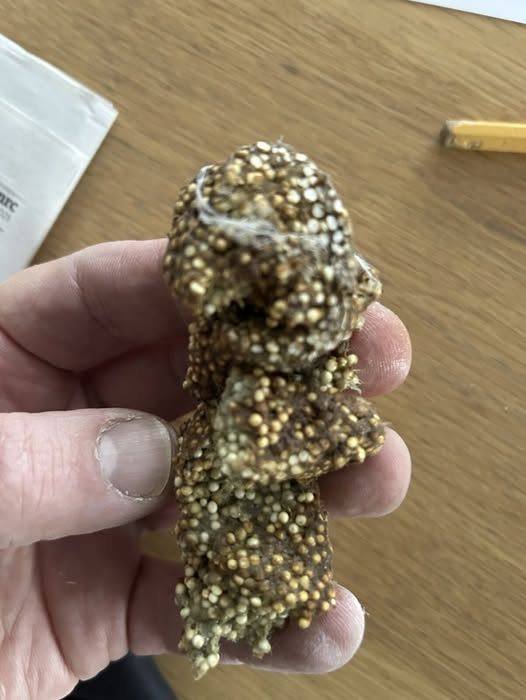
After throwing the dried Floam away, I thought that would be the end of it. A small moment of nostalgia, a quick trip down memory lane, and then life would move on as usual. But strangely, it didn’t. Instead, I kept thinking about it long after the shelf was clean and the room was back in order.

It wasn’t really about the object itself anymore. It was about what it represented. That tiny, forgotten piece of childhood somehow managed to open a door in my mind that I hadn’t realized was even closed. And once it opened, it was hard to ignore.


We often think of memories as something we control—things we can visit when we want and leave behind when we don’t. But moments like this remind us that memory is far less predictable. It can appear unexpectedly, triggered by the smallest and most ordinary things: a smell, a sound, or in this case, a strange lump of hardened childhood toy hidden under furniture.

The Strange Power of Forgotten Objects

There is something unusual about finding objects from your past in places you no longer think about. Under furniture, inside old boxes, at the back of drawers—these forgotten spaces seem to act like time capsules.

They don’t just hold objects. They hold versions of ourselves.

When I first reached under that shelf, I was just thinking about a missing LEGO piece. Something practical. Something small. But what I found instead didn’t belong to my present life at all. It belonged to a version of me that existed years ago, in a completely different mindset.

That version of me didn’t think about bills, responsibilities, deadlines, or routines. That version of me thought about play, imagination, and creating things simply because it felt fun.

And the strange part is, touching that object made that version of me feel close again—almost present.

Childhood Memories Hidden in Everyday Life

As I sat there thinking about it, I started realizing how many small memories are quietly stored in everyday life. Not in dramatic or important events, but in objects we barely notice anymore.

A worn-out toy. A broken pencil. A sticker peeled halfway off a surface. Even the smell of an old room.

These things don’t announce themselves as memories. They don’t demand attention. But when you pause long enough, they start to speak in a quiet way.

For me, Floam was one of those things. I didn’t even consciously remember it until I saw it again. But once I did, the memories came back quickly—sitting on the floor, trying to shape something “perfect” that never really turned out the way I imagined, and not caring at all that it didn’t.

That lack of pressure feels rare now.

How Simplicity Gets Replaced Over Time

One of the most interesting things about growing up is how gradually simplicity gets replaced without us noticing.

As children, we don’t think too deeply about whether something is useful or productive. If something is fun, it matters. That’s enough.

But as life moves forward, everything starts to gain weight. Even small decisions feel like they need purpose. Time becomes structured. Activities become scheduled. Rest becomes something we “earn” instead of something we naturally take.

Standing there with that forgotten piece of Floam, I realized how different that mindset is compared to adulthood.

It wasn’t that adulthood is bad or wrong—it just operates on completely different rules. But seeing that contrast so clearly, even for a moment, was strangely emotional.

The Emotional Weight of Ordinary Things

What surprised me most wasn’t nostalgia itself, but how strong it felt coming from something so insignificant.

It wasn’t a photograph or a meaningful gift. It wasn’t something preserved on purpose. It was literally something that had been forgotten, dried out, and left behind under a piece of furniture.

And yet it carried emotional weight.

That made me think about how often we underestimate the value of ordinary objects. We assume meaning has to be attached to something important or intentional. But sometimes meaning builds up quietly over time, without us realizing it.

Objects become markers of who we were at different stages of life. Even when we forget them, they don’t necessarily lose that connection.

They just wait.

A Brief Conversation That Changed My Perspective

Later that day, I showed what was left of it to someone in my family. Their reaction was exactly what I expected—confusion, followed by a shrug.

To them, it wasn’t anything special. Just an old, dry piece of material that had clearly served its purpose long ago.

But that difference in reaction was interesting.

It highlighted how personal memory really is. What feels deeply meaningful to one person can be completely ordinary to another. And that doesn’t reduce its importance—it just shows how layered our experiences are.

We don’t all carry the same emotional connections to the same things. We each build our own invisible archive of meaning over time.

Letting Go, But Not Forgetting

Eventually, I did throw it away. There wasn’t any reason to keep it. It had no practical use, and honestly, it wasn’t something I wanted to display or store.

But even though I got rid of the object itself, I didn’t really get rid of what it brought back.

That part stayed.

And maybe that’s the important distinction. Not everything meaningful needs to be physically preserved. Some things exist to remind us of something, not to stay with us forever.

The memory had already done its job. It reminded me of a time when life felt less complicated, even if only for a few minutes.

Why These Moments Matter More Than We Realize

We don’t often stop to reflect on small, random moments like this. Most of the time, we would simply clean it up, throw it away, and move on without thinking twice.

But sometimes, those moments carry quiet value.

They interrupt routine just enough to make us notice where we are in life compared to where we used to be. They don’t demand change, but they encourage awareness.

And awareness, even in small doses, can shift how we see everyday life.

After this experience, I started noticing other small things more often. Not in a dramatic way, but in a subtle one. Old objects I would normally ignore started to feel slightly more interesting. Not because they were valuable, but because of what they might represent.

The Shelf Is Clean Now, But the Thought Remains

The shelf where I found it is clean now. There’s nothing unusual about it anymore. It looks exactly as it did before.

But every time I walk past it, I remember that moment. Not because of the object itself, but because of the feeling it created.

It’s strange how something so small can temporarily change the way you think about time, memory, and even yourself.

In the end, it wasn’t really about finding Floam under a shelf.

It was about realizing how much of the past is still quietly present in the corners of everyday life.

And how sometimes, all it takes is one unexpected discovery to remind us of who we used to be—and how far we’ve come.

What That Small Discovery Really Meant in the End

After a few days, I stopped thinking about the shelf every time I walked past it. Life has a way of doing that—pulling your attention back into routines, responsibilities, and whatever is happening next. But even when the thought became less frequent, it didn’t fully disappear. It stayed tucked somewhere in the background, like a quiet reminder I hadn’t asked for but somehow needed.

What I kept coming back to wasn’t the Floam itself, but the realization that so much of our past doesn’t actually vanish. It just gets buried—sometimes literally, sometimes emotionally. We move houses, change rooms, grow older, and reorganize our lives so many times that entire versions of ourselves end up hidden in places we no longer look.

And yet, they are still there.

Not in a dramatic or overwhelming way, but in fragments. In objects. In habits we forgot we had. In the way certain moments suddenly feel familiar even when we can’t immediately explain why.

That day under the shelf didn’t change anything in my life, but it shifted something small in how I see it. It made me realize that memory isn’t just something we access—it’s something we live alongside every day without noticing.

We don’t need to go looking for meaning in big events. Sometimes it’s already sitting quietly under a shelf, waiting for us to accidentally find it.

Similar Posts