JD Vance rushed out first as Trump remains seated during White House dinner shooting
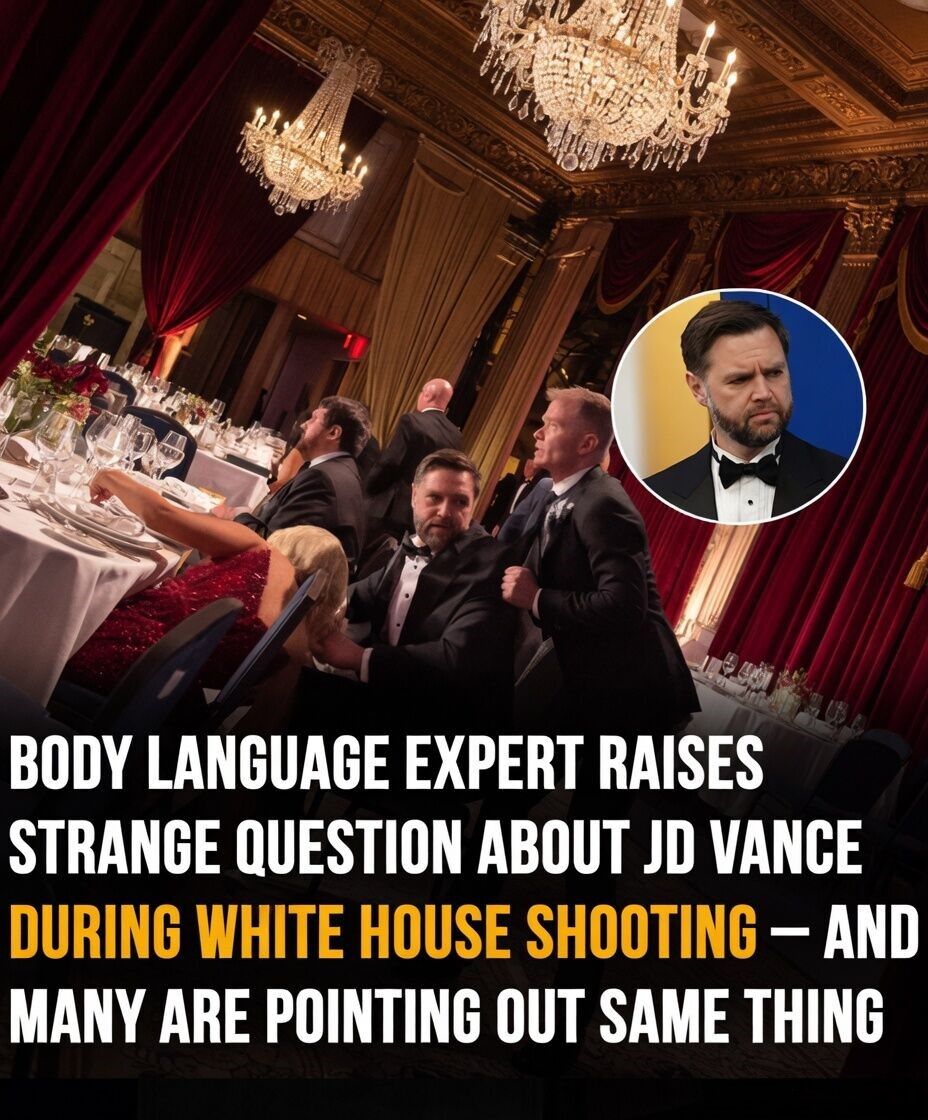
The footage from the White House Correspondents’ Dinner quickly shifted public attention away from the gunfire itself and toward a smaller, more puzzling detail: why JD Vance was rushed out immediately while Donald Trump appeared to remain seated for a few seconds longer.

At first glance, that contrast felt unusual. In a high-risk situation involving gunfire and a suspected armed attacker, many expected the president to be the first person moved. Instead, video clips showed Vance being physically pulled away by security, while Trump stayed in place briefly, seemingly observing what was happening. Those few seconds became the center of online debate.
Some analysts, including body language commentators, noted the difference without drawing firm conclusions. They pointed out that Vance’s extraction appeared urgent and immediate, while Trump’s movement came slightly later, creating a visible gap. For viewers, that gap raised questions about priority and protocol.
Trump later addressed the moment, saying he asked security to “wait a minute” so he could understand the situation. If accurate, that detail changes the interpretation. It suggests the delay wasn’t a failure in response, but a decision—one that may have slowed his removal compared to Vance, who was moved without hesitation.
Security experts often emphasize that evacuation order is not always as simple as rank. Factors like proximity to exits, agent positioning, and the direction of the threat all matter. If Vance’s detail had a clearer or faster path, they would act immediately. At the same time, any hesitation from a protected individual—even for a second—can alter timing.
Psychologically, reactions to sudden danger vary. Some people move instantly, while others pause to process. That “freeze” response is common, especially in unexpected situations.
And in a world where every second is recorded, replayed, and analyzed, even the smallest differences can become the biggest questions.
In the end, the moment highlights how perception can shape narratives. A few seconds of video, without full context, can raise questions that feel larger than the event itself—especially in a world where every detail is analyzed in real time.