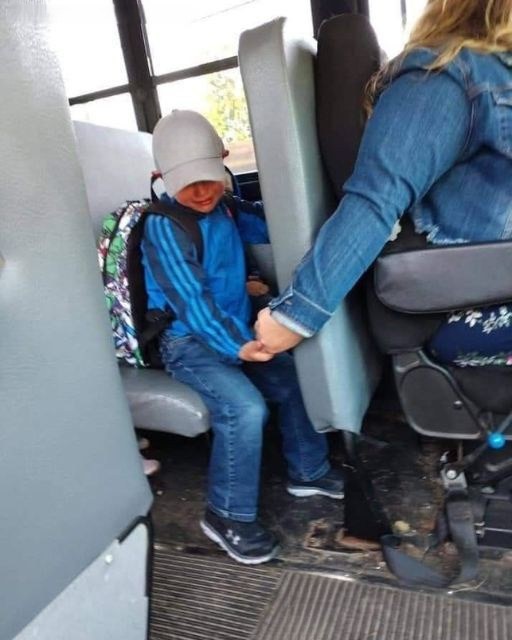
He cried every morning on the bus until a woman reached out and held him
Every morning, six-year-old Calvin would bolt out the front door like a firecracker—waving his toy dinosaur, shouting goodbye to the dog, his smile wide with secrets only a child could carry. The school bus was his favorite part of the day. At least, it used to be.
Then things shifted.
First came the silence. The bright greetings faded. His smile disappeared. The stomachaches began. He left the hallway light on at night. And the drawings—once sprawling dinosaur adventures—turned into angry scribbles or blank pages, crumpled and tossed away like trash.
I told myself it was just a phase. Deep down, I knew better.
One morning, I decided not to just wave from the porch. I walked him all the way to the bus stop. He clutched his backpack straps like a life vest, eyes dull, feet dragging. No more running. No more joy.
When the bus doors opened with a hiss, he hesitated. “You can do this,” I whispered. He nodded and stepped on.
That’s when I saw it.
As Calvin walked down the aisle, a kid in the back made a cruel comment. Another snickered. A push. A mocking smirk. Calvin pulled his hat down, turned toward the window, and wiped his cheek.
He was crying.
But the bus didn’t move.
Miss Carmen, our longtime bus driver, reached one hand back without saying a word. Calvin walked forward and gripped it tightly. She held his hand in silence, steady and sure. She didn’t ask questions. She just let him know he wasn’t alone.
That afternoon, when the bus pulled in, she didn’t just wave. She got off, walked up to the waiting parents, and spoke clearly: “Some of your children are bullying others. This isn’t teasing. This is targeted cruelty, and it ends now.”
Some parents looked confused. Others hurt. But Miss Carmen didn’t waver. “This morning, I watched a child cry before we even left the block. For three weeks, I’ve seen him shoved, called names. I’m done pretending it’s harmless.”