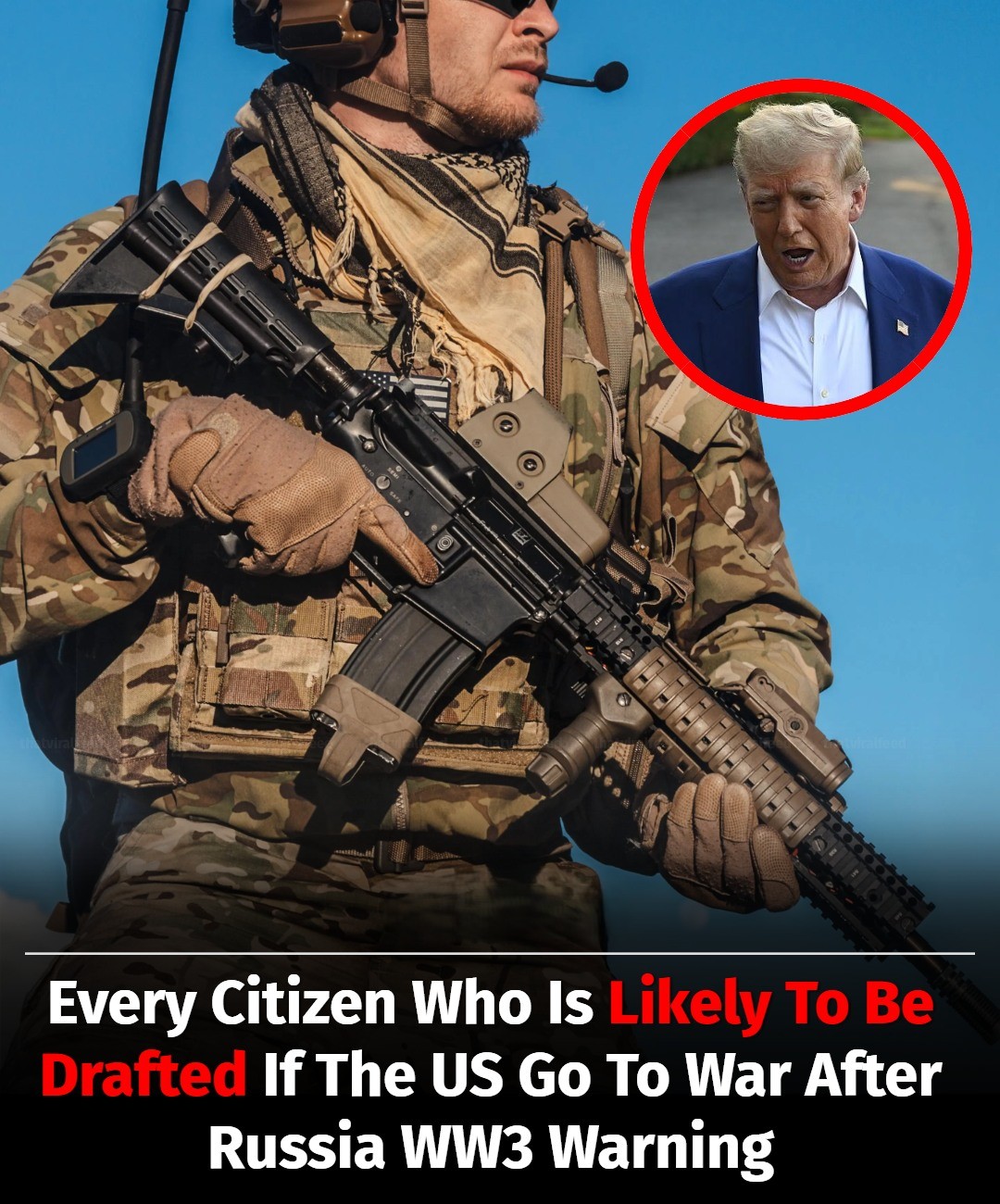
Every US Citizen Who Could Be Drafted If WWIII Breaks Out After Russia’s Warning

Later, on Tuesday, Trump criticized both Iran and Israel for violating a ceasefire that had just recently been put into place early that same morning.
Wrapping up his thoughts, Trump bluntly stated: “We basically have two countries that have been fighting so long and so hard that they don’t know what the f*** they’re doing.”
These remarks were made while Trump attended the NATO summit in the Netherlands. During the summit, NATO leaders came together and agreed on a major increase in defense budgets.

Global Leaders and Military Experts Sound the Alarm
As global conflict continues to rise, Russian general Apti Alaudinov voiced a concern that’s been growing more common—he said what many have feared: we might already be in the middle of World War III, whether we realize it or not.
Meanwhile, the U.S. is stepping up its preparations. Two powerful aircraft carrier strike groups, the USS Nimitz and the USS Carl Vinson, have been stationed in the Middle East as a precaution in case the situation spirals further, according to The National Interest.
Even though Trump once vowed to pull the U.S. out of endless wars—what he called “forever wars”—he now finds himself facing a completely different global reality. And if full-scale war does break out, there’s a good chance the country might need to bring back the military draft, something we haven’t seen since 1973.
The Draft: Who Could Be Called to Serve?
The Selective Service System, which has been around since 1917, would be the government’s way of drafting people again. During the Vietnam War, for example, 1.9 million Americans were called up through this system.
Right now, all male U.S. citizens between 18 and 25 years old are legally required to register for Selective Service. That includes undocumented immigrants, refugees, and those with green cards. If someone doesn’t register, they can face a fine of up to $250,000.
Although there have been discussions about possibly including women in the draft, no law has been passed so far to make that happen.

Who Is Exempt or Deferred?
The following categories of people might qualify for exemptions or delays in service if a draft were reinstated:
- Conscientious objectors
- Full-time students
- Parents and caregivers with dependents (hardship deferments)
- Essential workers in healthcare and critical infrastructure (e.g., tech, utilities)
- Ministers and certain elected officials
- Dual nationals under certain conditions
Students may request a postponement of their draft service, and anyone selected can ask for a reclassification. For example, someone might claim conscientious objector status after being drafted but before they report for training or duty.
Also, individuals who have been placed in institutions like hospitals or long-term care before turning 18 and who remain there until age 26 might not have to register with the Selective Service at all.
History Repeats?
The last time a draft took place in the U.S. was in 1972. It officially came to an end on January 27, 1973, when then-Secretary of Defense Melvin Laird stopped it.
The final person to be drafted was Dwight Elliott Stone, a 24-year-old apprentice plumber from Sacramento, California. He reported for service on June 30, 1973.
But now, with global tensions rising and military actions ramping up again, many people are starting to feel those old fears returning.
The current situation feels a lot like the early days of past major conflicts, only in a more modern setting.
However, some former lawmakers and officials have suggested options like a “national service mandate”.
The Washington Post also mentioned that a few members of the Republican party seem to be exploring that idea more seriously now.