Tips for Safely Clearing Ice from Your Walkways This Winter
Most people brace for winter with the same routine. Stock up on rock salt, dig out the shovel, and hope the ice is not too bad this year. It feels practical and familiar, almost comforting in its predictability. But that ritual has a quiet cost. Constant salting slowly eats away at your concrete, leaving it brittle and scarred over time. It seeps into the soil and damages nearby plants. It gets tracked inside on boots and paws, spreading a gritty, corrosive film across your floors. In trying to protect yourself from winter, you may be quietly damaging everything around you.
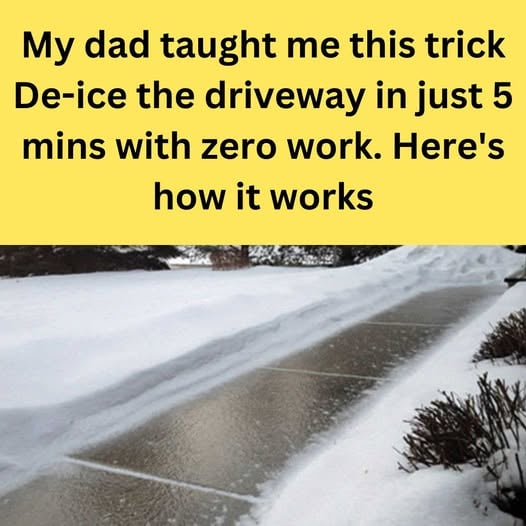
That is why this simple mix of dish soap, rubbing alcohol, and warm water feels almost unreal when you first hear about it. No heavy chemicals. No thick white crust left behind. Just three ordinary household items combined into a clear solution that melts ice on contact, helps prevent refreezing, and is gentle on your steps and walkway. The soap breaks the surface tension so the liquid spreads where it needs to go. The alcohol lowers the freezing point. The warm water jump starts the melting process. Together, they do the work quickly and cleanly, without the long term damage that salt leaves behind.
Using a mixture like this changes the way winter maintenance feels. Instead of reacting after the ice has already formed, you begin to work ahead of the storm. A quick spray before nightfall can mean no scraping in the morning. A light treatment during snowfall keeps ice from bonding to the surface in the first place. What once felt like a battle against the weather becomes a quiet routine of prevention.
You are not just clearing a path. You are quietly lowering the odds of that one devastating slip in the dark. The one that happens when you are tired, distracted, or carrying something in both hands. The one that can change the rest of the season, or much more than that. Winter injuries rarely come from dramatic moments. They come from ordinary steps taken under ordinary conditions, when caution slips for just a second.
A safer winter is built from small choices like this. Checking the forecast before bed. Treating your steps before the storm instead of after it. Walking slowly with boots that actually grip. Keeping at least one hand free when you move. Choosing smarter solutions instead of harsher ones. None of these actions feel heroic on their own. But together, they quietly reshape the season from something that feels hostile into something that feels manageable.
There is also a psychological shift that comes with preparation. When you treat your walkway before the cold sets in, you wake up expecting stability instead of danger. When you step outside and feel steady ground beneath you, your body relaxes in ways you hardly notice. Fear loosens its grip. Tension drops from your shoulders. Winter becomes less of a threat and more of a condition you know how to handle.
With just a few minutes of preparation, the season begins to change its character. It no longer feels like something that arrives to test your luck. It becomes something you are ready for. Not because you eliminated every risk, but because you reduced the biggest ones before they had a chance to grow. And in a time of year known for accidents, strain, and constant caution, that quiet kind of readiness may be the most powerful comfort of all.