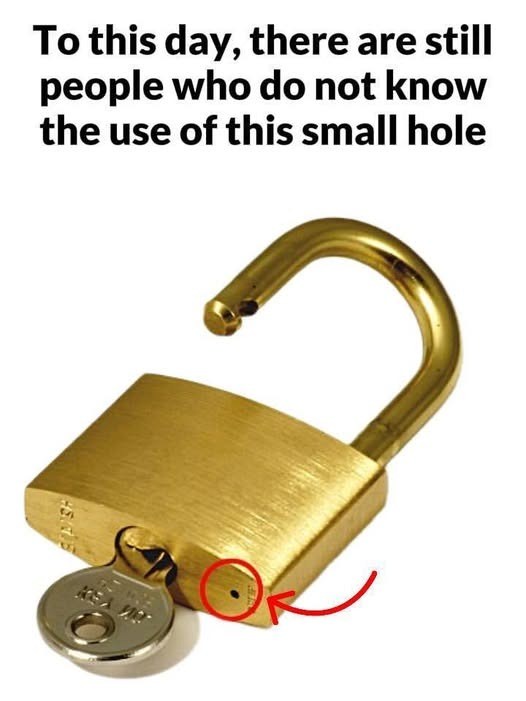
What is that little hole at the bottom of a padlock for? This clever design feature prevents rust, lets water drain, allows lubrication when locks jam, and reveals how everyday objects often hide smart engineering details that make life safer and easier.
That small opening at the bottom of a padlock is much more than a stray manufacturing detail. It exists to keep the internal mechanism alive. Rain, snow, and humid air can seep into the body of a lock, and without a place for that moisture to escape, the metal parts inside would seize up. The tiny channel gives trapped water a way out and also offers a spot where oil can be applied to reach the internal pins. With a few drops of lubricant, a stubborn lock can return to smooth motion instead of being forced open or cut away. Even the most modern weather resistant locks keep this feature because it provides simple, dependable drainage and a small amount of pressure relief. It represents decades of trial, error, and accumulated knowledge in a detail most people never notice.
Once you become aware of things like this, a whole world of quiet design choices begins to appear everywhere. A screwdriver handle often has a square or hexagonal base that a wrench can grip, allowing a person to apply controlled strength when a screw refuses to budge. That extra surface is not decorative. It is a built in reinforcement for moments when human grip alone is not enough.
The small fabric swatch once attached to new clothing had a similarly thoughtful purpose. It offered a way to test detergents or stain removers on a safe piece of the material before treating the actual garment. This simple scrap prevented many accidents and showed how even low cost items can reflect careful consumer focused thinking.
Brass doorknobs are another example. Their warm color and shine attract the eye, but the material itself has properties that help reduce bacteria on contact. Without any electronics or cleaning chemicals, the surface slowly breaks down microbes. In high traffic places such as schools and public buildings, this passive protection offers real value.
Even in the world of automobiles, quiet signals guide drivers every day. The tiny arrow on a fuel gauge that points left or right shows which side holds the fuel door. This small symbol prevents confusion at unfamiliar stations and saves time for anyone who drives more than one vehicle.
These little touches reveal a pattern. Designers and engineers often solve problems long before the user even knows those problems exist. Their choices create objects that feel simple and intuitive but only because the complexity has been handled behind the scenes. When you start paying attention, you begin to see the intelligence built into items that fill your pockets, kitchens, and garages. Common tools become reminders of how much thought goes into shaping an easier, safer, and more comfortable daily life.