Illegal Immigrant Suspect Arrested in High-Profile Operation by ICE Agents
In a rare and provocative exercise of judicial authority, a Boston Municipal Court judge has held a federal agent in contempt, a move that effectively draws a line in the sand between local courtroom integrity and federal immigration enforcement. The case, centered on the mid-trial arrest of a defendant, has ignited a high-stakes constitutional debate over whether the federal government’s power to deport supersedes a citizen’s—or non-citizen’s—right to a fair trial. The incident has reopened a long-simmering wound in Massachusetts, highlighting the volatile friction between “sanctuary city” policies and the mandates of U.S. Immigration and Customs Enforcement (ICE).
The Incident: Justice Interrupted
The courtroom drama began last week during what should have been a routine misdemeanor trial for Wilson Martell-Lebron. A native of the Dominican Republic residing in Massachusetts, Martell-Lebron stood accused of making false statements on a driver’s license application—a charge centered on identity misrepresentation.
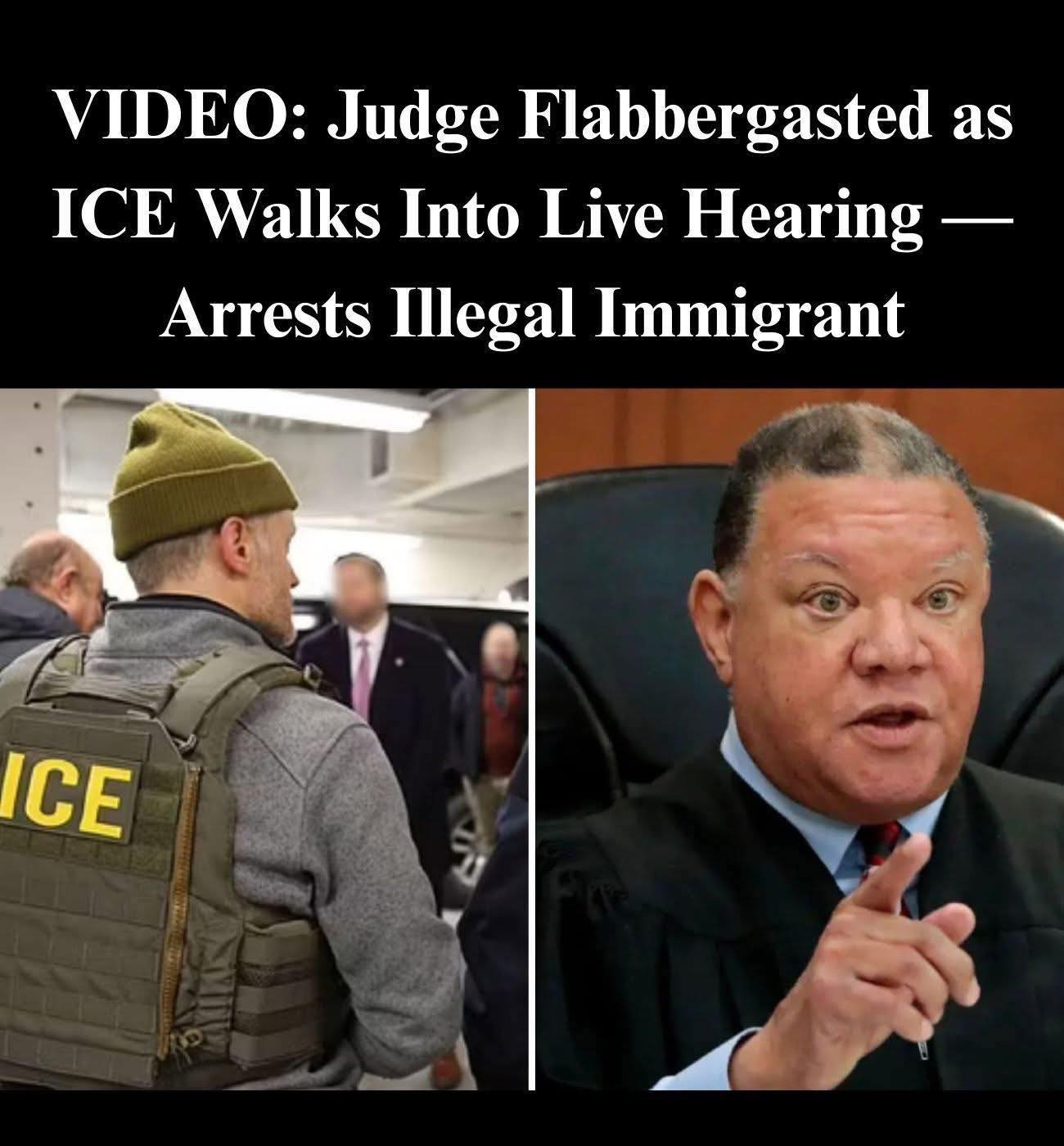
The trial was in its infancy. Opening statements had concluded, and the first witnesses were providing testimony. However, during a brief window as Martell-Lebron exited the courthouse, ICE Agent Brian Sullivan and his team moved in. According to witness accounts and legal filings, the apprehension was swift and silent; agents reportedly failed to identify themselves before placing Martell-Lebron into a nondescript government vehicle and whisking him away to a federal facility in Plymouth.
The Judicial Rebuke: “It Couldn’t Be More Serious”
The response from the bench was immediate and scathing. Judge Mark Summerville ruled that Agent Sullivan’s actions were not merely a procedural overstep, but a direct assault on the defendant’s Sixth Amendment rights.
“It’s a case of violating a defendant’s right to be present at trial and confront witnesses against him,” Judge Summerville stated from the bench. “It couldn’t be more serious.”
In a move that stunned the local legal community, Summerville took the extraordinary step of dismissing the criminal charges against Martell-Lebron, arguing that the government had made it impossible for the defendant to exercise his due process. Furthermore, by holding Agent Sullivan in contempt, the judge has opened the door for the Suffolk County District Attorney’s office to investigate whether the federal agent should face local prosecution.
Legal Foundations: The Sixth Amendment vs. Federal Mandate
The core of the legal conflict rests on the Sixth Amendment, which guarantees every criminal defendant the right to be present at their own trial and to confront their accusers. Legal experts suggest that by removing the defendant mid-proceedings, ICE effectively paralyzed the state’s ability to conduct a constitutional trial.
“There is no greater injustice in my mind than the government arresting someone… and preventing them from exercising their constitutionally guaranteed right to a jury trial,” said Ryan Sullivan, one of Martell-Lebron’s attorneys.
However, the federal perspective remains rooted in the authority of the Executive Branch to enforce immigration law. Agent Sullivan testified during a subsequent two-day hearing that he acted on credible information regarding Martell-Lebron’s status. He further alleged that both the Massachusetts State Police and the lead prosecutor had been briefed on the operation—a claim that Judge Summerville noted did not excuse the violation of the defendant’s physical presence in court.
Context: Boston’s “Sanctuary” Battleground
The arrest must be viewed through the lens of Boston’s political identity. As a designated “sanctuary city,” Boston limits local police cooperation with federal immigration authorities, a policy reaffirmed by Mayor Michelle Wu. These policies are designed to ensure that immigrant communities feel safe interacting with local police and the court system without fear of deportation.
The tension is not new. During the Trump administration, federal officials frequently criticized Boston for a perceived lack of cooperation in removing individuals with criminal records. Conversely, advocates argue that courthouse arrests create a “chilling effect,” discouraging victims and witnesses from ever stepping foot in a hall of justice.
Historical Precedent and the Road Ahead
Courthouse arrests were once rare under a “sensitive locations” policy that protected schools, hospitals, and courts. That policy was rescinded in 2017, leading to an increase in federal visibility within local judicial buildings. While federal law grants ICE the power to make these arrests, state and local jurisdictions have increasingly fought back to protect the autonomy of their courts.
For now, Wilson Martell-Lebron remains in federal custody in Plymouth, his state criminal case dismissed but his immigration status in peril. Agent Sullivan faces a looming investigation into his conduct.
As this case winds through the appellate levels, it may serve as a national precedent. The outcome will likely determine whether the interior of a state courtroom remains a sanctuary for due process, or becomes a revolving door for federal enforcement.