Kansas Election Leads to Surprising Legal Investigation
In the quiet, wind-swept streets of Coldwater, the atmosphere of post-election celebration has soured into a tense legal drama. Just days after local voters overwhelmingly returned Mayor Jose “Joe” Ceballos to office for a second term, the routine mechanics of small-town governance were shattered by a bombshell from the state’s highest law enforcement office.
What began as a sleepy unopposed race has transformed into a high-stakes legal battlefield. The Kansas Attorney General’s Office has filed criminal charges alleging that Ceballos was never eligible to cast a ballot—let alone hold office—because he is not a United States citizen.
From Unopposed Victory to a Six-Count Indictment
Coldwater, a community of fewer than 700 residents in Comanche County, is accustomed to quiet municipal cycles. On November 4, 2025, Ceballos, who has led the city since 2021, appeared to have secured a comfortable mandate for another four years.
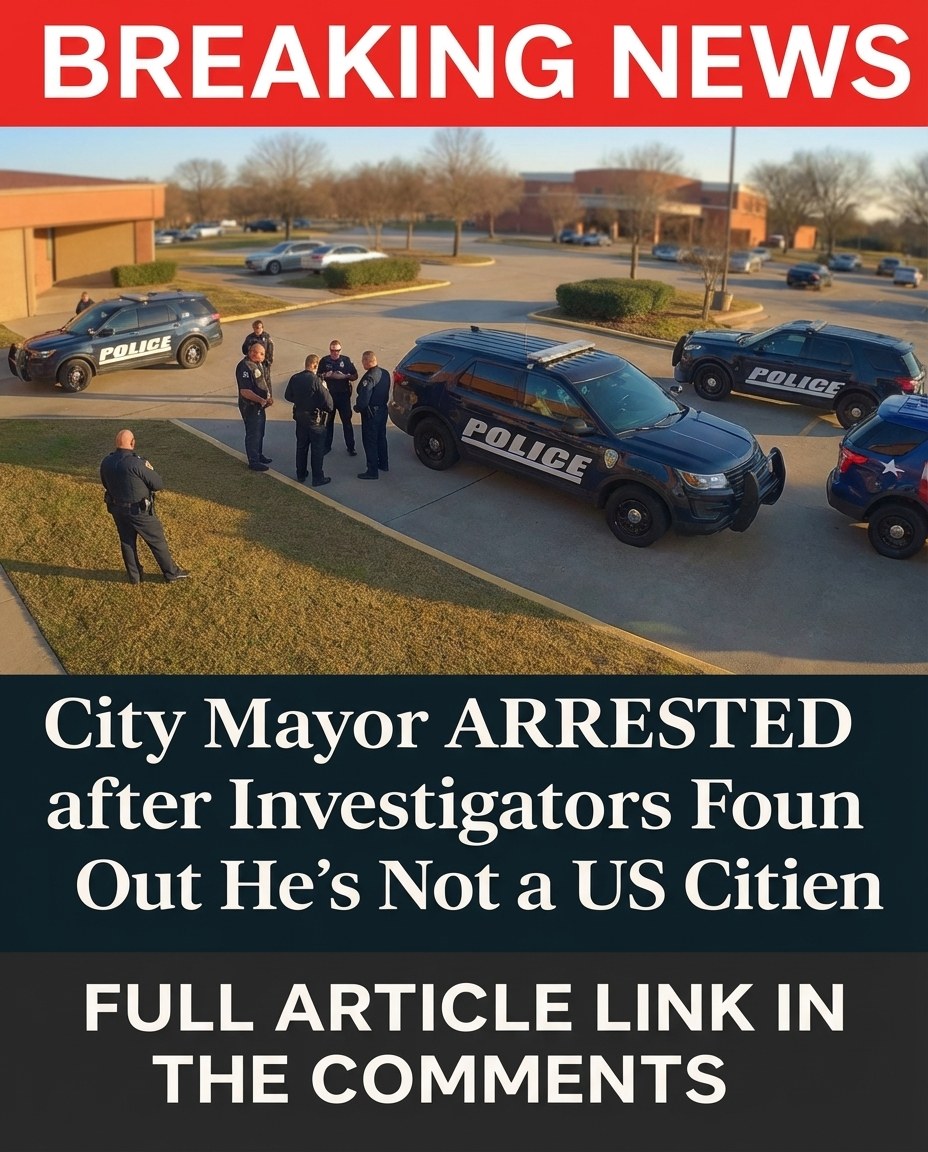
However, the victory was short-lived. Only twenty-four hours after the polls closed, Attorney General Kris Kobach announced that his office had filed six felony charges against the Mayor in Comanche County District Court. The state alleges that Ceballos voted illegally in at least three separate elections: November 2022, November 2023, and August 2024.
The specific charges include:
-
Three counts of voting without being qualified
-
Three counts of election perjury
Under Kansas law, these are classified as non-person felonies. If convicted on all counts, Ceballos faces a potential sentence of more than five years in prison.
The Citizenship Question
The core of the state’s case rests on Ceballos’s legal status. According to court documents, Ceballos is a lawful permanent resident—a green card holder and citizen of Mexico—but has not attained U.S. citizenship.
In Kansas, the requirements to be a “qualified elector” are unambiguous: one must be at least 18 years old, a resident of the jurisdiction, and a U.S. citizen. Because candidates for municipal office must generally meet the same eligibility requirements as the voters who elect them, the charges strike at the very heart of Ceballos’s right to hold the gavel.
The timing of the discovery has raised eyebrows. Officials indicate the discrepancy came to light during Ceballos’s own naturalization process. It appears that while applying for citizenship earlier this year, his prior voter registration triggered a red flag. While Kansas has recently adopted more robust verification tools, such as the SAVE database for cross-checking federal immigration records, Secretary of State Scott Schwab clarified that this case was built on a combination of records that suggested a pattern of ineligible voting.
A City Council in Limbo
The sudden legal cloud has left Coldwater’s local government scrambling to maintain a sense of normalcy. At a recent special meeting, City Council President Britt Lenertz attempted to reassure a rattled public, stating that city operations would continue without disruption.
“The matter is now in the hands of the judiciary,” Lenertz noted, emphasizing that the council is seeking guidance from state authorities on how to proceed. Under Kansas “home rule” statutes, an official who is found to be an unqualified elector may be subject to an automatic vacancy in their office, though city leaders stressed that Ceballos is entitled to due process until a court rules otherwise.
Broader Implications for Kansas Election Law
The Ceballos case has reignited a fierce statewide debate over voter roll maintenance and the shift from “self-attestation”—where a voter simply checks a box affirming citizenship—to more aggressive documentary verification.
Kansas has long been at the center of this national conversation. In the early 2010s, the state attempted to mandate documentary proof of citizenship for registration, a move that was eventually struck down by federal courts as unconstitutional. The current charges against Ceballos are being viewed by some as a “practical flashpoint” for proponents of stricter oversight, while others worry about the potential for administrative errors to disenfranchise lawful residents.
A Community Divided by Disbelief
For the people of Coldwater, the legalities are secondary to the personal shock of the news. Many residents expressed disbelief that a man they had trusted to lead their town for four years was now facing years in prison over his registration status.
“Allegations do not equate to guilt,” one resident noted, reflecting a common sentiment that the legal system must run its course before the town passes judgment. Yet, there is an undeniable awareness that this case could set a significant precedent for how election oversight is conducted across the state’s 105 counties.
As the proceedings move forward in Comanche County, the outcome remains uncertain. Ceballos has yet to issue a formal public comment, and his legal team has not detailed their defense. What remains certain is that the intersection of local service and state law has placed this small town at the center of a conversation that stretches far beyond the city limits of Coldwater.