“Psychic Who Predicted Covid-19 Foresees Major Political Shift in 2026”
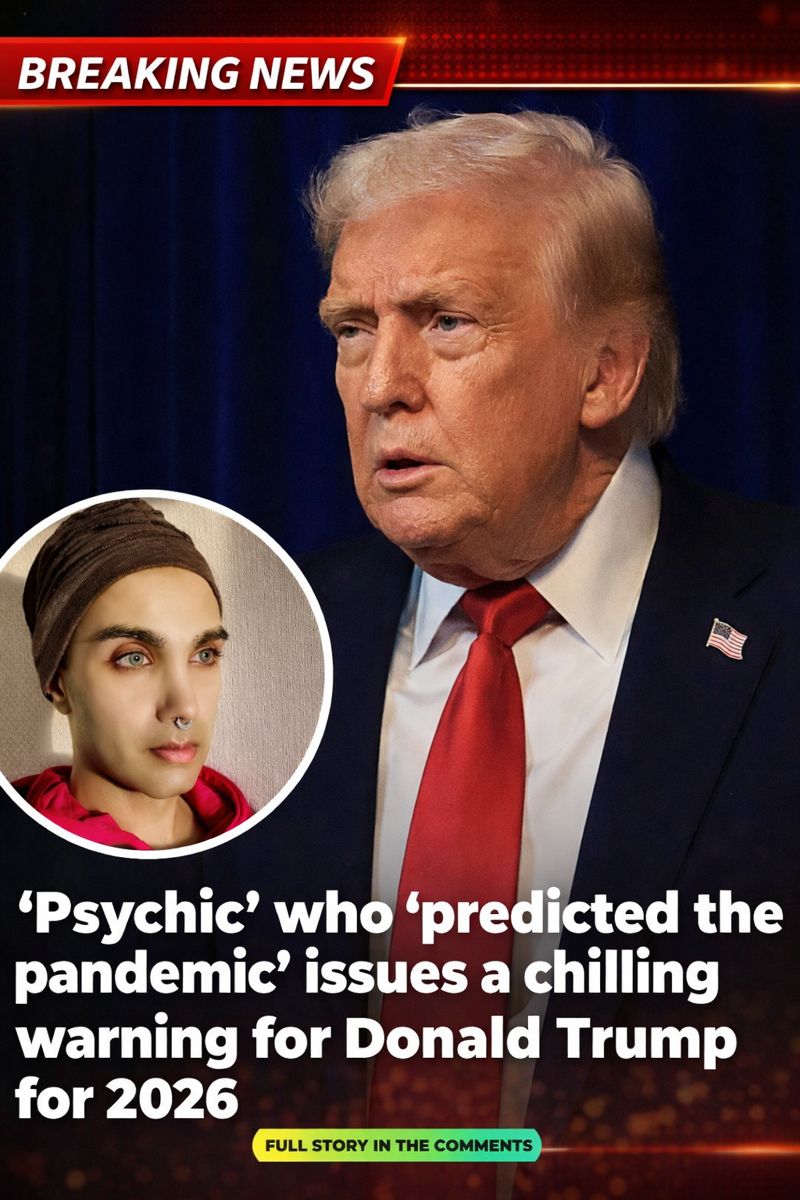
The human fascination with the future has always served a dual purpose: it acts as a mirror to our deepest anxieties and a lens through which we view the limits of our imagination. In recent months, this fascination has found a new focal point in the work of Nicolas Aujula, a psychic whose forecasts for the coming year have sparked a wave of public discourse. Described by many as dramatic and profoundly unsettling, Aujula’s claims suggest that 2026 will not merely be a difficult year, but a transformative period that could effectively “break” the global order. Aujula, who gained international notoriety for his purported forewarning of the Covid-19 pandemic, describes the looming crises as a series of interconnected disruptions. These are not isolated incidents localized to a specific leader or region; rather, they are presented as fundamental shifts in the wider human experience.
A Year of Vivid Instability
Aujula’s forecasts for 2026 are as vivid as they are alarming. He points toward a surge in seismic activity, specifically citing earthquakes striking Southern Europe, Turkey, and regions across the Pacific. The psychic notes that these events could specifically impact popular holiday destinations, adding a layer of personal vulnerability to the geographical data.
Beyond the shifting earth, he warns of a major global storm event. This atmospheric crisis, characterized by unprecedented wind speeds and catastrophic flooding, is framed as a historically significant event—one that transcends the typical seasonal weather patterns we have come to expect.
The predictions also move into the realm of high-stakes social and political drama:
-
Royal Upheaval: Aujula predicts a significant scandal involving Prince Harry and Meghan Markle. He suggests this event could trigger a dramatic shift in public sentiment, fundamentally altering how millions perceive the monarchy.
-
Political Unraveling: He references the “public unraveling” of a former U.S. president. In Aujula’s view, this event is both a literal occurrence and a metaphor for a broader sense of national and institutional instability.
-
A Neurological Mystery: Perhaps most unsettling is his description of a mysterious neurological illness. Striking without a clear pattern, the condition reportedly mimics the effects of an aneurysm, an event Aujula suggests could spike global levels of societal anxiety.
The Mechanics of the Vision
Understanding Aujula’s process is key to contextualizing his claims. He emphasizes that his visions are entirely involuntary, manifesting as sudden flashes, symbolic imagery, and experiences he links to past lives. For him, the future is not a detached, linear timeline, but a continuum of impressions.
While Aujula asserts that the “emotional tone” of his 2026 impressions matches the intensity of his pre-pandemic visions, he offers a significant caveat: symbols can be misread. He acknowledges that while the resonance of a vision may be clear, the timing is often ambiguous and the specific details can be subject to human misinterpretation. This admission highlights an essential journalistic truth—that such forecasts are inherently interpretive rather than deterministic.
Mirroring a World in Flux
To analyze these claims, one must look at the environment in which they flourish. Predictions of this nature rarely exist in a vacuum; they are woven from the threads of existing societal fears. Aujula’s forecasts clearly echo contemporary concerns regarding climate change, political polarization, and public health fragility.
Earthquakes and storms give voice to our climate anxiety, while royal and political scandals mirror a growing public obsession with leadership and institutional accountability. History, however, offers a necessary counter-narrative. While humanity has faced numerous “breaking points” throughout the centuries—from financial collapses to social revolutions—the recurring pattern is not just one of crisis, but of resilience. Communities have a historic tendency to adapt and systems to recover, even when the path forward seems uncertain.

The Narrative of Discernment
The dramatic nature of these forecasts has inevitably dominated headlines and social media feeds, often amplified by emotional framing that heightens public dread. Yet, the real lesson may lie in how we engage with these narratives.
Experts in psychology and risk assessment caution that while these “storytelling mechanisms” can provide a structure for diffuse fears, they should never replace critical thinking or evidence-based planning. Discernment remains our most valuable tool. Listening to a forecast does not require a surrender of judgment or a descent into panic.
Ultimately, the significance of Nicolas Aujula’s visions for 2026 may lie less in their literal accuracy and more in the societal reactions they provoke. They serve as a poignant reminder that fulfillment and purpose are not dictated by external accolades or predicted catastrophes, but by the quality of our connections, our self-awareness, and our ability to navigate the evolving journey of life with authenticity and grace.
In an era of hyper-connectivity, the dramatic forecasts of figures like Nicolas Aujula do not merely exist as isolated curiosities; they trigger immediate and profound ripple effects across the digital landscape. Social media acts as a powerful bellows, transforming sparks of speculation into roaring debates and, occasionally, widespread panic. However, a closer look at the public’s fixation on these 2026 predictions reveals a fundamental aspect of the human condition: our innate drive to impose structure onto the unknown.
Whether these narratives are factual or purely symbolic, they provide a much-needed framework for a society grappling with a world that feels increasingly volatile.
A Mirror to Collective Anxiety
The specific details of Aujula’s visions—earthquakes, political collapses, and mysterious ailments—are not random. They function as both a mirror and a magnifier, reflecting fears that already saturate our collective consciousness.
-
Climate and Environment: The mention of devastating storms and seismic shifts resonates with deep-seated anxieties regarding environmental instability and the tangible effects of climate change.
-
Political Fragility: Forecasts of “unraveling” public figures and royal scandals speak directly to our era’s crisis of institutional trust and the constant demand for accountability.
-
Medical Uncertainty: In the wake of recent history, the specter of a sudden neurological illness taps into an evergreen fear of emerging diseases and the limitations of modern medicine.
By giving these diffuse anxieties a tangible form, such predictions allow us to articulate and share fears that might otherwise remain abstract and overwhelming.
The Lessons of History: Resilience Over Ruin
While the rhetoric of a “breaking world” is evocative, history offers a necessary dose of perspective. Humanity has survived numerous periods of upheaval that, at the time, appeared insurmountable. From the depths of financial depressions and global conflicts to the peaks of natural disasters and public health crises, the record shows a consistent pattern: destabilization is followed by recovery.
Historical precedent suggests that outcomes are not dictated by the predictions themselves, but by the human capacity for adaptability, innovation, and social cooperation. These traits have consistently mitigated the impact of even the most catastrophic events. In this light, Aujula’s visions are perhaps best viewed as prompts for heightened awareness and strategic preparedness rather than deterministic scripts of the future.
The Behavioral Impact of Dramatic Narratives
From a behavioral science standpoint, the way we digest these forecasts is critical. Repeated exposure to alarming narratives can function as a double-edged sword:
-
Adaptive Response: Fear can drive constructive vigilance, encouraging communities to bolster emergency preparedness and proactive planning.
-
Maladaptive Response: Conversely, it can trigger paralyzing stress, the spread of misinformation, and a sense of fatalism that hinders effective action.
Aujula himself has noted the limits of his visions, admitting that symbols can be misread and timing is rarely precise. This openness to uncertainty is a vital detail; it encourages the audience to engage with these predictions as cautionary narratives rather than absolute truths.
“The true measure of resilience is not found in the vividness of an imagined catastrophe, but in the steady, practical response we mount when reality arrives.”
Navigating the Information Storm
As media framing often favors sensationalist headlines over nuanced analysis, the burden of discernment falls on the individual. Navigating the balance between staying informed and surrendering to panic is, in itself, a form of resilience.
Effective engagement with the future requires a clear separation between imaginative storytelling and evidence-based action. While symbolic warnings can catalyze reflection, they are no substitute for tangible measures such as climate resilience strategies, public health initiatives, and informed civic participation.
The Path Forward
In conclusion, the significance of the 2026 forecasts lies not in their literal accuracy, but in the conversations they provoke regarding our own fragility and strength. As we move into this uncertain year, the most effective response is not to dwell on the “breaking,” but to focus on the “building.”
By grounding ourselves in observable reality and maintaining a commitment to practical, collective action, we ensure that the human story remains one of endurance. Clarity emerges when we replace fear with thoughtful reflection and a steadfast focus on the steps we can take today to secure tomorrow.