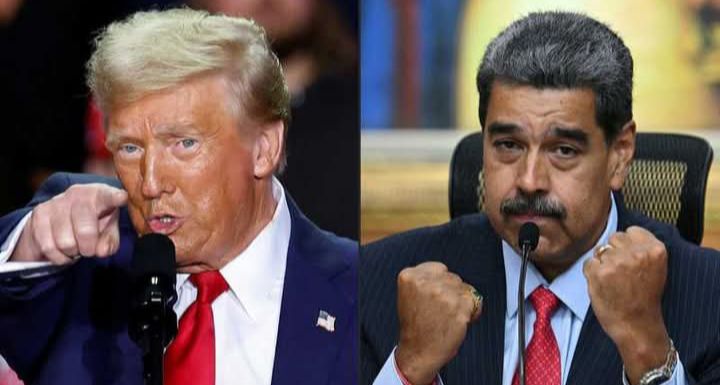
Trump Says the U.S. Will Take a Leading Role Following Changes in Venezuela’s Leadership
President Donald Trump has asserted that the United States will assume temporary oversight of Venezuela to facilitate what he described as a “proper transition” of power. The announcement followed his claims of a high-stakes U.S. military operation conducted this past Saturday, which he says resulted in the apprehension of Venezuelan President Nicolás Maduro and his wife, Cilia Flores. Speaking to a press pool from his Mar-a-Lago residence, Trump characterized the intervention as a necessary and controlled maneuver designed to stabilize the region. He emphasized that the American presence is intended to be transitional. “We’re there now, but we’re going to stay until such time as the proper transition can take place,” Trump stated, framing the U.S. role as one of interim management rather than long-term occupation.
Details of the Alleged Operation
The former president’s remarks provided a narrative for several hours of reported volatility in the region, including unconfirmed reports of explosions in the Venezuelan capital of Caracas. While initial details from the ground remained sparse, Trump later clarified the purported scope of the mission, maintaining that Maduro and Flores were taken into custody during the operation.
Addressing the safety of American forces, Trump reported that while several U.S. personnel sustained injuries during the “dramatic and highly complex” mission, there were no American fatalities.
“This is something that, gee, I don’t know, is amazing,” Trump remarked, citing the lack of U.S. deaths as a testament to the operation’s tactical execution. He defended the decision to move forward with the strike by linking it to broader national security interests, specifically the interdiction of drug trafficking—an issue he argued previous administrations had failed to resolve.
“We did a great job with stopping drugs from coming into this country, and nobody’s been able to do it until we came along,” he told reporters.
Economic Revitalization and the Oil Sector
Beyond the immediate military and political shift, Trump outlined an ambitious plan for Venezuela’s energy sector, which houses some of the world’s largest proven oil reserves. Describing the nation’s current infrastructure as “badly broken,” he stated that the new oversight would open the door for major American energy firms to lead a reconstruction effort.
“We’re going to have our very large United States oil companies, the biggest anywhere in the world, go in, spend billions of dollars, fix the badly broken infrastructure… and start making money for the country,” Trump said. He presented the move as a mutually beneficial strategy to rebuild the Venezuelan economy while providing significant returns for U.S. investors.
Regarding international competition—specifically China’s long-standing interests in Venezuelan petroleum—Trump expressed confidence that his relationship with Chinese President Xi Jinping would prevent diplomatic friction. He suggested that while the U.S. would ensure the security of the transition, it would not necessarily block Chinese access to oil, provided the U.S. remained the stabilizing authority. “There’s not going to be a problem,” he added.
A Warning to the Maduro Loyalists
While Trump did not provide a specific timeline for the withdrawal of U.S. forces or a formal roadmap for a new government, he noted the presence of Venezuela’s sitting vice president and suggested that existing political frameworks might be utilized during the interim.
However, he issued a stern warning to those still aligned with the Maduro administration. “If they stay loyal, the future is really bad for them,” Trump cautioned, though he claimed many within the government had already shifted their allegiances due to a perceived lack of internal support for Maduro.
Questions of Legality and Verification
Despite the former president’s confident delivery, his claims have sparked immediate questions regarding international law, constitutional authority, and the lack of independent verification. Trump acknowledged that his critics would likely raise legal objections to the administration of a sovereign nation, but he dismissed these concerns as standard political opposition, arguing that the results of the operation justified the means.
As of this report, the former president has not provided documentary evidence, specific timelines, or corroboration from international bodies to support the claims of Maduro’s capture or the extent of the U.S. military footprint currently in Venezuela.
For now, the international community is left to weigh the implications of Trump’s vision for a U.S.-led transition against the significant legal and diplomatic hurdles that such an intervention would inevitably face.
Expanding on his announcement of a U.S.-led transition in Venezuela, Donald Trump has laid out a strategy that leverages American private sector might to bypass traditional aid models, favoring instead a rapid, investment-driven reconstruction of the nation’s crippled infrastructure.
According to Trump, the key to accelerating Venezuela’s recovery lies in allowing major U.S. oil conglomerates to resume large-scale operations within the country. He argued that the influx of American capital and technical expertise is the most pragmatic solution to stimulate economic growth and generate the revenue necessary to support the Venezuelan population.
Private Capital as a “Pragmatic” Catalyst
Trump framed this approach not as a matter of ideology, but as a logistical necessity. He asserted that only the resources and modernized facilities provided by the global private sector could restore production capacity in a nation whose energy infrastructure has suffered from years of systemic neglect. While his remarks stopped short of detailing specific regulatory frameworks or contract structures, he suggested that these arrangements would be meticulously crafted to ensure corporate profitability while simultaneously funding national recovery efforts.
However, the former president made it clear that this economic opening would be backed by the full weight of the U.S. military. He issued a blunt warning that the United States remains prepared to take further military action should any security threats emerge during this delicate transition period. The messaging appeared to be a direct shot across the bow to remaining Maduro loyalists and armed factions, aimed at deterring any resistance that might disrupt U.S. control or jeopardize the security of oil operations.
Navigating the Geopolitical Minefield
The situation carries profound geopolitical weight, given Venezuela’s deep-seated ties to Russia, Iran, and China. When questioned on how Beijing might react to a shift in access to Venezuela’s vast reserves, Trump sought to project a stabilizing influence rather than a monopolistic one.
He characterized U.S. involvement as a force for order that would ultimately benefit international stakeholders by preventing regional chaos and mitigating the risk of renewed conflict. Citing his personal rapport with Chinese President Xi Jinping, Trump signaled that the world’s major powers could coexist within this new framework. Despite these reassurances, the former president did not clarify the mechanisms that would be used to resolve the inevitable disputes or balance competing international claims—processes that analysts note typically require years of multilateral treaties and complex negotiations.
The Strategy of Defection
Addressing the internal power dynamics of Caracas, Trump claimed a significant erosion of support for the Maduro regime. He asserted that many high-ranking political and military figures have already shifted their allegiances, though he provided no independent evidence to confirm these defections.
His rhetoric served as both a carrot and a stick: a promise of a “favorable future” for those who cooperate with the transition, and a warning of “severe consequences” for those who remain loyal to the previous administration. This classic psychological strategy appears designed to hollow out what remains of the regime’s institutional support from the inside out.
Notable Absences: Humanitarian Aid and Long-Term Governance
While Trump’s vision focused heavily on security and economic reconstruction, humanitarian concerns—a central pillar of most international discussions regarding Venezuela—were notably less prominent. The country’s ongoing crisis of mass migration and acute shortages of basic goods was not met with specific plans for public services or social programs. Instead, Trump leaned into a narrative that linked the intervention to his long-standing domestic priorities, such as border security and counter-narcotics efforts.
Observers point out that while oil revenue and military presence can provide a temporary lid on instability, long-term success often hinges on rebuilding public trust and civil institutions—elements that typically require the coordination of regional partners and international organizations, which were not detailed in his remarks.
A Vision Awaiting Verification
In summary, the narrative presented by Trump is one of decisive, outcome-oriented action aimed at securing U.S. interests while reviving a collapsed state through American industry. However, the plan remains heavily reliant on his personal account of events on the ground.
With no publicly released roadmap for formal governance, future elections, or international oversight, the feasibility and legitimacy of this “transition” remain the subjects of intense global debate. The coming days will likely determine whether this vision translates into verifiable outcomes or if it will face significant pushback from an international community currently grappling with the implications of such a bold and unconventional intervention.