The Final Words Were “I Love You” Before an Unexpected Ambush
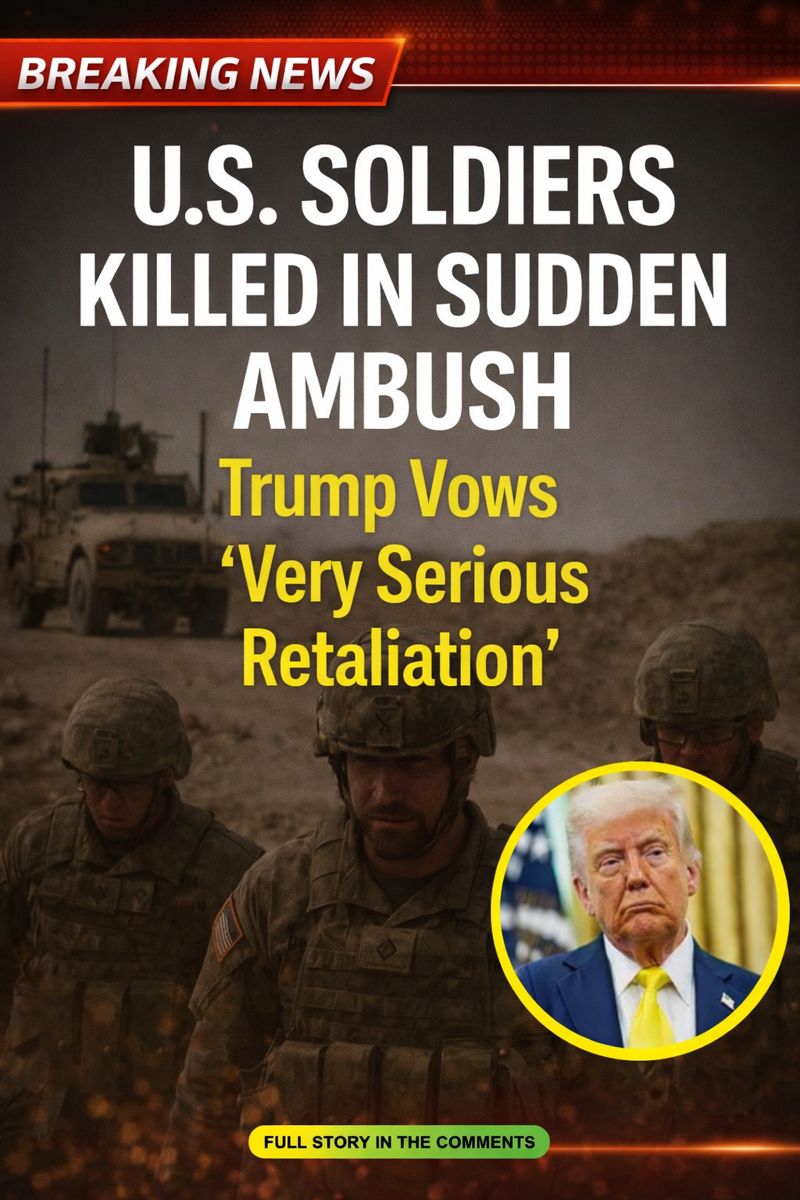
It was a routine patrol that dissolved into irreversible loss. In the vast, unforgiving expanse of the Syrian desert near Palmyra—a landscape defined by arid stretches and the long shadows of decades-old conflict—the horizon usually offers nothing but heat mirages and a deceptive stillness. That silence was shattered by the crack of gunfire. Two American service members, men whose names and faces were known only to an intimate circle of family and colleagues until that moment, were killed in a sudden, violent ambush. Responsibility was swiftly attributed to the Islamic State, an organization that continues to thrive in regional chaos, aiming to project terror far beyond the immediate reach of its weapons. The assault was intentional, swift, and merciless. It served as a grim reminder that modern wars do not end with the stroke of a pen or a formal declaration; they linger in the quiet, deadly spaces where the world has come to expect a semblance of safety.
The Long Thread of Tragedy
For those waiting at home, the geographic distance between the Middle East and the American Midwest felt both absolute and impossibly thin. In Iowa, a state of orderly cornfields and quiet residential streets, the repercussions arrived with the crushing weight of inevitability.
The morning began with routine. Messages were sent that would never be answered. Throughout the day, phones were checked with a ritualistic desperation that intensified with every passing hour. Homes that were once sanctuaries of comfort began to shift in meaning; the mundane scenery of everyday life—kitchen tables set for a dinner that would go cold, empty shoes by the door, laundry folded in familiar patterns—suddenly transformed into a landscape of profound absence.
In a single instant, the Syrian desert and the quiet Midwest were pulled together by an invisible thread of tragedy.
Lives Measured in Daily Acts
The men lost in the Palmyra outskirts lived lives defined by steady, unassuming dedication. They were the “anchors” of their communities—the kind of people whose impact is rarely captured in a headline but is felt deeply through years of reliability.
One was a fixture in local youth sports, coaching teenagers not just in the fundamentals of the game, but in the harder lessons of discipline and resilience. Another managed the delicate balance of long work hours and heavy family responsibilities, quietly carrying burdens he rarely discussed. They were trusted to return from their assignments unharmed, a belief reinforced by years of protocol and the official reassurances of the institutions they served.
That belief did not survive the notification calls. When the news finally arrived, it came in the stark language of military bureaucracy: phone calls from uniformed personnel and letters detailing “operational necessity” and “strategic deterrence.” While these words are intended to provide clarity and justification, they hold little currency within the walls of a grieving home.
Inside those rooms, the arithmetic of loss is far simpler and much heavier: a mixture of pride in the courage displayed, love for the life now missing, and a simmering, quiet anger at the distant decisions that led to this end.
The Duality of Grief
In the weeks following the deaths, the impact has rippled outward through the fabric of Iowa life. Schools have held silent acknowledgments for their missing coaches; workplaces have struggled to fill the voids left by dependable colleagues. Every conversation about the fallen men has become a careful exercise in restraint—an effort to honor their bravery without sensationalizing the tragedy that claimed them.
For the families, grief has become a new, disorienting reality. The duality of memory—acting as both a source of solace and a sharp instrument of sorrow—now defines their days. Every ordinary sound, from a car door closing in the driveway to a familiar ringtone, has been recontextualized as a marker of what is gone.
Questions without neat answers continue to multiply: Why was this specific patrol at such risk? Could a different tactical decision have changed the outcome? How can men so vital and ordinary simply vanish in such extraordinary circumstances?
The True Cost of Conflict
As the national debate continues over foreign policy, troop presence, and geopolitical strategy, the truth remains stark and deeply personal. Wars do not conclude on a timetable set by governments or 24-hour news cycles.
Instead, they persist in the kitchens where a parent’s laughter is suddenly missing. They endure in the driveways that no longer witness a familiar figure returning from duty, and in the silent pauses of conversations once filled with shared plans. The abstract language of defense and global security cannot encapsulate the physical weight of an empty chair at the dinner table.
Ultimately, these losses force a reckoning with the true nature of service. Every deployment ordered by distant authorities carries consequences that resonate for years, long after the battlefield has cleared. The men who died near Palmyra were more than casualties of a violent encounter; they were individuals whose absence has fundamentally transformed the contours of the communities they left behind.
There is a clinical coldness to military statistics and official after-action reports that can never quite capture the true anatomy of a sacrifice. Behind every casualty notification is a complex architecture of human life—a tapestry of unfinished routines, quiet aspirations, and the small, daily joys that a soldier, sailor, or airman packs away when they leave home, fully expecting to retrieve them upon their return.
In the aftermath of the recent tragedy near Palmyra, the heartland of Iowa has become a study in the persistence of both grief and life. While the headlines focus on the geopolitical fallout of the ambush, the real story is unfolding in the town squares and living rooms of small-town America, where the absence of two men has fundamentally reshaped the social fabric.

The Communal Ripple of Grief
In Iowa’s close-knit communities, news of this magnitude does not break; it seeps into the soil, traveling swiftly and silently from neighbor to neighbor. This was a loss that expanded far beyond the immediate families, touching colleagues, acquaintances, and even strangers who had only known the fallen in passing.
In local community centers and town squares, candlelight vigils have served as more than just a place to mourn. They have become a form of public testimony. Those in attendance seek to ensure that these lives—defined by a quiet, everyday excellence—do not fade into the anonymity of a military brief or a numbered casualty report.
Inside the homes of the bereaved, however, the grief is far more tactile and unrelenting. Bedrooms that once echoed with laughter now hold a heavy, sacred silence. Every object left behind—a pair of worn football cleats, a collection of hand-drawn sketches, or a meticulously folded uniform—has been transformed from a mundane possession into a relic of identity. Parents find themselves speaking to empty rooms, attempting to bridge the chasm death has carved with the simple, verbalized weight of their love.
The Empty Chair: Impact on the Next Generation
The void is perhaps most visible in the local organizations where these men served as anchors. Young athletes, once guided by the patient hand of a coach now lost, have struggled to reconcile the absence of their mentor. Teachers report a subtle but pervasive emotional turmoil among students, a “ripple effect” that has colored community events and volunteer groups.
Whether it is the empty chair at a town hall meeting or the sudden silence in a group chat, the grief is communal. It has forced a reckoning with the reality of what it means to send young men into harm’s way, even on missions labeled as “routine” or “low risk.” Conversations in local diners and on porches have shifted from simple condolences to a sharper scrutiny of foreign policy. Families are beginning to question how decisions made in distant command centers, thousands of miles from the Midwest plains, result in such permanent, local tragedies.
The Daily Work of Remembrance
While flags flying at half-mast and moments of silence at sporting events provide a necessary structure for public mourning, they are only partial remedies. The truest measure of these lives is being found in the “larger, quieter” acts of honoring the dead:
-
The Continuation of Service: A new coach stepping in to lead a youth program with the same dedication the fallen once showed.
-
Neighborhood Support: The delivery of groceries and the quiet maintenance of a grieving family’s home.
-
The Living Legacy: Children carrying forward the lessons of discipline and kindness they learned from their fathers and mentors.
These actions rarely make the evening news, yet they serve as living proof that absence can coexist with an enduring presence. They are the “stubborn persistence of life” that refuses to let a legacy be defined solely by the moment of its ending.
A Reckoning with Policy and Price
Ultimately, this tragedy serves as a stark reminder that wars do not end neatly on a government timetable. The consequences of conflict linger in driveways that will never see a familiar figure return and in phones that will never again ring with the voice of a son or a brother.
The human element remains the most potent aspect of the national discourse. Behind every operational brief are individual lives carrying the hopes of entire communities. To truly honor their sacrifice, there must be a recognition that the cost of war is not measured in medals, but in the love that survives and the responsibility we share in weighing the choices that place others in danger.
In the quiet corners of Iowa, life continues, but its rhythm has been irrevocably altered. Children will grow and communities will adapt, but they will do so in the shadow of a loss that emphasizes both human fragility and the relentless strength required to endure it. The echoes of the Palmyra attack continue to resonate—quiet, persistent, and impossible to ignore—long after the battle has moved elsewhere.