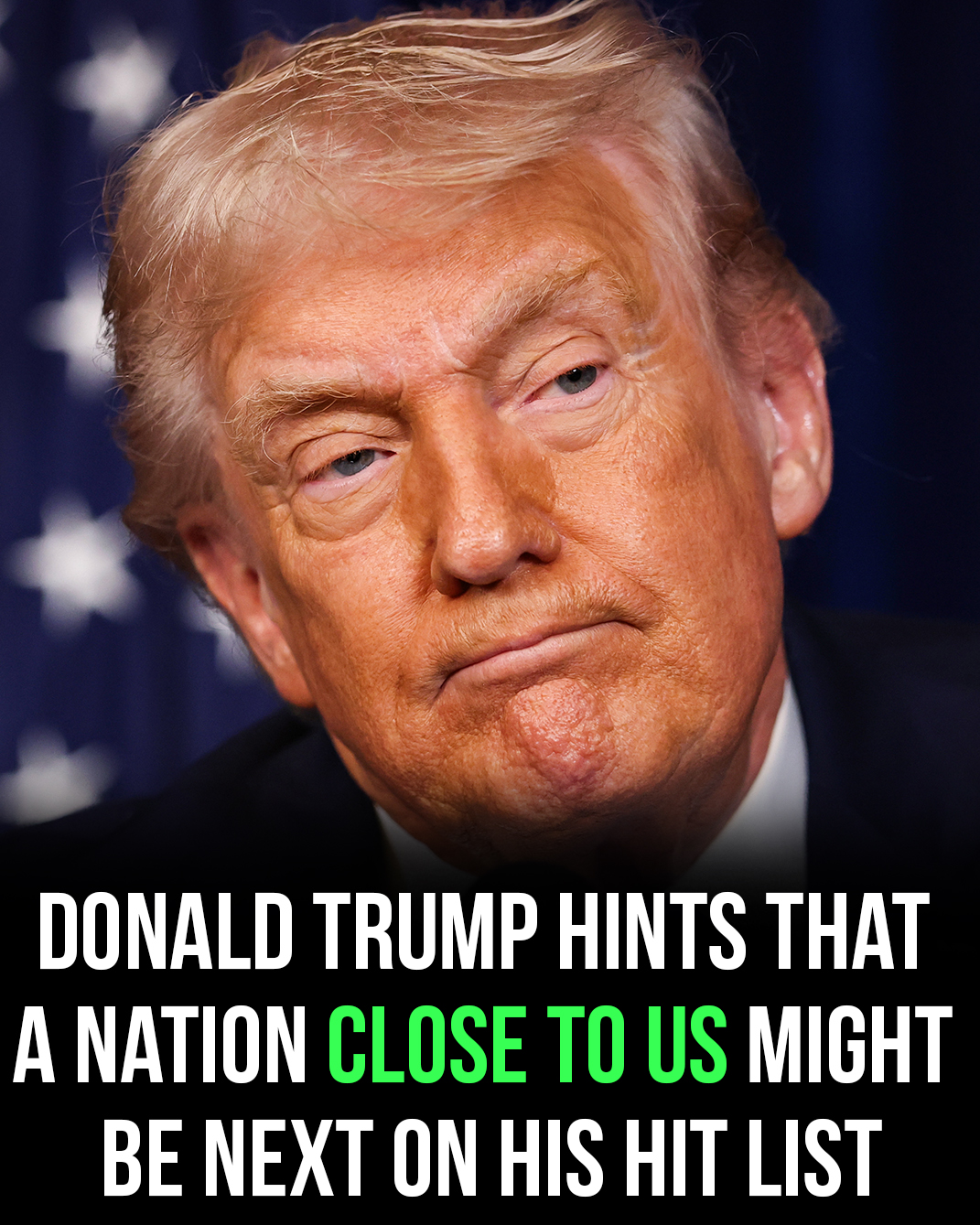
Donald Trump hints a nearby nation could be next on his list of targets
The recent U.S. military intervention in Venezuela, culminating in the dramatic apprehension of Nicolás Maduro, appears to have been merely the opening salvo in a far broader geopolitical strategy. Following the high-stakes operation that neutralized the Venezuelan leadership, President Donald Trump is now fueling intense speculation that several other nations—some situated precariously close to American borders—may soon find themselves in the crosshairs of his administration. Over the weekend, U.S. forces executed a clandestine surprise operation in Caracas, arresting Maduro alongside his wife, Cilia Flores. The couple was swiftly extradited to the United States to face judicial proceedings. In a subsequent confirmation of the mission’s “success,” President Trump announced that the U.S. would assume temporary oversight of Venezuela until a formal transition of power is orchestrated. However, it was the President’s post-operation rhetoric that sent shockwaves through the international diplomatic community, signaling that the Venezuelan mission might not be an isolated event.
Colombia: The Possible Next Target
While speaking to reporters aboard Air Force One, the President appeared to direct his attention toward Colombia. Reports from TMZ indicate that Trump labeled Colombian President Gustavo Petro a “sick man,” accusing him of a penchant for “making cocaine and selling it to the United States.” In an ominous postscript, Trump remarked that Petro would not be “doing it very long.”
When pressed by the press corps on whether Colombia could be the next theater for U.S. intervention, Trump’s response was characteristically blunt: “It sounds good to me.”
These comments follow a series of escalations in which Trump warned Petro to “watch his a**” and publicly branded the Colombian leader an “illegal drug leader.” Petro, responding to the news of Maduro’s arrest via X, demanded that Trump “stop slandering” him, further warning that Latin American nations must forge a united front or risk being “treated as a servant and slave.”
Cuba and Mexico Under Scrutiny
Colombia is not the only nation on the administration’s radar. President Trump also suggested that Cuba is currently teetering on the brink of a total systemic collapse, asserting that the island nation’s economy was fundamentally dependent on Venezuelan oil—a lifeline that has now been severed.
“Cuba now has no income. They got all of their income from Venezuela, from the Venezuelan oil. They’re not getting any of it. Cuba literally is ready to fall,” Trump stated.
While the President seemed to downplay the immediate necessity for military action on the island, he issued a pointed and stern warning to Mexico. Asserting that the country “has to get their act together” regarding the flow of narcotics across the border, Trump hinted that the U.S. might eventually “have to do something.”
In a notable contrast of tone, he praised Mexican President Claudia Sheinbaum as a “terrific person,” though he tempered the compliment with a grim assessment: “But unfortunately, the cartels are very strong in Mexico.”
A Growing Wave of International Backlash
The administration’s aggressive posturing has triggered a firestorm of international condemnation. In a rare display of regional solidarity, Brazil, Chile, Colombia, Mexico, Uruguay, and Spain issued a joint communique firmly rejecting the unilateral military actions in Venezuela.
“We express our profound concern and firmly reject the military actions undertaken unilaterally in Venezuelan territory,” the statement declared. “These actions contravene fundamental principles of international law… and constitute an extremely dangerous precedent for peace and regional security.”
Unmoved by the outcry, Trump addressed the nation from Mar-a-Lago, characterizing the Caracas raid as “brilliant” and crediting “great, great troops and great people.” He further justified the move by accusing Maduro of transforming the Venezuelan state into a “terrorist organization.”
The Revival of the Greenland Ambition
Buoyed by the success of the Venezuelan operation, the President has also resurrected one of the most controversial foreign policy goals of his first term: the acquisition of Greenland.
According to White House sources, Trump views the Arctic territory as a vital national security priority to “deter our adversaries in the Arctic region.” Officials have confirmed that the administration is exploring several avenues, ranging from a direct purchase of the island from Denmark to the establishment of a Compact of Free Association.
“The president and his team are discussing a range of options to pursue this important foreign policy goal, and of course, utilizing the U.S. military is always an option at the commander-in-chief’s disposal,” the White House stated.
While both Greenland and Denmark have categorically rejected any sale, and U.S. lawmakers from both sides of the aisle have warned against threatening a NATO ally, senior officials insist the President is undeterred. “It’s not going away,” one official remarked regarding the push for the island.
The situation reached a critical point on January 6, when Denmark’s parliamentary foreign affairs committee convened an emergency crisis meeting. Following the session, Foreign Minister Lars Løkke Rasmussen confirmed that Denmark has requested urgent talks with U.S. Secretary of State Marco Rubio. According to reports from the Wall Street Journal, Rubio’s primary objective remains negotiating the purchase of the island.