The latest polls on Trump’s approval are downright astonishing
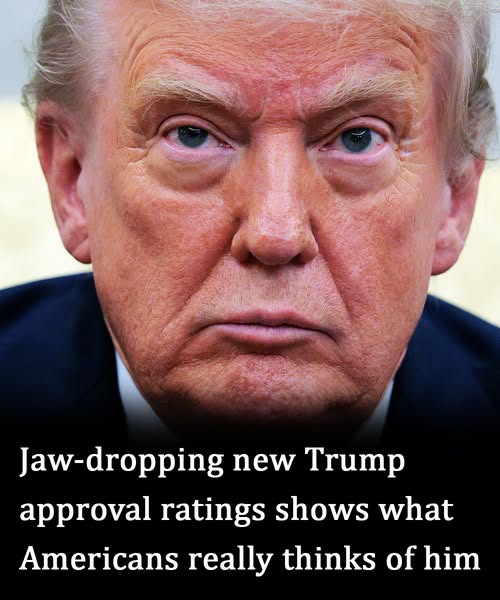
To hear President Donald Trump tell it, the state of the union is not just strong; it is unparalleled. Ten months into his second term, the former real estate mogul and reality television titan-turned-commander-in-chief remains a relentless engine of optimism. From the Oval Office, he continues to project an image of “record-breaking success,” touting a triumvirate of victories across the economy, foreign policy, and his “America First” domestic agenda. Yet, as the nation moves into a volatile 2026, a starkly different reality is emerging from the streets of middle America. According to the latest CNN/SSRS national survey, the public’s sentiment has decoupled from the President’s rhetoric. Trump’s approval rating has eroded to a sobering 37%—one of the lowest ebbs of his presidency and a precipitous decline from the 47% high-water mark recorded last February. The survey, conducted among 1,245 adults nationwide, paints a portrait of a country grappling with profound frustration and a growing sense of political fatigue that has begun to leach across traditional party lines.
The Kitchen Table Crisis
While the White House focuses on macroeconomic indicators, 47% of voters cited the economy and the soaring cost of living as their primary anxiety—dwarfing immigration (10%) and national security (8%). Despite relatively low unemployment, the lived experience for many working families is one of a relentless “inflation squeeze.” Wages, while growing, have failed to outpace the escalating prices of essentials: bread, rent, and life-saving healthcare.
For a President who staked his brand on economic dominance, these figures represent a significant narrative challenge. His aggressive suite of policies—sweeping tariffs, wholesale deregulation, and a “drill, baby, drill” energy expansion—initially found favor in the C-suites of corporate America. However, for the average household now staring down higher monthly bills, the story is increasingly seen as one of turmoil rather than triumph.
Public Opinion Turns Sour
The polling data suggests the President’s challenges are systemic rather than localized. A staggering 61% of Americans now believe his policies have actively worsened economic conditions, while a mere 27% credit them with improvement.
The dissatisfaction extends to the global stage. Fully 56% of respondents believe Trump has damaged America’s international standing, compared to 32% who see it as strengthened. From bruising trade standoffs with Beijing to abrupt troop realignments and unconventional alliances, his “revisionist” foreign policy continues to polarize the global community and domestic electorate alike.
Perhaps most telling is the public’s view on the use of executive power. As Trump leans into the levers of the presidency, 61% of those surveyed believe he has overstepped his constitutional authority. Critics point to a flurry of executive orders, controversial National Guard deployments, and the recent military intervention in Venezuela as evidence of an executive branch that has untethered itself from congressional oversight.
The Midterm Shadow
With the 2026 midterms looming, these numbers carry heavy political weight. When asked how Trump’s performance would influence their vote for Congress, 41% said they would cast their ballot specifically to oppose him, while only 21% said they would vote to support his agenda.
“Trump’s greatest strength is also his greatest weakness—intensity,” notes Dr. Elaine Hargrove, a political scientist at Georgetown University. “He inspires a level of passion that cuts both ways. In a general election, that volatility can act as a political boomerang.”
Trump Fires Back: “Fake Polls and Fake News”
True to form, the President has met the data with characteristic defiance. In a lengthy broadside on Truth Social, he dismissed the findings as “phony” and accused the “Radical Left Media” of data manipulation.
“In the Fair Polls, I have the Best Numbers I have ever had,” Trump wrote, asserting that he has ended wars and built the “greatest economy in history.” He capped the post with a flourish of Oval Office bravado: “As I look around my beautiful surroundings, I say to myself, ‘Oh, look, I’m sitting in the Oval Office!’”
While his base finds this defiance vintage and unbowed, critics view it as a dangerous disconnect from a public that is increasingly looking for stability over showmanship.
A Presidency Under Pressure
The approval slump coincides with a grueling fiscal reality: the federal government is emerging from a record-setting 43-day shutdown, the longest in U.S. history. While a temporary funding deal was struck to keep doors open through January 30, the “Shutdown Redux” remains a looming threat.
Simultaneously, the administration is navigating a geopolitical minefield. Ongoing tensions with Iran, trade instability with China, and an emboldened push to acquire Greenland have put the “America First” agenda under a microscope of scrutiny.
The Great Divide
Perhaps the most striking takeaway from the CNN/SSRS data is the confirmation of a nation living in two parallel realities. Within the GOP, Trump’s approval remains a fortress at 82%. Among independents, however, it sags to 31%, and among Democrats, it sits at a negligible 6%.
“The middle ground is vanishing,” says veteran journalist Marianne West. “For supporters, every critique is ‘fake news.’ For opponents, every defense is propaganda. We are losing the ability to have a shared national conversation.”
What Comes Next
As the White House braces for a turbulent 2026, the President faces a high-stakes balancing act. History suggests that Donald Trump is at his most formidable when his back is against the wall, often rebounding after high-profile rallies or disruptive policy shifts.
However, with nearly two-thirds of the country currently disapproving of his performance, the question remains: is this a temporary wave of voter frustration, or a permanent shift in the national consciousness? The answer will likely define not just the midterms, but the remainder of his second term.