Will the ICE officer who shot a woman in Minneapolis face charges? Here’s what we know
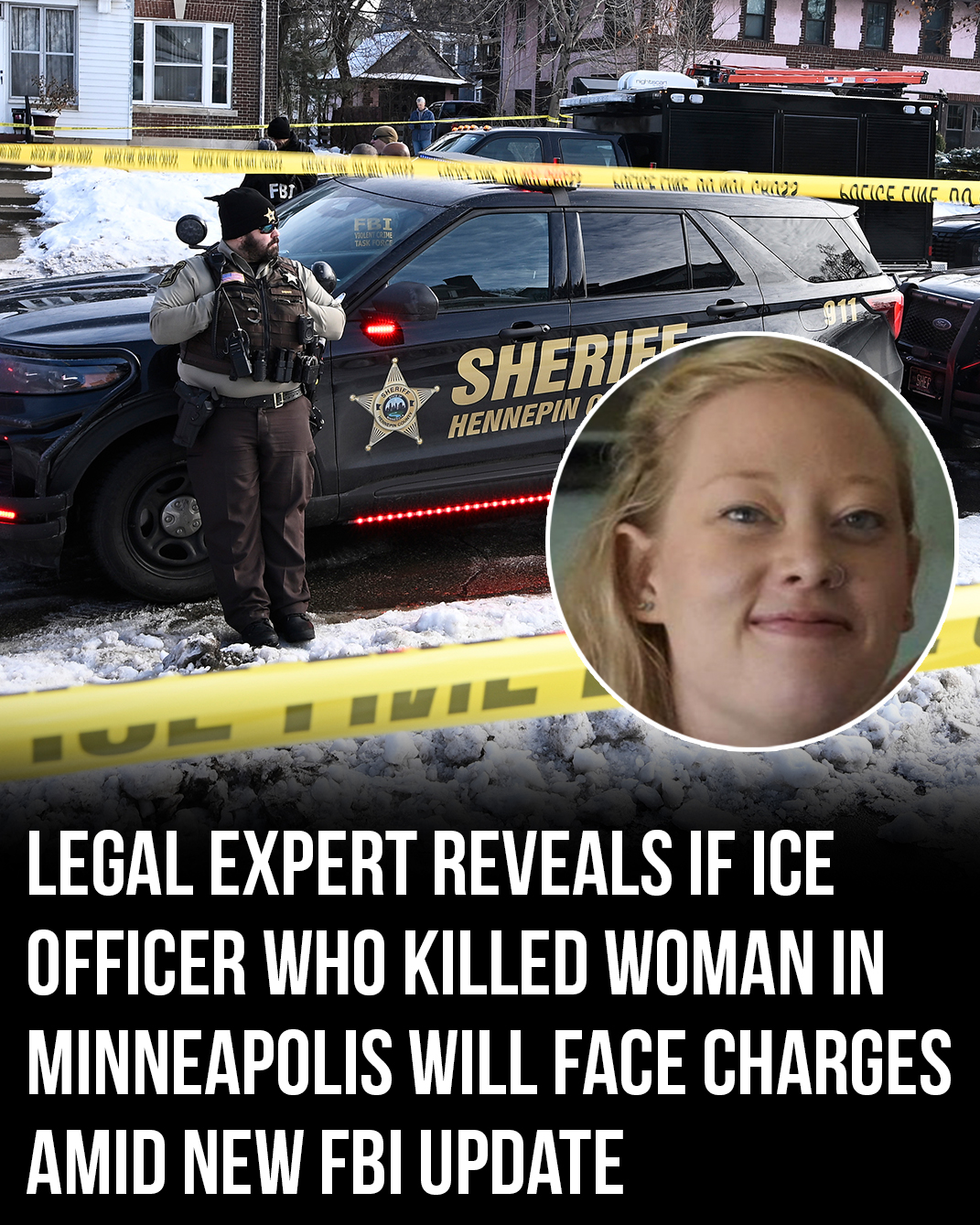
As the Twin Cities grapple with the volatile aftermath of the fatal shooting of Renee Nicole Good, a high-stakes legal and political battle is taking shape over whether the federal agent involved could—or should—face criminal prosecution. For weeks, the atmosphere in Minneapolis had been a tinderbox. Friction between local residents and federal authorities reached a breaking point this week as protests erupted in response to a surge of immigration raids. The situation was already at a fever pitch when, according to reports, an estimated 2,000 Customs and Border Protection (CBP) and Immigration and Customs Enforcement (ICE) personnel were mobilized for large-scale operations across Minneapolis and St. Paul. That tension turned tragic on January 7. Renee Nicole Good, a 37-year-old mother, was shot and killed while behind the wheel of her vehicle during one of those very federal raids. Bystander footage captures a harrowing sequence: a burgundy SUV surrounded by ICE agents at a residential intersection, followed almost instantly by a volley of gunfire. The SUV then veers wildly, crashing into a light pole and several parked cars. Chillingly, images from the scene show a bullet hole centered in the driver’s side windshield.

A War of Words: The “Weaponization” Narrative
The core of the legal dispute rests on the seconds preceding the gunfire. Federal authorities have been quick to frame the shooting as a clear-cut case of self-defense. The Department of Homeland Security (DHS) alleges that Good attempted to “weaponize” her vehicle, steering it toward an officer in a deliberate attempt to cause harm.
Vice President JD Vance has emerged as one of the administration’s most vocal defenders, taking to social media to place the blame squarely on the deceased. In an expansive post, Vance argued that the officers were acting within the law to stop an “obstruction” of their duties.
”First of all, she’s not waving the officers through and has no right to do so… She is waving another car through, before the officers approach her car,” Vance wrote, dismissing the notion that Good was an innocent bystander. He further contended that the officer fired only when the vehicle was “pointed at him” and the driver “pressed the gas,” asserting that other video angles—not yet released to the public—show the car “clearly” striking the agent.
Vance concluded with a stinging rebuke of the administration’s critics: ”A tragedy? Absolutely. But a tragedy that falls on this woman and all of the radicals who teach people that immigration is the one type of law that rioters are allowed to interfere with.”
The Legal Reality: Immunity vs. Accountability
While the White House projects a united front, legal analysts suggest the path forward is far more complex. Traditionally, federal agents enjoy a high degree of protection from state prosecution under the Supremacy Clause of the Constitution. However, legal experts noted this week that this immunity is not absolute. If a state prosecutor can prove that an agent acted outside the scope of their federal duties or used force that was “objectively unreasonable” under the Fourth Amendment, criminal charges could technically move forward.
In Minneapolis, local leadership is already signaling a refusal to let the federal narrative stand unchallenged. Mayor Jacob Frey has publicly dismissed the self-defense claim as “bulls***,” accusing federal agents of “sowing chaos” and “literally killing people.”
Governor Tim Walz joined the chorus of dissent, lambasting the administration’s handling of the incident as “governing by reality TV.” Walz has called for a “full, fair, and expeditious” investigation, even as the Minnesota Bureau of Criminal Apprehension (BCA) was reportedly sidelined from the probe by federal officials.
A Community in Mourning
Beneath the floor of legal jargon and political maneuvering lies the human cost of the morning of January 7. Renee Nicole Good is survived by her six-year-old son, a child who—according to neighbors—was the center of her world.
As the FBI takes sole control of the investigation and the White House doubles down on its defense of the officer, the city of Minneapolis remains a community divided. For the residents of Portland Avenue, the question isn’t just about the law—it’s about whether a mother’s life was taken by an “unrestrained paramilitary force” or a law enforcement officer doing a dangerous job.
As the Twin Cities navigate the jagged aftermath of the fatal shooting of 37-year-old Renee Nicole Good, the nation’s attention has shifted from the snowy intersection of Portland Avenue to the complex legal machinery of federal immunity. The central question—whether the ICE officer who fired the fatal shots will face criminal prosecution—is now the centerpiece of a high-stakes constitutional tug-of-law.
Good, a U.S. citizen and award-winning poet, is survived by her six-year-old son, a child described by neighbors as the center of her world. Her sudden death has transformed her from a private citizen into a symbol of a fractured America. On social media, she had once playfully described herself as a “poet and writer and wife and mom and shitty guitar strummer from Colorado; experiencing Minneapolis, MN.”
Her mother, Donna Ganger, provided a more intimate portrait to the Minnesota Star Tribune, describing her daughter as a woman of profound empathy. “She was extremely compassionate. She’s taken care of people all her life. She was loving, forgiving and affectionate. She was an amazing human being,” Ganger said, before adding a haunting assessment: “She was probably terrified.”
The Legal Shield: The Case for Justified Force
Despite the outpouring of grief and the tributes currently flooding Minneapolis, legal experts warn that the threshold for prosecuting a federal agent is exceptionally high. Andrew C. McCarthy, a former Chief Assistant U.S. Attorney for the Southern District of New York, argues that a criminal indictment remains unlikely under current Fourth Amendment precedents.
Writing in the National Review, McCarthy posited that if the officer had a “good-faith belief” that Good’s vehicle posed a significant threat, the use of force would be legally shielded.
“Undoubtedly, if it is reasonable to construe the woman’s action as a deliberate attempt to mow down an ICE agent with a speeding vehicle, the use of force was justified,” McCarthy noted. He further suggested that even if Good was simply attempting to flee, her actions could be interpreted as “actionable assault on a federal officer,” a felony that complicates any local attempt at prosecution.
“It is settled Fourth Amendment law that a police officer may use deadly force against a fleeing suspect if he has a good-faith belief that the suspect poses a significant threat of death or serious physical injury to the officer or others,” McCarthy concluded.
A Narrative Under Fire
The federal government has doubled down on this “self-defense” narrative. Secretary of Homeland Security Kristi Noem, speaking at a recent news conference, offered her unequivocal support for the agent’s actions, characterizing the shooting as a textbook application of federal training.
“Our officer followed his training, did exactly what he’s been taught to do in that situation, and took actions to defend himself and defend his fellow law enforcement officers,” Noem stated. She confirmed that the FBI has assumed lead jurisdiction over the investigation, a move that has effectively sidelined local authorities. “I do believe the officer used his training in this situation and we’ll let the FBI continue the investigation to get it resolved.”
Local Authorities Sidelined
This “federalizing” of the probe has caused significant friction in Minnesota. Superintendent Drew Evans of the Minnesota Bureau of Criminal Apprehension (BCA) announced that his agency has “reluctantly” stepped back from the case after the FBI assumed total control. The move has stripped local investigators of access to key evidence, scene materials, and interviews, fueling concerns among city leaders that a “transparent and independent” investigation is no longer possible.
As vigils continue—including a massive gathering at Fruitvale Plaza Park in Oakland, California, where Good was honored as a “legal observer” and neighbor—the demand for accountability remains at a fever pitch.
The case of Renee Nicole Good is no longer just a local tragedy; it is a test of whether the “qualified immunity” of federal agents can withstand the scrutiny of a city, a state, and a family demanding to know why a poet and mother was shot in the head just blocks from her front door.