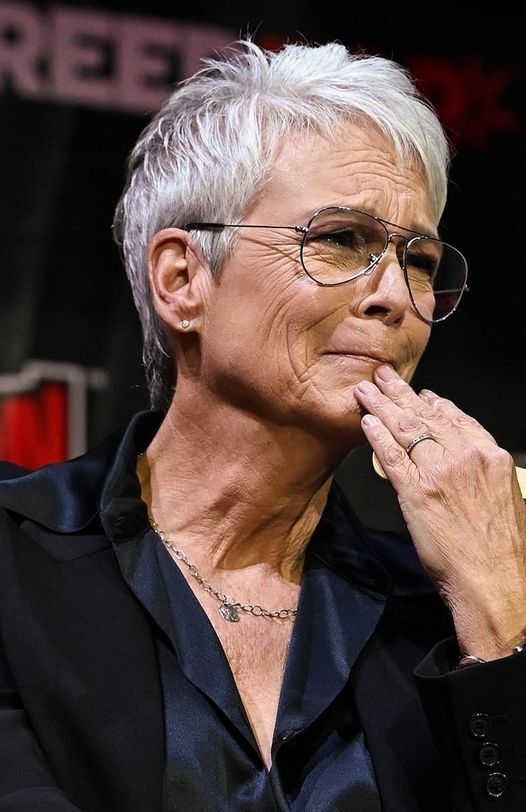
Jamie Lee Curtis overwhelmed with grief makes the heart-wrenching announcement: “He passed away today… he was a beautiful soul…
In an industry where eulogies are often as meticulously polished as a PR campaign, Jamie Lee Curtis’s tribute to the late Richard Lewis stands as a jarring, beautiful outlier. It is not a glossy retrospective. It is a raw, intimate account grounded in the grit of survival. Curtis didn’t reach for nostalgia; she reached for the heavy truth of lived experience—chronicling a bond forged in fear, sustained by friendship, and anchored in a reality that existed far beyond the klieg lights of celebrity. Curtis traces the genesis of their connection not to a casting office, but to a moment of pure instinct on Sunset Boulevard. Catching sight of Lewis’s face on a billboard, she felt an immediate, inexplicable certainty that he belonged in her orbit. She was the one who insisted he audition for Anything But Love, sensing something essential and perhaps fractured beneath his public persona. While the world saw a brilliant, neurotically charged comedian, Curtis saw a vulnerability that was only barely contained.
Behind the frantic energy of Lewis’s humor lived a paralyzing, systemic fear. Curtis paints a vivid picture of a man haunted by the specter of failure; he hid his lines everywhere—taped to props, scribbled on door frames, and even written on her own face during tight close-ups—terrified that his memory would betray him. Yet, she notes that once the cameras rolled, that terror underwent a profound alchemy. His anxiety didn’t just fuel his comedy; it sharpened his honesty, resulting in performances that were deeply human and ultimately unforgettable.
However, the core of Curtis’s tribute transcends their professional collaboration. She states, with striking plainness, that Richard Lewis is the reason she is sober today. At a pivotal, life-altering crossroads, it was Lewis who intervened. He did so without the theatrics of a Hollywood drama or the sting of judgment, but with an unwavering, quiet resolve. His refusal to let her fade away didn’t just save a friendship; it altered the trajectory of her life.
Their bond only deepened as they navigated the long shadows that addiction casts over the entertainment industry and shared the weight of mutual grief. Even as his own health declined near the end, Lewis’s focus remained on the legacy of their shared work, asking Curtis to help preserve Anything But Love. His request wasn’t born of a desire for posthumous recognition, but of a deep-seated need for remembrance.
Ultimately, Curtis’s words honor the quiet, stable life Lewis managed to build: a life of sobriety, of genuine love, and of a hard-won gentleness. Her tribute serves as a poignant reminder that in the grand theater of life, the most significant roles are played off-camera, and that the simple, steady care of one person can be the force that changes another’s world forever.