Emotional statement from the wife of a woman killed by ICE following a car crash
A heavy cloud of grief and systemic fury has settled over Minneapolis following a fatal confrontation between a federal Immigration and Customs Enforcement (ICE) agent and a local resident. The death of 37-year-old Renee Nicole Good has not only devastated a community but has ignited a fierce national debate over the escalation of force during federal immigration operations in American neighborhoods. Good, a celebrated local poet, musician, and mother, was killed during what federal authorities described as a routine enforcement action. Today, her name has become a rallying cry for those demanding accountability in a case where the official narrative and raw video evidence appear to be in direct conflict.

The Morning of the Shooting: Chaos on Portland Avenue
The violence erupted on the morning of January 7, 2026, in the residential heart of South Minneapolis. The intersection of 34th Street and Portland Avenue—usually a quiet corridor for a close-knit community—transformed into a crime scene marked by shattered glass and spent shell casings.
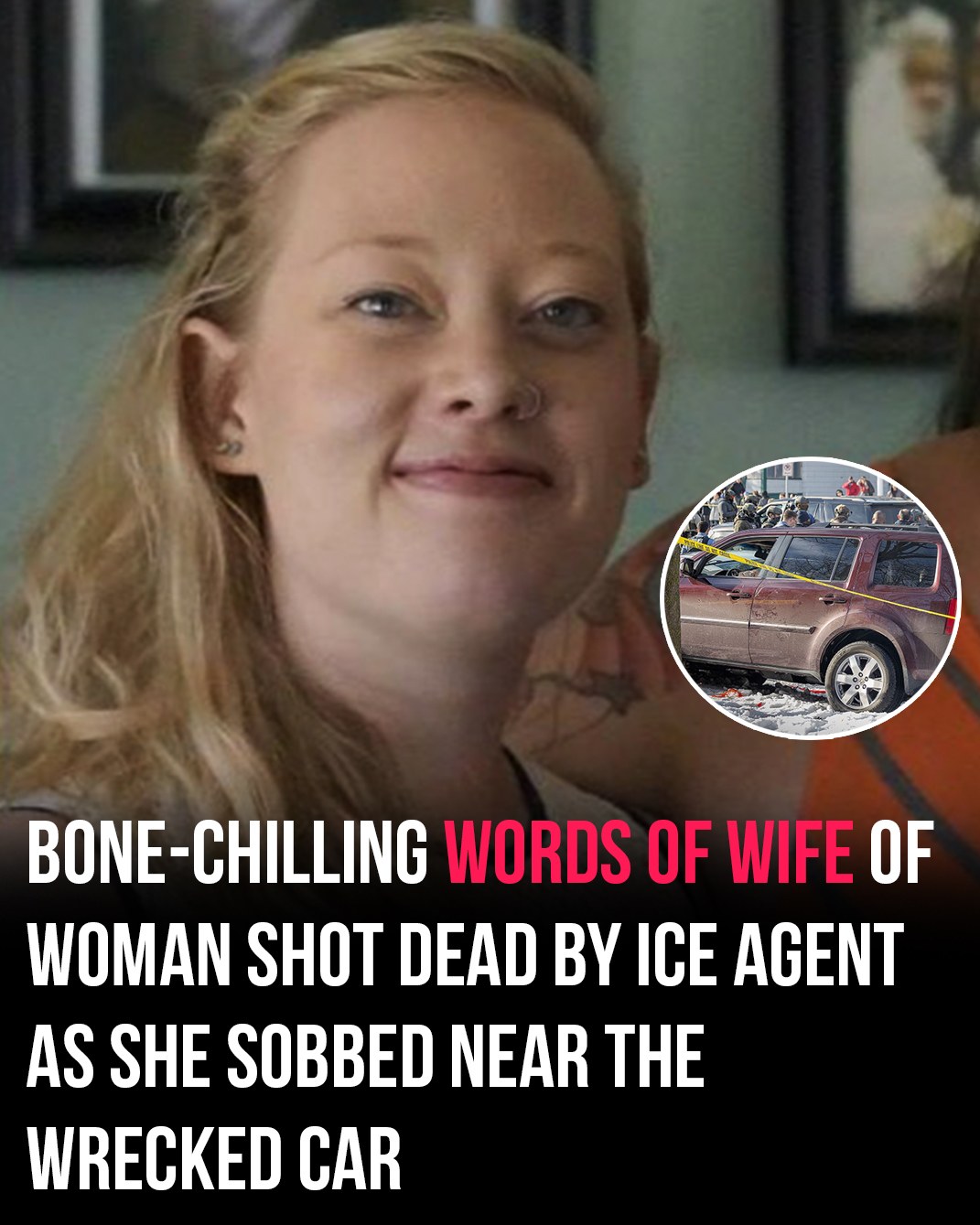
Digital footprints of the incident began circulating almost immediately. Video footage captured by bystanders shows a burgundy SUV pinned by multiple ICE vehicles. In a matter of seconds, the sound of rapid gunfire pierced the air. The SUV, riddled with bullet holes through the driver’s-side windshield, veered into a light pole and several parked cars before coming to a halt on the icy pavement.
The aftermath was gut-wrenching. Good’s wife was filmed at the scene, her clothing stained with blood, collapsing in a state of shock. “I made her come down here, it’s my fault,” she screamed in a video that has since gone viral. “They just shot my wife.” Reports from the New York Post suggest she had been filming the agents’ activities just moments before the fatal shots were fired, a detail that has added another layer of scrutiny to the federal agents’ conduct.
Federal Defense: Claims of Self-Defense and “Obstruction”
In the hours following the tragedy, the Department of Homeland Security (DHS) moved quickly to frame the shooting as a justified use of lethal force. DHS spokesperson Tricia McLaughlin issued a statement asserting that the officer involved fired “fearing for his life, the lives of his fellow officers, and the lives of the public.”
According to the federal account, the agent followed protocol to neutralize a threat. “The alleged perpetrator was hit and is deceased,” McLaughlin stated, adding that the officers involved, though injured, were expected to recover.
DHS Secretary Kristi Noem doubled down on this defense during a press conference alongside U.S. Customs and Border Protection Commander Gregory Bovino. Noem characterized Good’s actions as “stalking and impeding” federal agents, labeling the entire tragedy as “preventable” while firmly backing the ICE team.
“Any loss of life is a tragedy, and I think all of us can agree that, in this situation, it was preventable,” Noem told reporters, placing the onus of the escalation on the victim.
A Narrative Under Fire
The political stakes reached the highest level when President Donald Trump weighed in, describing Good as “very disorderly, obstructing and resisting.” The President alleged that Good had attempted to use her vehicle to run over an officer.
However, these claims have been met with intense skepticism by legal observers and community activists. Video evidence from the scene appears to show ICE agents moving freely without visible injuries, contradicting the administration’s claims of a hospitalized officer. This growing discrepancy has fueled a firestorm of criticism and urgent calls for an independent probe.
Local Leadership Blasts “Governing by Reality TV”
The rift between federal authorities and Minnesota leadership has reached a breaking point. Minneapolis Mayor Jacob Frey offered a blistering rebuttal to the DHS narrative, using uncharacteristically blunt language to describe the federal claims as “bulls***.”
Frey accused federal agents of “ripping families apart” and “sowing chaos” in the city. “In this case,” Frey added, “they are quite literally killing people.”
Governor Tim Walz joined the fray, condemning the federal government’s handling of the situation and the subsequent rhetoric as “governing by reality TV.” Walz has demanded a comprehensive and transparent investigation, emphasizing that the sanctity of life must take precedence over political posturing.
A Community in Mourning
As the sun set over South Minneapolis, a makeshift memorial of flowers, candles, and handwritten poems began to grow near the site of the shooting. For the neighbors who knew Renee Nicole Good as a creative spirit and a devoted mother, the legal and political jargon from Washington feels worlds away from the reality of the loss.
The city now waits for answers, caught in the middle of a constitutional and moral standoff between local sovereignty and federal reach.
While federal authorities have doubled down on a narrative of self-defense, a growing chorus of skeptics argues that the official story is riddled with holes. The existence of bystander video, contradictory witness testimony, and a deepening chasm between federal and local political statements have galvanized a public demand for transparency that shows no sign of waning.
As Minneapolis grapples with the fallout of this fatal encounter, a clearer picture is emerging of the woman behind the breaking news alerts. To the federal government, Renee Nicole Good was a suspect; to this community, she was a mother, a poet, and a compassionate neighbor whose death has left a jagged wound in the social fabric of South Minneapolis.

A Life Defined by Compassion, Not Conflict
Renee Nicole Good was a 37-year-old mother of three whose life was rooted in the arts and the quiet service of others. A longtime resident, she was a fixture in the local creative scene, often described by friends as a woman of profound empathy.
On social media, Good presented herself with a characteristic blend of humility and wit, describing herself as a “poet and writer and wife and mom and shitty guitar strummer from Colorado; experiencing Minneapolis, MN.” It was a self-portrait that friends say captured her perfectly: grounded, creative, and entirely unpretentious.
In a heartbreaking interview with the Minnesota Star Tribune, her mother, Donna Ganger, struggled to reconcile the federal government’s aggressive characterization of her daughter with the woman she raised.
“She was extremely compassionate,” Ganger said through tears. “She’s taken care of people all her life. She was loving, forgiving, and affectionate. She was an amazing human being. She was probably terrified.”
The Collateral Damage of a Fatal Encounter
Beyond the political posturing in Washington and St. Paul lies a family in ruins. The most poignant concern remains for Good’s youngest child, a six-year-old boy who now faces a future without his mother.
The ripples of this tragedy extend across state lines. Timmy Ray Macklin Sr., the father of Good’s late former husband, expressed a desperate resolve to step in for his grandchild. “There’s nobody else in his life,” he said. “I’ll drive. I’ll fly. To come and get my grandchild.”
Neighbors who witnessed the family’s daily life describe a home filled with warmth. Mary Radford, who lived next door, recalled the sight of the family playing outside as a staple of the neighborhood. “It’s a beautiful family,” Radford noted. “They have a son. He’s very sweet… It is so painful to think about how he’s gonna fare in his life.”
Another friend, Megan Kocher, recalled a quiet afternoon spent with Good just weeks ago—a simple memory of tea and cookies that now carries the weight of a final goodbye. “She was such a warm and loving mother,” Kocher said. “This is tragic beyond words.”
“Domestic Terrorism” vs. The Neighborhood Narrative
The Department of Homeland Security (DHS) has taken the extraordinary step of labeling the incident “domestic terrorism,” alleging that Good attempted to “weaponize her vehicle” against ICE agents. While DHS confirmed the SUV was in motion during the encounter, they have offered little explanation for the specific mechanics of the threat or why the vehicle’s Missouri registration was considered a factor in the escalation.
This branding has drawn fierce condemnation from civil rights advocates and city leaders who argue the term is being used as a rhetorical shield to justify an avoidable killing. Local officials have pointed out that video evidence appears to contradict federal claims of immediate threats to public safety and officer injuries.
A City Council Demands Justice
The Minneapolis City Council has wasted no time in challenging the federal reach. In a rare joint statement, members condemned the killing in no uncertain terms.
“This morning an ICE agent shot and killed Renee Nicole Good, a member of our community,” the statement read. “Anyone who kills someone in our city deserves to be arrested, investigated, and prosecuted to the fullest extent of the law.”
Adding to the tension, State Senator Omar Fateh reported disturbing allegations that federal agents may have obstructed medical aid. Taking to X (formerly Twitter), Fateh noted reports that a doctor on-site was blocked from administering life-saving CPR. While these claims remain unconfirmed by federal investigators, they have intensified the calls for an independent, non-federal probe into the actions of the ICE officers.
A Community in Mourning
In the days following the shooting, the intersection near 34th and Portland has transformed into a sanctuary of grief. Flowers, candles, and handwritten verses of poetry—a nod to Good’s own passion—line the sidewalk. The atmosphere is one of shared disbelief, as residents struggle with the reality of a federal tactical operation unfolding in the same space where their children play.
For Minneapolis, this is more than a legal dispute; it is a re-opening of old wounds regarding policing and the limits of state power. As the political debate rages, those who loved Renee Nicole Good are determined to ensure she is remembered not for how she died, but for how she lived.