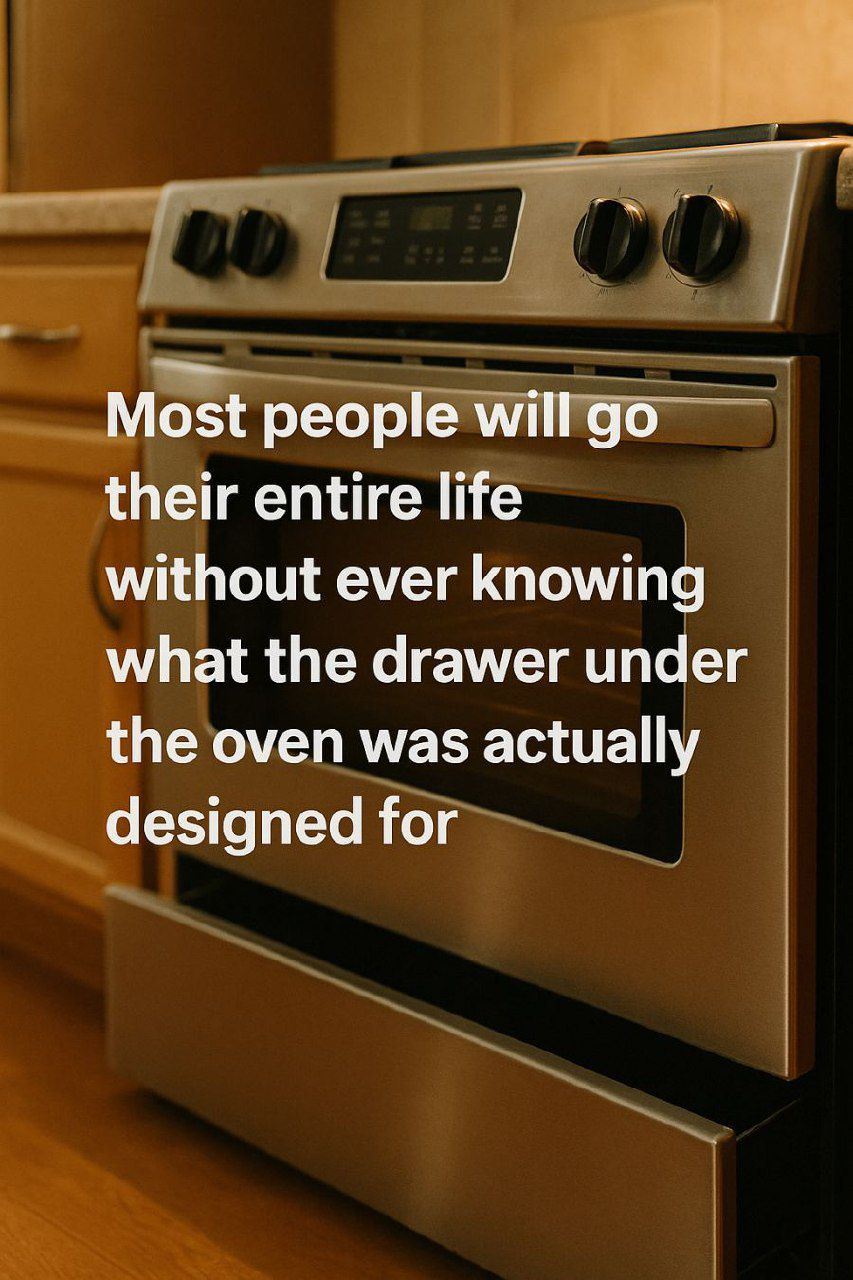
Many people go their whole lives without realizing the true purpose of the drawer beneath the oven
In the modern home, the kitchen remains the undisputed headquarters of daily life—a theater of routine where families gather and meals are orchestrated. Yet, within this space, a significant piece of engineering is being systematically misused and misunderstood. Tucked beneath the oven, a narrow drawer exists in nearly every household, serving as a catch-all for cluttered baking sheets, frying pans, and cooling racks. While its location makes it an intuitive choice for overflow storage, the history of appliance design tells a far more sophisticated story. For decades, this compartment was not built for storage at all; it was designed as a “warming drawer,” an innovative solution to one of the culinary world’s oldest challenges: the logistics of timing.

The Evolution of a Feature
Historically, gas and electric ovens were manufactured with these drawers to provide a controlled environment for prepared food. Operating at a steady, gentle heat—typically between 140°F and 200°F—the warming drawer was intended to hold dishes at safe temperatures without the risk of overcooking or drying them out.
Unlike the primary oven cavity, which utilizes high-intensity heat that can quickly degrade the texture and moisture of a finished meal, the warming drawer preserves the integrity of the food. It was a boon for the multi-course host or the busy family, allowing side dishes to remain “just-cooked” while waiting for late arrivals or the main course to finish.
Storage vs. Warming: The Modern Confusion
As kitchen designs shifted toward minimalism and space-efficiency, the lines between functionality and storage began to blur. Today, the market is split: some modern units are strictly equipped with storage drawers, while others maintain traditional warming capabilities.
The confusion stems from a lack of visual distinction. To the untrained eye, a storage drawer and a warming drawer look nearly identical. However, the differences are mechanical:
-
Warming Drawers: Feature dedicated heating elements, specialized insulation, and often integrated controls on the oven’s main interface. Look for labels such as “Warm” or “Proof.”
-
Storage Drawers: Are basic cabinet components lacking any electrical or heating infrastructure.
[Image: A side-by-side comparison diagram showing a storage drawer (empty metal box) versus a warming drawer (insulated with heating coils and a thermostat).]

A Matter of Safety and Efficiency
Misidentifying this feature isn’t just a missed culinary opportunity; it’s a potential safety hazard. Storing flammable items—such as paper liners, plastic-handled pans, or cloth towels—in a drawer equipped with a heating element can lead to warping, melting, or fire. Even in storage-only models, residual heat from the oven above can migrate downward, potentially damaging non-stick coatings or sensitive materials.
Furthermore, overstuffing these drawers can impede airflow and strain the mechanical tracks, reducing the efficiency of the appliance and leading to premature wear and tear.
Unlocking Professional Techniques at Home
For those who discover they own a true warming drawer, a new suite of professional techniques becomes available:
-
Plate Warming: Serving food on pre-warmed plates—a standard in fine dining—keeps meals hot longer once they hit the table.
-
Dough Proofing: The stable, low-heat environment is ideal for encouraging yeast activity in bread dough, a trick long utilized by master bakers.
-
Meal Coordination: Keeping vegetables and starches at peak quality while the roast rests.

Reclaiming the Heart of the Home
The mystery of the oven drawer underscores a broader trend in modern homeownership: the underutilization of expensive technology due to a lack of basic instruction. From a journalist’s perspective, this is a story of “forgotten innovation.” We have traded a valuable culinary tool for a few extra square inches of clutter space.
To determine your drawer’s true purpose, the most reliable method remains a quick search for the model number online or a glance at the user manual. If your drawer lacks a seal or heating controls, use it for your heavy cast iron and baking sheets—but do so with an awareness of the residual heat.
By rediscovering the intended use of our appliances, we do more than just organize a kitchen; we enhance safety, improve our cooking, and honor the thoughtful engineering that was meant to simplify our lives. The drawer beneath your oven is not just a forgotten compartment—it is a quietly useful tool waiting to be put back to work.