“Tension Rises as Sanctuary City Mayor Addresses Secretary Kristi Noem”
In my decade of covering the friction between federal mandates and local governance, I’ve seen few standoffs as high-stakes as the one currently unfolding in the Pacific Northwest. On Tuesday, Homeland Security Secretary Kristi Noem delivered a blunt, uncompromising ultimatum to Portland Mayor Keith Wilson: align with federal enforcement protocols or prepare for a massive surge in federal personnel. The threat marks a significant escalation in the war of words over the city’s South Waterfront neighborhood, home to a U.S. Immigration and Customs Enforcement (ICE) facility that has become a national flashpoint since mid-2025.
The Ultimatum: “Four Times the Amount”
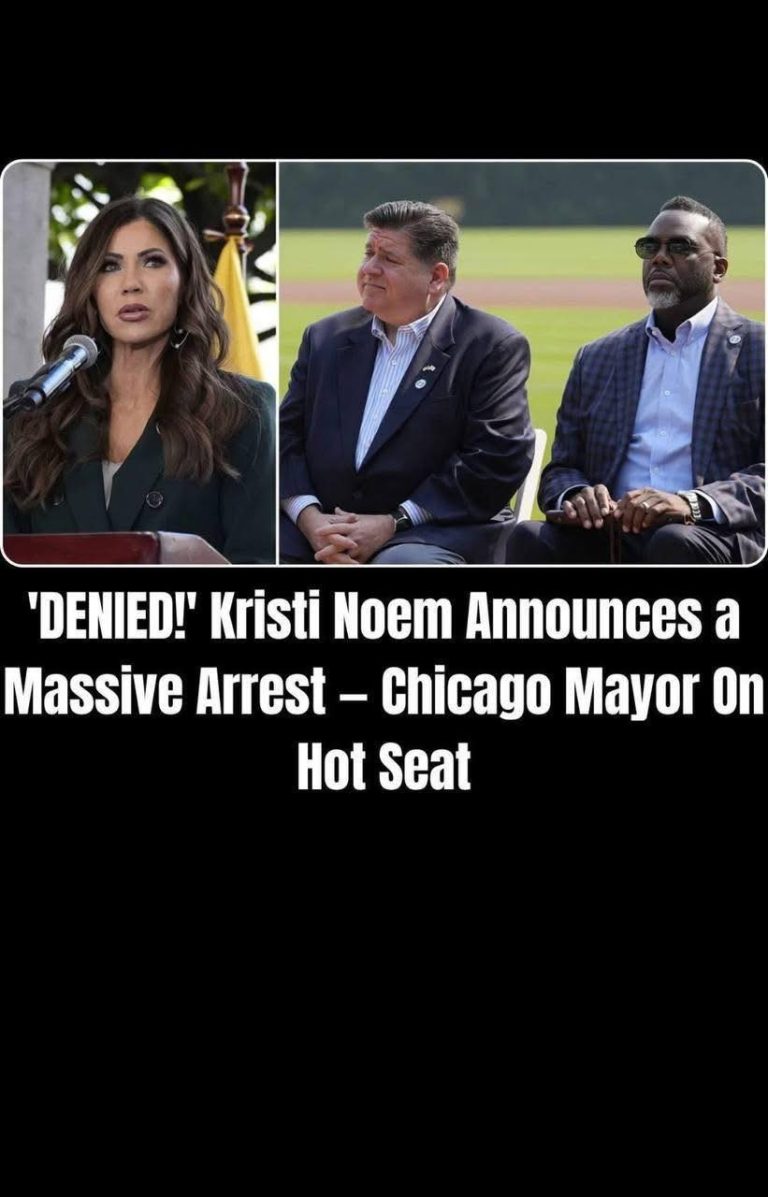
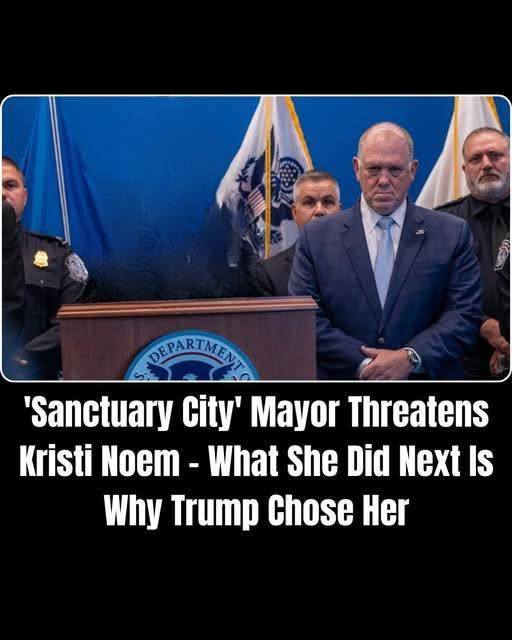
Secretary Noem’s visit to Portland on Tuesday was not a mission of diplomacy, but one of deterrence. After touring the ICE facility—a building frequently besieged by protesters—Noem appeared on Fox News to describe her meeting with Mayor Wilson as “extremely disappointing.”
During her interview on Jesse Watters Primetime, Noem revealed that she had issued a direct warning to the mayor: if the city continues to resist federal security measures, the Department of Homeland Security (DHS) is prepared to “cover him up” with a four-fold increase in federal officers.
“We told him if he did not follow through on some of these security measures for our officers… we were going to send four times the amount of federal officers here so that the people of Portland could have some safety,” Noem stated.
A Rhetorical War on the Rooftops
The tension reached a fever pitch earlier in the day when Noem stood on a rooftop overlooking the ICE facility. Flanked by federal agents, she framed the standoff as a matter of impending tragedy, accusing Wilson of allowing political fear to paralyze his leadership.
“He’s going to have blood on his hands because he sat around and thought too long,” Noem said, characterizing the mayor’s approach as a dangerous hesitation. She further sharpened her rhetoric by referring to the agitators near the facility as “professional terrorists,” a phrase intended to distinguish them from the peaceful protesters local leaders describe.
The Mayor’s Rebuttal: Professionalism vs. “Full Force”
Mayor Keith Wilson, who described the meeting as “cordial but deeply concerning,” has pushed back against the federal narrative of a city in chaos. In a written statement, Wilson maintained that Portland is managing public safety “professionally and responsibly,” regardless of the characterizations provided by “out-of-state social media influencers.”
Wilson’s primary concern remains the lack of transparency regarding the administration’s “Full Force” policy. He questioned why the city was being treated like a “military training ground” and signaled his intent to use every legal avenue to protect the community’s constitutional rights, including the right to free expression.
The Legal Quagmire
This showdown occurs as the federal government struggles to navigate a series of judicial roadblocks. A federal judge recently blocked the administration’s attempt to deploy National Guard troops to Oregon, ruling that the government failed to establish a legal basis for military intervention. While that case remains under appeal, the administration has pivoted to using DHS resources as their primary lever of influence.
President Trump has consistently echoed Noem’s sentiments, describing Portland as “war-ravaged” and insisting that “law and order” must be restored. However, local law enforcement leaders continue to reject this portrayal, asserting that they remain in control and that federal tactics often serve only to escalate localized tensions.
In my decade covering the intensifying friction between federal mandates and local sovereignty, I’ve seen the “Portland standoff” evolve from a localized dispute into a national case study on the limits of executive power. As of January 2026, the rhetoric has reached a fever pitch, with Portland Police Chief Bob Day offering a sobering counter-narrative to the “war-ravaged” depictions often broadcast from Washington.
Chief Day recently told CNN that the media narratives depicting widespread disorder simply do not reflect the day-to-day reality of life in the city. “This is just one small block in a big city,” Day emphasized, noting that local law enforcement remains committed to a strategy that is “measured, proportionate, and centered on community safety.”
The Constitutional Crossroads
Despite the Chief’s appeal for perspective, the ultimatum issued by Homeland Security Secretary Kristi Noem—and her pledge to potentially quadruple the federal officer presence—underscores a fundamental and unresolved rift. This is no longer just a dispute over a single ICE facility; it is a broader national debate over the sanctity of “sanctuary” policies and the boundaries of federal authority.
-
The Local Stance: Leaders in cities like Portland argue that maintaining community trust and respecting constitutional protections are the only ways to ensure long-term safety.
-
The Federal Stance: Administration officials contend that when local leaders limit cooperation, the federal government must take assertive, unilateral action to secure its personnel and property.
Legal Gridlock and the “Militia” Question
The structural tension in Portland is further complicated by a series of high-stakes legal battles. Since mid-2025, the administration has sought to deploy National Guard troops and tactical units from CBP and ICE to the city—efforts that have been met with immediate injunctions.
Governor Tina Kotek and Mayor Keith Wilson have successfully argued in court that such deployments risk violating the Posse Comitatus Act and the Militia Clauses of the Constitution. A landmark permanent injunction issued in late 2025 by U.S. District Judge Karin Immergut sharply curtailed the President’s power to “federalize” state guards over a governor’s objection, ruling that the administration had failed to demonstrate a “rebellion” or any inability to enforce laws with existing regular forces.
The Human Cost: A New Wave of Violence
The debate moved from the courtroom to the streets following two recent, high-profile tragedies that have reignited community trauma:
-
The Hazelwood Incident: On January 8, 2026, federal agents were involved in a shooting in Portland’s Hazelwood neighborhood that left two individuals hospitalized. Local police were not involved, and the lack of transparency regarding the agents’ identities has deepened the divide.
-
The Minneapolis Connection: The fatal shooting of Renee Nicole Good by an ICE agent in Minneapolis on January 7 has become a rallying cry for protesters in Portland. Secretary Noem’s characterization of the event as an act of “domestic terrorism” was met with a scathing rebuke from Mayor Wilson, who called the rhetoric “callous and sickening.”
Political Strategy vs. Public Safety
For the administration, Portland is a potent symbol of “lawlessness” used to justify a broader nationalist agenda. President Trump has repeatedly labeled the city as “war-ravaged,” framing federal intervention as a non-political necessity for “law and order.”
Conversely, Portland’s leadership views these interventions as a “militarized” overreach. As Chief Day and Mayor Wilson continue to emphasize community-centered policing and constitutional restraint, the city remains the primary testing ground for a “sovereignty-first” doctrine. Whether this standoff ends in a surge of thousands of federal agents or a landmark Supreme Court ruling on state autonomy remains the defining question of early 2026.