Justice Served – Man!
The story of Liam Deane, a 22-year-old man from Wakefield in West Yorkshire, stands as one of the most disturbing and heartbreaking cases in recent memory. It is a story that shook an entire community, unsettled a nation, and forced an uncomfortable reckoning with the realities of violence, emotional instability, and the devastating consequences when warning signs go unaddressed. At its center is the brief, fragile life of Luna — a baby girl who lived for just two days before her life was violently taken by the very person who was meant to protect her.
Liam Deane’s crime defies easy explanation. Society instinctively associates parenthood, particularly fatherhood, with responsibility, care, and protection. The idea that a newborn could be harmed by her own father is not only shocking but deeply unsettling on a fundamental human level. Luna entered the world utterly dependent, vulnerable, and trusting, and within 48 hours, that trust was irrevocably betrayed. The loss is immeasurable, not only for her mother and immediate family but for anyone confronted with the reality of how abruptly innocence can be destroyed.
During the trial that followed, the courtroom became a place of quiet devastation. The details surrounding Luna’s death were painful to hear and impossible to forget. Prosecutors laid out evidence that painted a picture of extreme violence inflicted upon a defenseless infant. Jurors, court officials, and observers struggled to reconcile the facts with the idea that such harm could occur within a family setting, so soon after a child’s birth. When the guilty verdict was delivered, it brought a measure of legal closure, but it offered no emotional resolution. Justice, in the narrow legal sense, could not undo what had already happened.
For Luna’s mother, the verdict did not signal an end to suffering. Her grief existed outside the boundaries of the courtroom, untouched by sentencing or procedure. She had lost her child in the most brutal way imaginable, and no prison term could restore what was taken. The silence left behind by Luna’s absence was permanent, echoing through the lives of those who loved her and those who would forever carry the weight of knowing what she endured.
As disturbing as the crime itself was, the case raised broader questions about emotional regulation, mental health, and the systems meant to protect vulnerable individuals. What circumstances led to such an explosive act of violence? Were there signs of emotional instability, unmanaged anger, or psychological distress that went unnoticed or untreated? While these questions can never justify the act, they underscore the need for deeper examination of how society identifies and responds to people in crisis, particularly new parents facing overwhelming pressure.
The transition into parenthood is often portrayed as joyful, but it can also be destabilizing, especially for individuals with limited coping mechanisms or unresolved emotional issues. In Deane’s case, the failure to recognize or address such vulnerabilities resulted in irreversible harm. The tragedy highlights the importance of early intervention, mental health screening, and support for new parents who may be struggling far beyond what they are able or willing to admit.
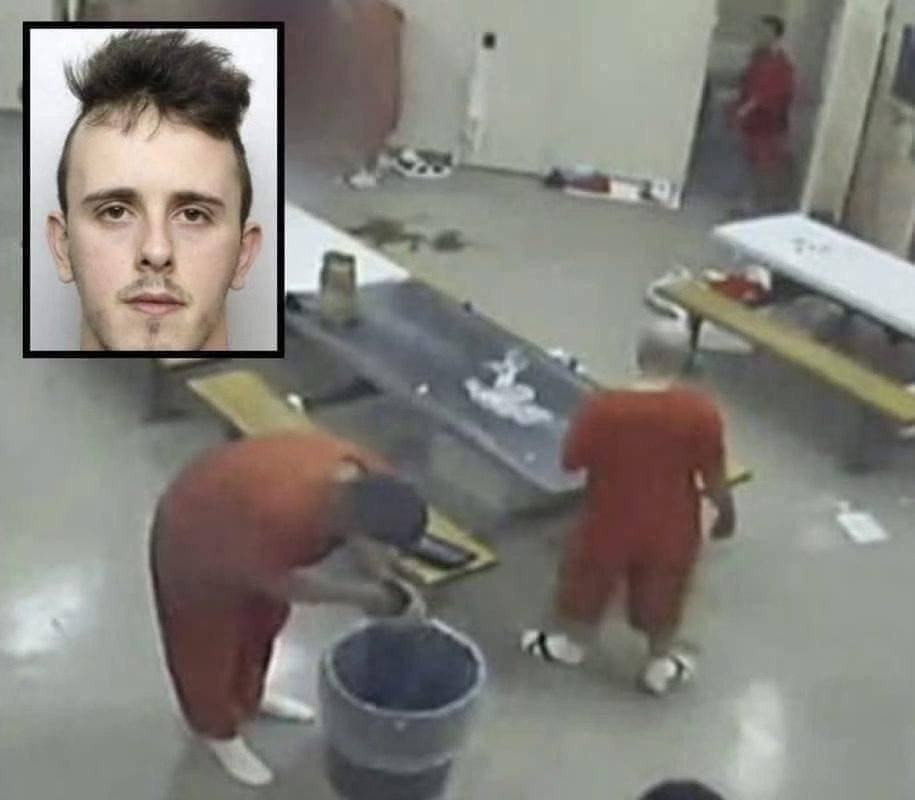
Following his conviction, Liam Deane was sent to prison to serve his sentence. However, the story did not end there. While incarcerated, Deane himself died under violent circumstances. Reports indicated that he was killed by another inmate, an event that introduced yet another layer of complexity to an already devastating case. His death, while not mourned in the conventional sense, reopened debates about prison safety, inmate protection, and the role of the justice system beyond sentencing.